
When your faithful companion starts slowing down on walks or resting a bit longer in their bed, it is incredibly easy to dismiss it as a natural part of growing old. But in veterinary medicine, those subtle lifestyle shifts often hide a much more complex internal struggle. Congestive heart disease dogs experience is a progressive, systemic condition that occurs when the heart muscle gradually loses its capacity to pump blood effectively, forcing fluids to pool back into the lungs or the abdominal cavity.
Early structural identification is the single greatest tool you have. Catching the warnings before clinical collapse allows for highly targeted medical interventions that can dramatically preserve your dog’s daily comfort and slow down the disease’s timeline. Your vigilance at home is their primary line of defense. Let’s look past the confusing clinical jargon and look directly at the 7 critical warning signs that require your immediate attention.
7 Critical Warning Signs of Congestive Failure
Resting Respiratory Rate (RRR) Tracking
The single most powerful way to monitor your dog’s lung health at home is by counting their breaths per minute (BPM) while asleep. Use this chart to understand normal fluctuations versus emergency thresholds:
Clinical Urgency & Action Matrix
Not all symptoms carry the same immediate timeline. Use this verified clinical guide to direct your home response:
| SYMPTOM PRESENTATION | URGENCY LEVEL | POTENTIAL PATHOPHYSIOLOGY | IMMEDIATE OWNER ACTION REQUIRED |
|---|---|---|---|
| Weakness, Fainting, Sudden Collapse | Critical Emergency | Severe cerebral hypoxia; acute cardiac output failure or malignant arrhythmia. | Transport immediately to the nearest animal emergency hospital. Minimize all physical movement. |
| Labored Breathing, Blue/Pale Gums | Critical Emergency | Severe systemic oxygen deprivation due to advanced pulmonary edema. | Go straight to emergency care. Keep the car cool and the dog completely calm during transit. |
| Sudden Abdominal Swelling (Ascites) | High Priority | Severe right‑sided fluid backup or potential acute internal bleeding. | Secure a veterinary diagnostic appointment within 24 hours. Seek emergency care if in distress. |
| Persistent Coughing, Elevated Resting Respiration | Moderate‑High | Progressive pulmonary fluid leak requiring immediate pharmaceutical adjustments. | Schedule a prompt clinic visit for complete chest auscultation and digital X‑ray diagnostics. |
| Severe Lethargy, Total Loss of Appetite | Moderate | Decline in systemic cardiac output heavily impacting secondary organ systems. | Book a veterinary exam within a few days for full blood panels and cardiac ultrasound work. |
| Mild Drop in Exercise Intolerance | Routine Monitor | Early‑stage cardiovascular insufficiency or initial structural shifts. | Log changes meticulously and discuss them during their next scheduled veterinary check. |
Which Dogs Face the Highest Risk?
While heart disease can strike any canine, specific demographic factors drastically raise the statistical likelihood of developing heart problems:
- Senior Companions: The structural wear on cardiac valves rises exponentially alongside aging.
- Small & Toy Breeds: Chihuahuas, Toy Poodles, Pomeranians, and Cavalier King Charles Spaniels are highly prone to Myxomatous Mitral Valve Disease (MMVD), where valves degrade and leak. This is the number one driver of **congestive heart disease dogs** navigate.
- Large & Giant Breeds: Great Danes, Doberman Pinschers, and Irish Wolfhounds are instead genetically vulnerable to Dilated Cardiomyopathy (DCM), a condition where the heart muscles thin out and stretch.
- Dogs with Known Murmurs: A structural murmur caught during annual checkups is the primary early indicator of underlying valvular dysfunction.
- Overweight Dogs: Excess adipose tissue forces a struggling heart to beat significantly harder to sustain basic systemic perfusion.
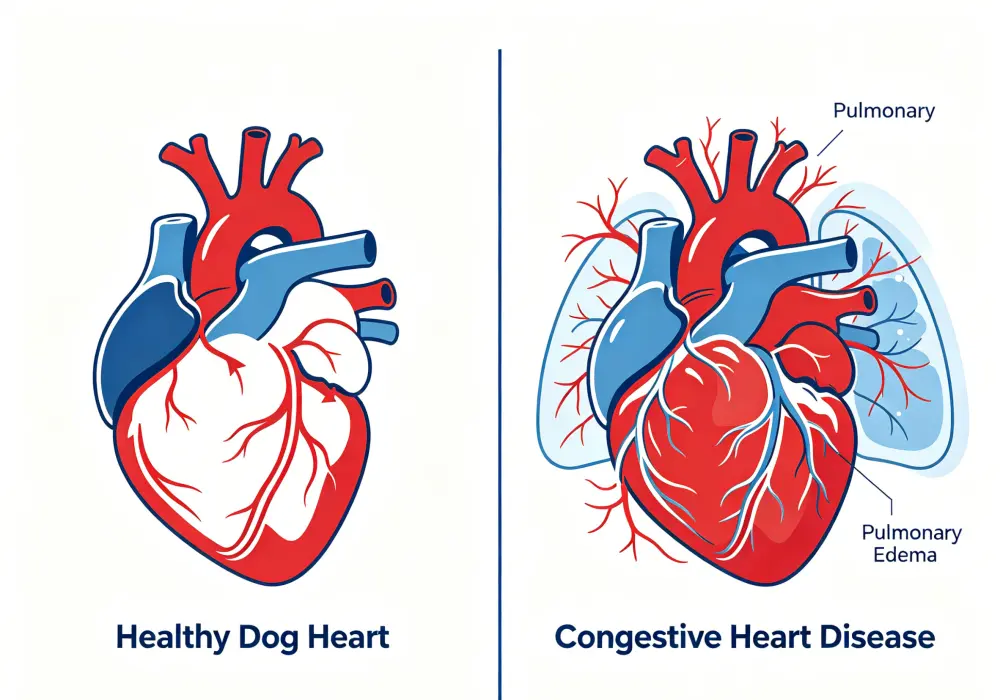
Which Dogs Face the Highest Risk?
While heart disease can strike any canine, specific demographic factors drastically raise the statistical likelihood of developing heart problems:
- Senior Companions: The structural wear on cardiac valves rises exponentially alongside aging.
- Small & Toy Breeds: Chihuahuas, Toy Poodles, Pomeranians, and Cavalier King Charles Spaniels are highly prone to Myxomatous Mitral Valve Disease (MMVD), where valves degrade and leak. This is the number one driver of **congestive heart disease dogs** navigate.
- Large & Giant Breeds: Great Danes, Doberman Pinschers, and Irish Wolfhounds are instead genetically vulnerable to Dilated Cardiomyopathy (DCM), a condition where the heart muscles thin out and stretch.
- Dogs with Known Murmurs: A structural murmur caught during annual checkups is the primary early indicator of underlying valvular dysfunction.
- Overweight Dogs: Excess adipose tissue forces a struggling heart to beat significantly harder to sustain basic systemic perfusion.
Being Their Voice
Your dog completely counts on you to decode their silent changes and act as their medical advocate. Learning these warning signals isn’t designed to spark unnecessary panic; it is meant to empower you to make precise, life-saving choices within critical windows. While a diagnosis of **congestive heart disease dogs** experience carries weight, modern veterinary cardiology has specialized tools to extend comfortable timelines. Through structured medical care, careful home monitoring, and your love, many dogs continue to enjoy months or years of joyful life. Your alert, timely action is the ultimate gift of safety you can offer them.
Related Articles
What Are Common Dog Behavior Changes with Age
Canine behavior and healthy aging Common Dog Behavior Changes with Age: What Is Normal and What Is Not? Dogs change throughout life, but age alone does not explain every new

Why Does My Dog Follow Me Everywhere?
DOG BEHAVIOR GUIDEIf you keep wondering, "Why does my dog follow me everywhere?", the answer is often quite ordinary: you are the safest and most rewarding part of your dog's
Hormonal Behavior in Dogs: Causes, Signs, and What to Do
Canine behavior and health guide Hormonal Behavior in Dogs: Causes, Signs, and What to Do Hormones can influence marking, roaming, mounting, nesting, appetite, sleep, and emotional responses. They are only