It starts with a stiffened neck, a low rumble, or a quick snap when you reach for a discarded toy. For many owners, witnessing resource guarding for the first time is heartbreaking. It feels like a betrayal of the bond you’ve worked so hard to build. But here’s the truth that professional behaviorists want you to know: resource guarding isn’t about “dominance” or your dog trying to be the boss—it’s a profound expression of insecurity.
When your dog treats a food bowl like a treasure worth fighting for, they aren’t being “bad.” They are reacting to a deep-seated fear of loss. By mastering the nuances of dog body language and shifting your approach from confrontation to cooperation, you can fix the root cause of this behavior. In the following chapters, we’ll move beyond quick fixes to look at a proven, science-based path to a safer, more relaxed home.
Phase 1: Defining Resource Guarding in Dogs
At its core, resource guarding is the use of overt behaviors to maintain control over an item the dog deems valuable. While most people associate it with food, resource guarding can extend to toys, sleeping spots, or even the attention of a specific person.
To effectively manage resource guarding, you must first acknowledge that your dog isn’t trying to be the “alpha.” They are simply protecting what they believe is theirs for survival. Identifying the earliest signs in dog body language—such as freezing, rapid eating, or hovering—is critical for preventing escalation.
Hierarchy of Resource Guarding Severity
Not all instances of resource guarding require the same level of intervention. Understanding the severity allows you to apply the correct training techniques without overwhelming your pet. Below is a detailed classification of resource guarding levels.
| Level | Behavioral Manifestations | Recommended Strategy |
|---|---|---|
| Mild Guarding | Stiffening, staring intently, “whale eye,” or eating faster. | Home-based desensitization and trading games. |
| Moderate Guarding | Low growling, lifting lips, or “air snapping” without contact. | Structured positive reinforcement under expert guidance. |
| Severe Guarding | Lunging and biting that causes bruising or skin punctures. | Immediate consultation with a certified behaviorist. |

What Triggers Resource Guarding?
While the psychology of resource guarding remains consistent, the triggers can vary wildly. Understanding what your dog values most is essential for creating a targeted training plan. By observing shifts in dog body language when different items are present, you can identify their highest-value triggers.
As the chart demonstrates, food items are the most common focus of resource guarding. However, the guarding of space (like a favorite chair) and toys also represents a significant portion of behavioral cases. In each scenario, the key is to watch for subtle dog body language cues that signal the onset of a guarding episode.
A Science-Based Protocol to Overcome Resource Guarding
Step 1: Environmental Management
The first rule of treating resource guarding is to stop the dog from practicing the behavior. If your dog guards bones, stop giving them bones for now. If they guard their food bowl, feed them in a separate room where they feel safe. Preventing the rehearsal of resource guarding is essential for lowering their overall stress levels.
Step 2: Desensitization to Proximity
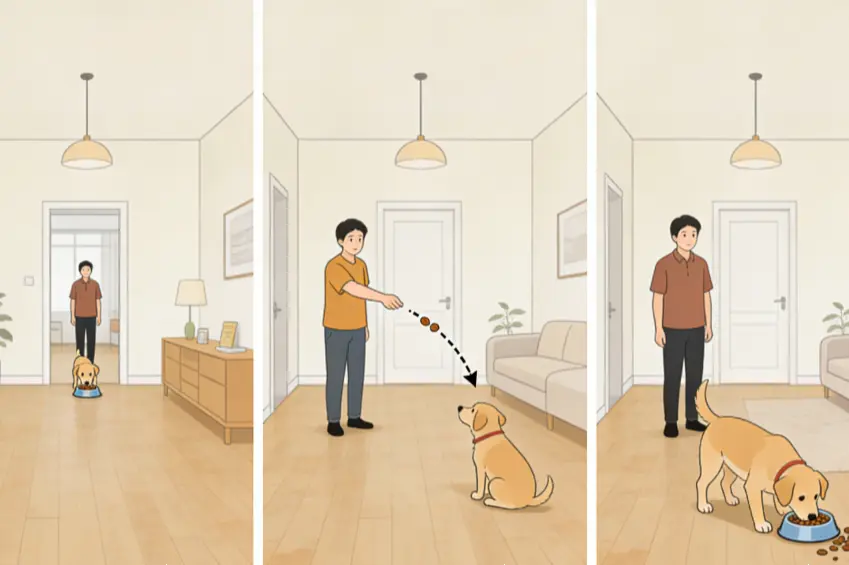
To resolve resource guarding, we must change the dog’s emotional response to our approach. Stand at a distance where your dog is aware of you but isn’t showing negative dog body language. Toss a high-value treat (like steak) toward them and walk away. You want the dog to associate your presence with “bonus” food, not “taking” food.
Step 3: The “Trade-Up” Strategy
This is a cornerstone of resource guarding rehabilitation. When your dog has an item they value, offer them something of even higher value. Show them the new treat, wait for them to drop the current item, and then give them the treat. Once they finish, give the original item back. This proves that you are a provider, not a threat to their resources.
Step 4: Gradually Reducing the Threshold
Over weeks of consistent practice, you can begin to decrease the distance between you and the dog during high-value moments. Always monitor for dog body language signs like a frozen tail or stiffened neck. If these appear, you have moved too fast and need to increase the distance again.

Common Myths About Canine Resource Guarding
- The Dominance Myth: Many believe resource guarding is a bid for power. Science proves it is almost always anxiety-driven.
- The “Hand-in-Bowl” Mistake: Messing with a dog’s food to “show them you can” actually creates resource guarding by making the dog feel their meal is under constant threat.
- “He’ll Grow Out of It”: Untreated resource guarding typically worsens as the dog becomes more confident in using aggression to protect their belongings.
Summary: A Long-Term Commitment
Overcoming resource guarding is not a quick fix. it requires a fundamental shift in how you interact with your pet. By prioritizing their sense of security and mastering the nuances of dog body language, you can ensure that resource guarding no longer dictates the atmosphere of your home.
Remember, every positive interaction is a brick in the foundation of trust. Stay patient, stay consistent, and always lead with empathy when addressing resource guarding in your companion.
Related Articles
What Are Common Dog Behavior Changes with Age
Canine behavior and healthy aging Common Dog Behavior Changes with Age: What Is Normal and What Is Not? Dogs change throughout life, but age alone does not explain every new
Why Does My Dog Follow Me Everywhere?
DOG BEHAVIOR GUIDEIf you keep wondering, "Why does my dog follow me everywhere?", the answer is often quite ordinary: you are the safest and most rewarding part of your dog's
Hormonal Behavior in Dogs: Causes, Signs, and What to Do
Canine behavior and health guide Hormonal Behavior in Dogs: Causes, Signs, and What to Do Hormones can influence marking, roaming, mounting, nesting, appetite, sleep, and emotional responses. They are only