Most humans believe they have a handle on what their dogs are saying. We see a wagging tail and assume joy; we hear a growl and assume aggression. However, modern canine ethology reveals that dog body language is far more nuanced, often relying on micro-expressions that the untrained eye misses completely.
Think of your dog as a silent storyteller. Instead of words, they use the tilt of an ear, the stiffness in their shoulders, or the way they lean into a room. When we misread these quiet signals, it’s more than just a misunderstanding—it’s a missed opportunity to build real trust. Let’s break down the actual anatomy of how your dog talks to you, from the tension in their brow to the tip of their tail.
The Eyes: A Window into Cortisol
The eyes are arguably the most honest part of a dog’s body. In behavioral studies, pupil dilation and the shape of the eyelids are primary indicators of autonomic nervous system arousal.
1. Soft Eyes vs. Hard Stare
Relaxed dogs have “soft eyes,” meaning their eyelids are loose and they may even squint slightly. A “hard stare,” where the eyes are wide and focused intensely on a person or object, is a direct challenge. If a dog refuses to break eye contact, it is often a precursor to a defensive or offensive action.
2. The Whale Eye (Mydriasis)
The term “Whale Eye” describes when a dog turns their head slightly away but continues to track a threat, showing the white of the eye (the sclera). This signal is frequently seen during resource guarding or when a dog feels cornered.
Mouth and Muzzle: Beyond the Bark
A dog’s mouth can convey everything from extreme submission to imminent threat. Understanding the subtle movements of the lips and tongue is vital for early stress detection.
Lip Licking and Yawning: When not related to food or sleep, these are “displacement behaviors.” The dog is effectively trying to calm themselves down or signal to others that they are not a threat. In a training context, if your dog starts yawning, they aren’t bored—they are overwhelmed.
The Tail: Decoding the Direction and Height
Research suggests that the lateralization of a tail wag (which side it leans toward) can indicate emotional state. A wag biased to the right typically indicates positive feelings, while a wag to the left suggests negative or withdrawal-based emotions.
| Position | Tension Level | Emotional Context |
|---|---|---|
| High & Rigid | Very High | Arousal, dominance, or high alert. Potential for aggression. |
| Level with Spine | Moderate | General interest, relaxed observation, or neutral state. |
| Tucked Between Legs | High (Internal) | Severe fear, anxiety, or extreme submission. |
| Low & Fast Wag | Moderate | Insecurity or “I’m friendly but nervous” signal. |
The Canine Stress Ladder
Behaviorists often refer to the “Ladder of Aggression.” Dogs don’t usually bite out of nowhere; they climb this ladder signal by signal.
Contextual Behavior: The “Full Body” Assessment
The golden rule of dog body language is: Never look at one body part in isolation. A dog who is panting and has a loose, wiggly body is likely just hot. A dog who is panting, has a rigid body, and is looking around frantically is likely having a panic attack.
As owners, our goal is to become “fluent” in these silent conversations. By recognizing the early displacement signals, we can intervene before a dog ever feels the need to reach the top of the stress ladder.
PDF: Dog Body Language: The Ultimate Guide to Canine Communication
Related Articles
What To Expect When Having Your Dog Put Down To Prepare Peacefully
Making the decision to say goodbye to your dog is one of the hardest things you will ever do. The phrase "put down" can feel cold and clinical, but
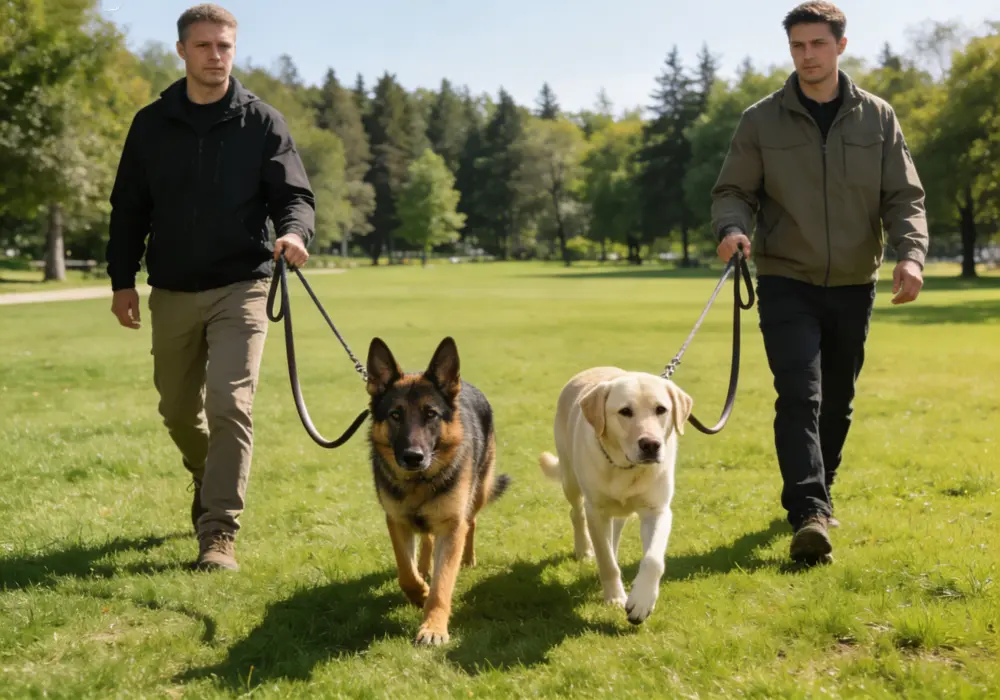
Training Dogs To Get Along With Each Other A Step By Step Guide
Bringing a second dog into your home doubles the potential for joy—but it can also instantly double the domestic tension if introductions go wrong. Whether you are introducing an
Best Way To Keep Dogs Safe In Car And Essential Travel Gear
The simplest, most unfiltered truth about car travel with a dog is this: the absolute best way to keep dogs safe in car compartments is to never leave them