
One day, your well-behaved companion is following the house rules perfectly; the next, it’s as if an invisible switch has been flipped. The dog that never had an accident is suddenly soiling the living room carpet. Your calm, friendly pup is now growling at familiar guests or barking incessantly at empty corners. The sudden destruction of a favorite couch pillow or a newfound reluctance to be touched can leave you feeling deeply confused, frustrated, and worried.
Before you assume this is a deliberate act of defiance or a training regression, take a deep breath. Dogs do not act out of spite or plan revenge. When you face a situation where your dog misbehaving all of a sudden disrupts your home, it is almost always a physical or emotional symptom, not a conscious choice. This is your dog’s primary way of communicating that something is fundamentally wrong.
By shifting your perspective from frustration to curious detective work, you can decode their behavior. This guide breaks down the five most common root causes behind sudden behavioral shifts, giving you a clear, science-backed roadmap to restore balance and peace to your household.
The #1 Rule: Rule Out Pain and Illness First
This clinical rule cannot be overstated. Any sudden behavioral change should first prompt a thorough visit to your veterinarian. Pain or internal discomfort from an undiagnosed medical condition is statistically the leading driver when you observe a dog misbehaving all of a sudden and acting out of character.
How Physical Pain Manifests as “Misbehavior”:
- Sudden Aggression or Snapping: A dog struggling with sore joints or a painful ear infection may growl or snap when touched in a tender spot, or react defensively when approached while resting because physical movement hurts.
- Unexpected House Soiling: A sudden UTI or gastrointestinal distress creates an urgent, uncontrollable need to eliminate. Alternatively, severe arthritis may make the physical posturing too painful or make navigating the stairs to go outside too difficult to manage in time.
- Pacing and Destructive Chewing: Chronic pain prevents restful sleep. A dog may pace restlessly, whine, or chew obsessively at objects (or their own body parts) to distract their mind from a constant dull ache.
- Avoidance and Hiding: Withdrawing from family interactions, hiding under desks, or staying in dark closets is a classic survival instinct for a dog that does not feel well.
Action Step: Book a comprehensive veterinary exam immediately. Be highly specific about the exact timeline of the behavioral changes. Your vet may need to run diagnostic blood work, a urinalysis, or targeted X-rays to uncover the hidden physical trigger.

Fear, Stress, and Environmental “Trigger Stacking”
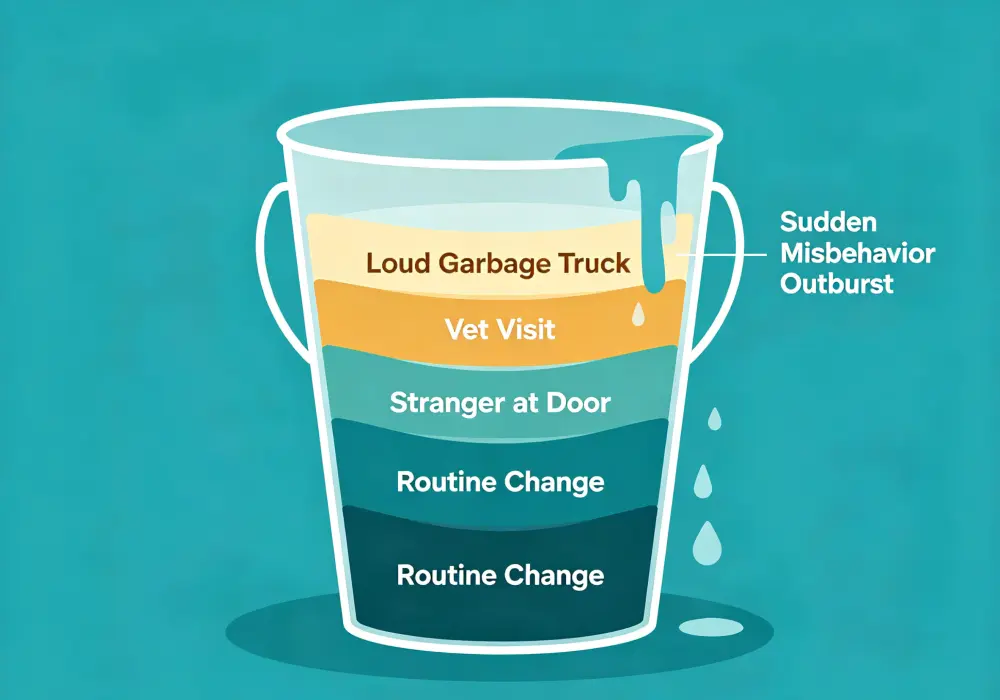
Dogs process fear and environmental changes differently than humans. A single scary event—or the compounding build-up of several low-grade stressors—can push a dog completely over their emotional tolerance threshold. If you are trying to manage a dog misbehaving all of a sudden, understanding this psychological threshold is crucial.
Subtle Warning Signs of Stress to Watch For:
Before a major behavioral outburst occurs, stressed dogs display subtle body language changes. Recognizing these can prevent a sudden reaction:
- Excessive yawning or lip-licking when food is not present.
- “Whale eye” (where the whites of the eyes are clearly visible in a half-moon shape).
- Slight trembling, rapid shallow panting, or pinning their ears flat back against their head.
- Refusing to take high-value treats that they normally love.
Changes in Routine, Household, or Social Dynamics
Dogs are passionate creatures of habit and thrive on environmental predictability. Significant disruptions to their daily flow can trigger deep-seated feelings of insecurity, leading to sudden, anxious behavioral displays.
When an outdoor event triggers sudden outbursts, walking your pet can quickly become a stressful ordeal. If you are struggling with a pup that lunges, barks, or freezes around other dogs and strangers, check out our expert behavioral roadmap on How to Keep Your Reactive Dog Calm in Public Spaces to safely de-escalate their fear and rebuild outdoor confidence.
Unmet Physical and Mental Needs (Boredom & Frustration)
A sudden spike in destructive, noisy, or hyperactive behavior is often the direct result of pent-up energy. When owners face a dog misbehaving all of a sudden through destructive chewing, digging, or vocalizing, the root cause is frequently a simple mismatch between their energy output and their cognitive stimulation.
Canine Cognitive Dysfunction (CCD) in Senior Dogs
If your dog is a senior (generally 8 years or older) and their sudden behavior changes include confusion, night waking, or getting stuck behind doors, you may be dealing with Canine Cognitive Dysfunction (CCD)—a neurodegenerative condition closely resembling Alzheimer’s in humans.
Critical Senior Night-Waking Connection:
Pacing, panting, and distressed vocalization at night in older dogs are frequently misdiagnosed as purely behavioral cognitive issues. However, these symptoms can also point to physical discomfort caused by fluid pressure changes in the chest cavity. If your senior dog exhibits sudden night restlessness, please rule out cardiac dysfunction by reviewing our diagnostic checklist on signs your dog may have congestive heart disease.
Behavior & Underlying Medical Link Probability
This diagnostic chart illustrates the clinical probability that a dog misbehaving all of a sudden is reacting to an underlying medical or pain-based cause. By understanding these percentages, owners can better recognize when behavioral distress is actually a clinical emergency:
Decoding Sudden Behavior: A Diagnostic Guide
Use this clinical reference table to quickly identify the root causes of a dog misbehaving all of a sudden, helping you match symptoms with precise, compassionate solutions:
| SUDDEN BEHAVIOR RED FLAG | POTENTIAL ROOT CAUSES | IMMEDIATE HOME & CLINICAL ACTION REQUIRED |
|---|---|---|
| Uncharacteristic Snapping, Growling, or Reactive Outbursts | Acute physical pain (joints, teeth, ears); sudden leash reactivity; localized fear trigger. | Rule out medical pain via a vet exam. If triggered by outdoor stressors, implement desensitization steps in our guide on How to Keep Your Reactive Dog Calm in Public Spaces. |
| House Soiling (After Rock-Solid Training) | UTI; gastrointestinal inflammation; cognitive decline (CCD); pain making posturing difficult. | Collect a clean urine sample and visit the vet. Do not scold your dog. Step up frequency of outside trips. |
| Nighttime Restlessness, Wandering, or Whining | Senior cognitive decline (DISHA); cardiac pressure changes (CHF); chronic orthopedic pain. | Assess sleeping breathing rates. Provide orthopedic bedding at ground level. Schedule senior bloodwork and cardiac check. |
| Sudden Destruction of Furniture or Drywall | Trigger stacking (construction, thunder); severe boredom; separation anxiety from routine changes. | Audit home environmental exposures and noise triggers. Provide interactive puzzles (stuffed lick mats) to burn mental energy. |
| Obsessive Licking of Paws, Groin, or Floor | Environmental or food allergies; localized joint pain; obsessive-compulsive stress relief. | Check skin for redness or hot spots. Discuss a clean elimination diet and allergy management with your veterinarian. |
Frequently Asked Questions
Being Their Advocate
When your dog’s behavior changes overnight, it is a plea for help, not a declaration of war. A dog misbehaving all of a sudden is simply using the only vocabulary available to them to signal distress. Your most powerful tools are focused observation, active veterinary partnership, and compassionate detective work. By methodically ruling out physical health problems, auditing your dog’s immediate environment for new stressors, and honestly assessing whether their daily physical and mental enrichment needs are being met, you can move from frustration to a lasting, loving solution.
This journey back to emotional balance is one of the most powerful bonding experiences you can share. By advocating for your dog when they cannot find the words to explain their distress, you prove to them that you are their ultimate safe haven. Start with a vet check, listen to what the sudden behavior change is trying to tell you, and respond with patience, empathy, and structured care.
- The #1 Rule: Rule Out Pain and Illness First
- Fear, Stress, and Environmental “Trigger Stacking”
- Changes in Routine, Household, or Social Dynamics
- Unmet Physical and Mental Needs (Boredom & Frustration)
- Canine Cognitive Dysfunction (CCD) in Senior Dogs
- Behavior & Underlying Medical Link Probability
- Decoding Sudden Behavior: A Diagnostic Guide
- Frequently Asked Questions
- Being Their Advocate
Related Articles

How to Train Your Dog to Overcome Resource Guarding
It starts with a stiffened neck, a low rumble, or a quick snap when you reach for a discarded toy. For many owners, witnessing resource guarding for the first

Why Do Dogs Show Behaviour Changes When They Are in Season and How to Support Them
If your normally independent, sweet-tempered pup has suddenly transformed into an anxious, shadow-following velcro dog—or conversely, an irritable nester who wants absolutely nothing to do with you—it can be incredibly
10 Common Dog Behavior Problems and How to Fix Them: A 2026 Roadmap
It’s perfectly normal to feel frustrated, embarrassed, or even angry when your beloved dog barks incessantly at the mail carrier or destroys your favorite shoes. However, these dog behavior