
A sudden round of vomiting or diarrhea can make even a calm owner second-guess everything. One minute your dog seems normal. The next, they are pacing, licking their lips, refusing food, or asking to go outside again. Some stomach upsets pass with careful watching. Others need a veterinarian much sooner.
This dog upset stomach symptoms checklist is meant to slow the moment down. Instead of guessing from one messy symptom, you check the pattern: how often your dog vomits, what the stool looks like, whether they still respond normally, whether the belly seems painful, and whether dehydration is starting.
It does not replace a vet exam. It helps you decide what to do next: watch closely at home, call your regular clinic, or treat the situation as urgent.
Use this page as an owner safety guide, not as a diagnosis. If your dog is weak, collapsed, repeatedly retching, passing black stool, vomiting blood, or cannot keep water down, contact a veterinarian or emergency clinic now.
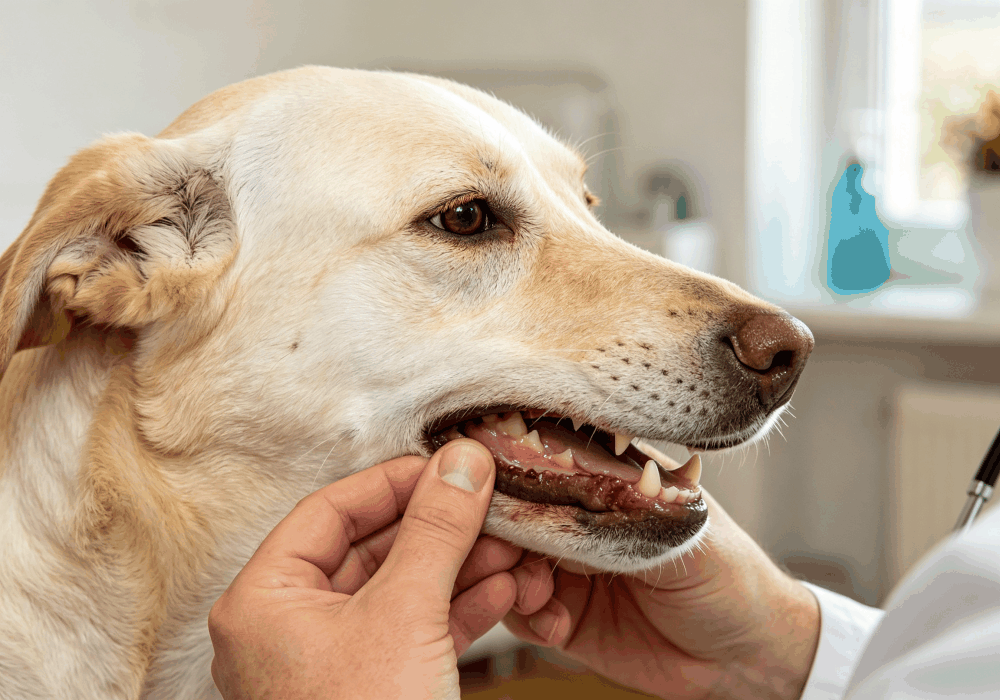
Step 1: Count Vomiting and Diarrhea First
Start this dog upset stomach symptoms checklist with the signs you can count. One episode of vomiting or one soft stool can happen after a food change, scavenging, stress, or a mild stomach irritation. Repeated vomiting, watery diarrhea, blood, or a dog that cannot keep water down changes the situation.
Vomiting Frequency and Appearance
First, separate true vomiting from unproductive retching. If your dog keeps trying to vomit but brings up nothing, or only small amounts of foam, do not wait. This can be seen with gastric dilatation-volvulus, often called bloat, which is an emergency.
If your dog is bringing something up, look at what you see. Yellow bile or clear fluid may appear when the stomach is empty. Dark material that looks like coffee grounds, visible blood, or repeated vomiting in a short period deserves a vet call. Repeated vomiting also raises the risk of dehydration, especially if your dog refuses water or vomits after drinking.
Diarrhea Color and Consistency
Next, check the stool. Mildly loose stool that still holds shape is different from watery diarrhea that happens again and again.
Bright red blood can come from irritation in the lower digestive tract, but you should still take it seriously if there is a lot of blood or your dog seems unwell. Black, tarry stool is more concerning because it can point to digested blood from higher in the digestive tract. If the upset seems food-related, it may also be worth reviewing the ingredient list with our dog food ingredient label guide.
Step 2: Check Energy and Appetite
After you count vomiting and diarrhea, watch the dog in front of you. A stomach symptom means more when it comes with low energy, weakness, trembling, hiding, or a complete refusal to eat.
Energy and Response
A dog with a mild stomach upset may look uncomfortable but should still notice you, move normally, and respond to familiar words. They may skip a meal and still seem mostly like themselves.
If your dog is flat, hard to wake, too weak to stand, confused, or not responding normally, treat that as urgent. Collapse or near-collapse is not a wait-and-see sign.
Appetite Changes
Appetite matters most when you read it together with energy and fluid loss. A dog that skips one meal but still drinks, walks normally, and responds to you may be watched briefly. A dog that refuses food and water, vomits after drinking, or looks painful should be treated more seriously. Call your vet sooner for puppies, senior dogs, toy breeds, diabetic dogs, or dogs with known medical problems.
Step 3: Inspect for Abdominal Pain, Arching, or Hiding
Belly pain is one of the most useful checks in a dog upset stomach symptoms checklist. Dogs do not always cry when their abdomen hurts. Many show it through posture, guarding, hiding, or sudden irritability when touched.
How to check safely: Do not press hard on the belly. If your dog allows touch, rest your hand gently near the abdomen and watch their reaction. A rigid belly, groaning, sudden guarding, snapping, or a “please do not touch me” response is enough reason to call a vet. If pancreatitis is on your mind, compare the signs with our pancreatitis in dogs symptoms checklist.
Step 4: Check for Dehydration Indicators
Vomiting and diarrhea can pull fluid out of the body quickly. Dehydration is one of the main reasons a mild stomach upset becomes harder to manage at home.
You can check gums and skin return, but these signs are not perfect. Gums should feel moist and slippery, not dry or tacky. When you gently lift a fold of skin over the shoulders, it should fall back quickly. Slow skin return, sunken-looking eyes, weakness, or a dog that cannot keep water down should move you toward a vet call. For a fuller fluid check, use our dog dehydration symptoms checklist.
Small caution: Gum moisture and skin return can be misleading in older dogs, very thin dogs, and some breeds. Use them as clues, not proof. If your dog looks weak or keeps losing fluid, a veterinarian can check hydration more reliably.
Dog Stomach Triage Checklist
Do not use this calculator to treat a diagnosed condition without your veterinarian.
Select what you are seeing. This digital dog upset stomach symptoms checklist does not diagnose the problem; it only helps you decide how urgently to contact a veterinarian.
Suggested Urgency Level
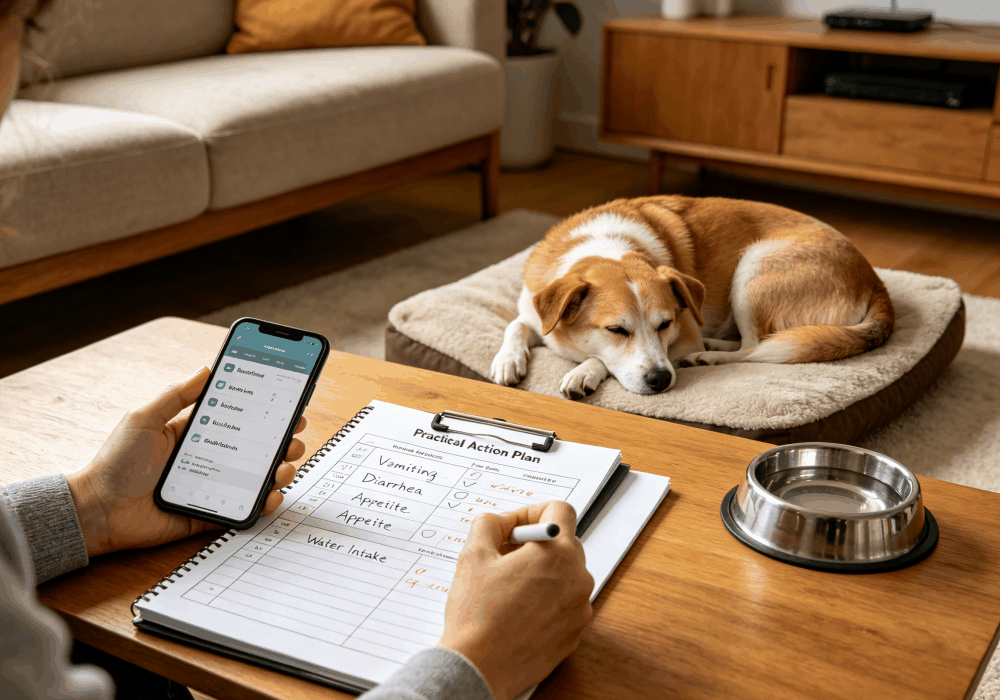
Practical Action Plan
After you work through the dog upset stomach symptoms checklist, place your dog in one of these three practical groups:
Quick Reference Matrix
Use this matrix as a fast summary of the dog upset stomach symptoms checklist:
| CHECKLIST STEP | HEALTHY / MILD INDICATORS | VETERINARY ATTENTION MARKERS | CRITICAL ER RED FLAGS (GO NOW) |
|---|---|---|---|
| 1. Evacuation Frequency | Single vomiting episode; slightly soft, shaped stool. | Vomiting more than 3 times in 12 hours; watery diarrhea. | Unproductive heaving; bloody vomit; black tarry stools (melena). |
| 2. Mental & Appetite | Bright, alert, responsive; minor, short-term pickiness. | Mild lethargy; refusing food for over 24 hours. | Collapsed, completely unresponsive; shivering or shaking. |
| 3. Abdominal Pain | Enjoys belly rubs; body remains soft and relaxed. | Hiding in dark closets; soft, occasional whining. | Rigid, guarded belly; “praying” posture; biting when touched. |
| 4. Hydration Check | Slick, wet gums; skin snaps back instantly. | Sticky, tacky gums; skin recoil delayed by 1–2 seconds. | Dry mouth; skin tents in place; sunken, dull eyes. |
Common Reasons Dogs Get an Upset Stomach
Many stomach upsets start with ordinary things: eating scraps, a sudden food change, a rich treat, stress, parasites, or an infection. The chart below is an owner-friendly way to think about common possibilities. It is not a diagnosis.
Frequently Asked Questions
What To Do Next
A useful dog upset stomach symptoms checklist should make you calmer, not overconfident. Count the vomiting and diarrhea, check energy, look for belly pain, check gums and hydration, and write down what changed before the symptoms started.
If your dog is bright, drinking, and improving, careful observation may be enough for a short time. If signs stack up or your dog looks weak, call your vet. If there is unproductive retching, collapse, black stool, bloody vomiting, or suspected poisoning, do not wait.
Related Articles
What Are Common Dog Behavior Changes with Age
Canine behavior and healthy aging Common Dog Behavior Changes with Age: What Is Normal and What Is Not? Dogs change throughout life, but age alone does not explain every new

Why Does My Dog Follow Me Everywhere?
DOG BEHAVIOR GUIDEIf you keep wondering, "Why does my dog follow me everywhere?", the answer is often quite ordinary: you are the safest and most rewarding part of your dog's
Hormonal Behavior in Dogs: Causes, Signs, and What to Do
Canine behavior and health guide Hormonal Behavior in Dogs: Causes, Signs, and What to Do Hormones can influence marking, roaming, mounting, nesting, appetite, sleep, and emotional responses. They are only