
Many dog owners start with the front of the bag. The photo looks fresh, the meat name sounds familiar, and the words natural or premium feel reassuring. The problem is that the front of the package is built to sell. The back of the label is where you find the information that helps you make a safer choice.
A dog food label includes the product name, ingredient list, guaranteed analysis, nutritional adequacy statement, feeding directions, and manufacturer information. No single part tells the whole story. The better approach is to read several parts together and ask one simple question: does this food match the dog who will actually eat it?
Important: This article is educational. If your dog has pancreatitis, kidney disease, heart disease, food allergies, obesity, chronic diarrhea, or needs a therapeutic diet, ask your veterinarian before changing foods.
Start With the Nutritional Adequacy Statement
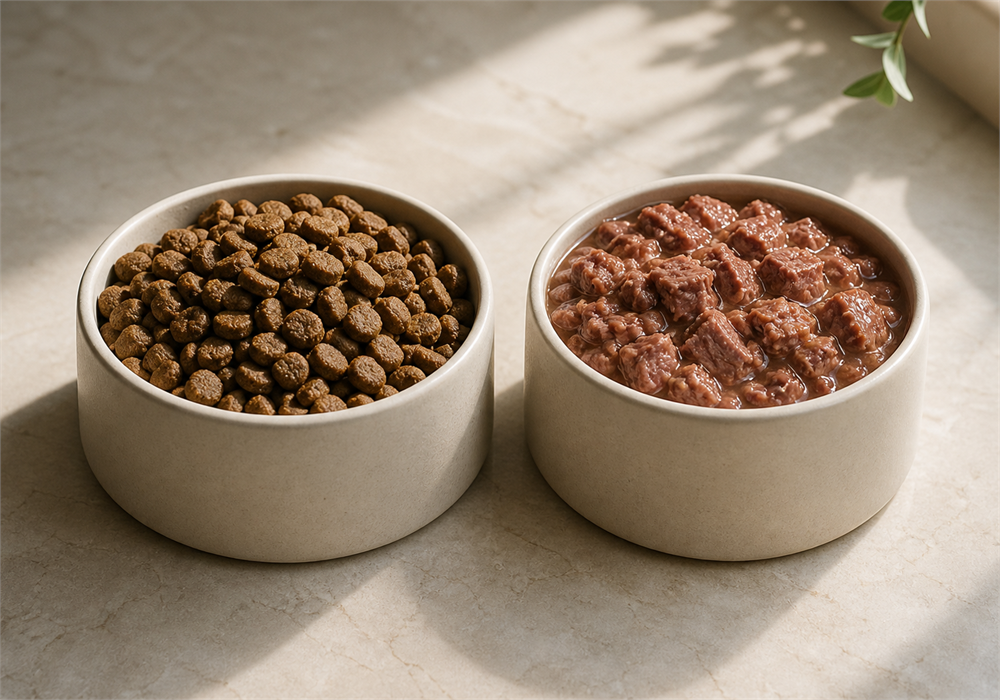
If a food is meant to be your dog’s daily main diet, it should say that it is complete and balanced for a specific life stage. AAFCO describes the nutritional adequacy statement as one of the key parts of the label because it helps match the food to a pet’s needs.
This statement usually tells you whether the food is for adult maintenance, growth, reproduction, all life stages, or supplemental feeding only. That last one matters. If a product says it is for intermittent or supplemental feeding only, it is not designed to be the only food your dog eats every day.
All life stages also deserves a closer look. It may sound better, but these foods often meet the higher needs of puppies and pregnant or nursing dogs. That can be too rich for some adult, senior, neutered, overweight, or low activity dogs.
Do Not Judge a Food Only by the First Ingredient
Seeing chicken, beef, turkey, or salmon first on the ingredient list can be useful, but it does not prove the food is automatically better. Ingredients are listed by weight as they are added, and fresh meat contains a lot of water. After cooking, the moisture is reduced.
This is why ingredient lists can be misleading if you read them too quickly. A named meat first is a good sign, but it should be read together with the rest of the recipe, the guaranteed analysis, the manufacturer quality information, and your dog’s needs.
Clear Animal Sources Are Easier to Understand
Specific animal ingredients are easier for owners to evaluate. Chicken meal, turkey meal, salmon, beef liver, and chicken fat tell you more than broad terms such as animal fat or meat meal.
This does not mean every by product is bad. Some named organ ingredients can provide useful nutrients. The issue is clarity. If your dog has food sensitivity or needs a limited protein source, vague animal terms make the diet harder to evaluate.
For dogs with a history of itching, vomiting, loose stools, or suspected food reactions, clear protein naming is especially helpful. You can also compare this with our guide to dog food for sensitive stomach and diarrhea.
Added Colors Sugars and Sweeteners Deserve Caution
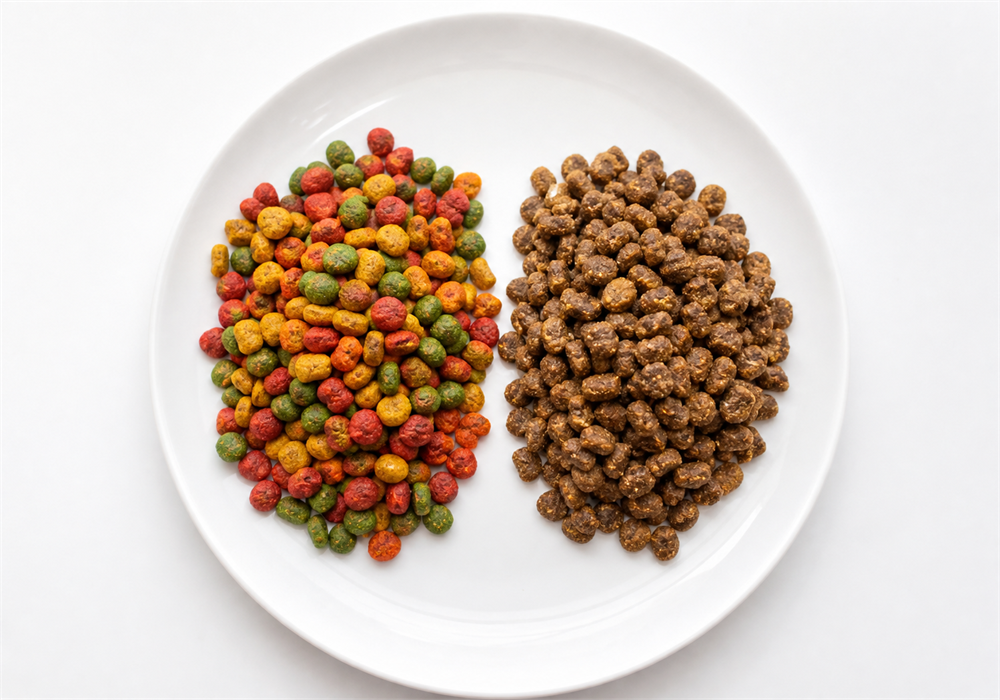
Dogs do not need kibble to look red, green, or shaped like tiny pieces of meat. Artificial colors are usually added for the person buying the food, not for the dog eating it.
Added sugars such as corn syrup, sucrose, or molasses may make food taste more appealing, but they are not a sign of better nutrition. They are worth avoiding when a dog already struggles with weight, dental issues, or blood sugar concerns.
Xylitol warning: xylitol, sometimes called birch sugar, is dangerous for dogs. It is more common in human foods and some dental products than in complete dog foods, but owners should treat it as an emergency ingredient if a dog eats it.
Dry Matter Basis Calculator
Dry food and wet food have very different moisture levels. This calculator helps compare nutrients after removing water from the equation.
Enter the moisture and nutrient values from the guaranteed analysis.
Formula: dry matter percentage = label nutrient percentage divided by 100 minus moisture percentage, then multiplied by 100.
Fat Levels Should Match Your Dog
Fat is not bad. Dogs need fat for energy, skin, coat, and normal body function. The question is whether the amount is right for your dog.
A highly active healthy dog may do well on a food that would be too rich for a dog with obesity, pancreatitis history, high triglycerides, or digestive sensitivity. This is where dry matter comparison is useful, especially when comparing canned food with kibble.
Wet food can look lower in fat than it really is. A canned food may list a small fat percentage because it contains a lot of water. Once moisture is removed from the comparison, the dry matter fat level can be much higher.
Product Names Can Change What the Label Means
AAFCO product name rules can help owners understand why small wording changes matter. Chicken dog food, chicken dinner, dog food with chicken, and chicken flavor dog food do not mean the same thing.
| LABEL WORDING | EXAMPLE | WHAT IT GENERALLY MEANS | OWNER TAKEAWAY |
|---|---|---|---|
| 95 percent rule | Beef Dog Food | The named ingredient makes up most of the product. AAFCO describes this as at least 95 percent excluding added water and at least 70 percent including water. | Usually a much stronger named ingredient claim. |
| 25 percent dinner rule | Beef Dinner or Chicken Recipe | The named ingredient is present at a lower required amount than the simple ingredient name suggests. | Read the full ingredient list instead of assuming the named meat dominates. |
| With rule | Dog Food with Beef | The named ingredient may only need to be present at a small percentage. | The word with can be easy to overread. |
| Flavor rule | Beef Flavor Dog Food | The food needs to provide recognizable flavor, not a high amount of the named meat. | Not the same as a food based mainly on that ingredient. |
AAFCO Name Rules at a Glance
This chart simplifies the naming rules so the difference between a main ingredient claim and a flavor claim is easier to see.
A Two Minute Label Check
Related Articles

When to Switch Puppy to Adult Dog Food
Puppy nutrition guide When Should You Switch a Puppy to Adult Dog Food? The right time is based less on a birthday and more on your puppy's expected adult size,
Adult vs. Senior Dog Food: What’s the Difference and When Should You Switch?
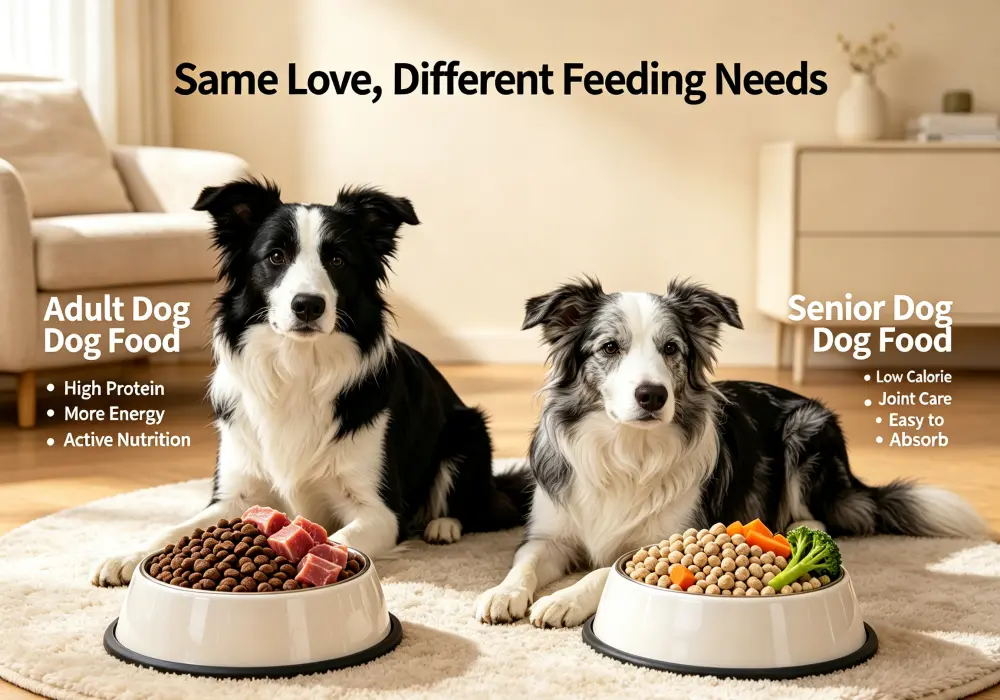
The difference between adult and senior dog food is rarely obvious from one ingredient or one number on the label. Adult food covers maintenance after growth. Senior formulas often try

How to Choose Dog Food for a Senior Golden Retriever
The gray muzzle often arrives before a Golden Retriever starts acting old. That can make a food change feel premature. Yet an older Golden may already be using fewer calories,