
If you’ve been researching dog nutrition lately, you’ve probably noticed “rich in Omega-3” stamped across an increasing number of bags and cans. For good reason, omega-3 fatty acids, particularly eicosapentaenoic acid (EPA) and docosahexaenoic acid (DHA), are well-studied nutrients in canine nutrition. Marine-sourced EPA and DHA may support skin, joint, heart, kidney, and brain health depending on the dog, the condition, and the overall diet.
But not all “Omega-3” claims are created equal, and not every bag that mentions fish actually delivers meaningful EPA and DHA. This guide cuts through the marketing to show you which dog food brands tend to be higher in Omega-3, how to read the label so you’re not guessing, and when a fish-based diet versus a separate fish oil supplement makes more sense.
To evaluate your companion’s baseline physical condition before starting therapeutic lipids, cross-reference their physical markers with our clinical checklist on the Signs of a Healthy Dog.
Clinical Disclaimer: This guide is educational and is not a dosing plan. If your dog has a diagnosed medical condition, takes medication, has a history of pancreatitis, or needs a therapeutic diet, ask your veterinarian before changing food or adding fish oil.
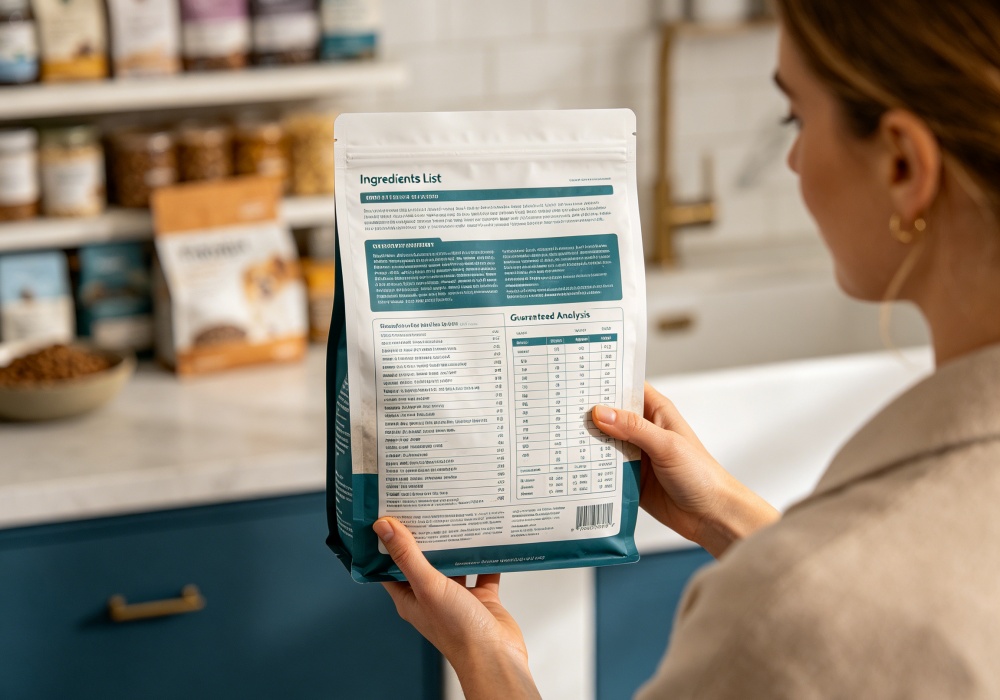
What Omega-3 Fatty Acids Mean in Dog Food
Omega-3s are a family of polyunsaturated fatty acids. In the context of dog food, the three you’ll hear about most are:
- ALA (alpha-linolenic acid): Found in plant-based sources like flaxseed, chia, and canola oil.
- EPA (eicosapentaenoic acid) and DHA (docosahexaenoic acid): Found in marine sources—fish oil, salmon, sardines, anchovies, krill, and algae. These are the best-studied omega-3 forms for dogs, especially when a veterinarian is targeting skin, joint, heart, kidney, or cognitive support.
EPA and DHA vs. ALA: What Owners Should Know
| SOURCE | FORM | CONVERSION IN DOGS | PRACTICAL VALUE |
|---|---|---|---|
| Flaxseed / chia / canola | ALA (plant) | Low and inefficient | Modest general support; not reliable for therapeutic EPA/DHA goals. |
| Fish oil / salmon / sardines / krill | EPA + DHA (marine) | Direct—no conversion needed | Best-studied source for targeted support when vet-guided. |
| Algae oil | DHA-heavy, some EPA | Direct marine-source DHA; EPA varies | Useful option when fish ingredients are not appropriate; verify EPA/DHA data. |
Bottom line for shopping: If the goal is “higher Omega-3” in the sense that matters most for dogs, look for named marine sources (salmon oil, menhaden fish oil, krill oil, anchovy oil, algal oil) in the first 5-10 ingredients, and ideally see EPA/DHA called out on the Guaranteed Analysis or brand technical sheet.
For a veterinary nutrition explanation of why EPA and DHA from fish oil are more directly useful than plant-based ALA, see Tufts Petfoodology’s overview of essential fatty acids.
Which Dog Food Brands Tend to Be Higher in Omega-3?
Below is a curated, realistic snapshot of brands that often formulate for higher Omega-3/EPA+DHA—either as a core selling point or via fish-forward recipes. This is not an exhaustive ranking, and formulations change, so always verify the current bag or brand nutrient sheet before choosing.
This article is informational and not sponsored. We do not rank brands by payment or affiliate commission.
Brand-Level Quick Compare
| BRAND / LINE | PRIMARY OMEGA-3 SOURCE | EPA/DHA PUBLISHED? | POSITIONING |
|---|---|---|---|
| Royal Canin Skin Care | Fish oil | Often yes on vet sheets | Skin support; verify current formula. |
| Hill’s Prescription Diet j/d | Fish oil (high) | Yes for some Rx lines | Veterinary diets—joint / skin / cardiac support. |
| Purina Pro Plan Sensitive | Salmon + fish oil | Partial; check current label | OTC—sensitive stomach + coat support. |
| Purina OM / NF (Rx) | Fish oil | Often yes on vet sheets | Rx—weight / kidney; vet-guided. |
| Orijen Six Fish | Whole fish + herring oil | Yes on current official GA | OTC—fish-forward, higher omega-3 kibble. |
| Addiction Salmon | Salmon + salmon oil | Usually no; ask brand | OTC—salmon-based; verify current data. |
| Zignature Trout & Salmon | Fish meal + oil | Usually no; check label | OTC—limited ingredient fish recipes. |
| Fresh (Spot & Tango Salmon) | Whole fish + added oil | Varies—ask brand | Fresh / gently cooked; storage matters. |
EPA/DHA Data Transparency by Brand
This interactive chart rates how easy it is to verify omega-3, EPA, or DHA information for each brand or line. High scores represent a brand’s commitment to making exact scientific assays readily available:
This calculator is educational only. Therapeutic EPA/DHA targets should be discussed with your veterinarian, especially for dogs with kidney, heart, joint, skin, or pancreatic disease.
Canine Daily Omega-3 Target Calculator
Do not use this calculator to treat a diagnosed condition without your veterinarian.
Input your dog's weight and select their clinical support profile to calculate their recommended daily marine-source EPA & DHA metabolic dose.
Metabolic Estimation Profile
-- mg/day
-- mg/day
--
Veterinary Formulation Guidance
Please input your dog's weight to receive active metabolic feedback.
How to Read Omega-3 Claims on Dog Food Labels
This is where most owners get tripped up. Avoid marketing traps by utilizing a logical decoding order:
Fish-Based Dog Food vs. Fish Oil Supplements
A common question: “If I feed a salmon-based kibble, do I still need fish oil?” The answer depends entirely on your dog’s physiological health goals.
Food Alone is Appropriate If:
- Your dog is healthy and you want general maintenance support for skin, coat, or overall wellness.
- The food genuinely delivers marine Omega-3s (Salmon oil is listed in the first few ingredients).
- Your vet is not targeting a specific, high-dose therapeutic clinical path.
⚠️ Watch the Fat Load
Do not double up blindly. Excess fish oil adds significant fat calories and can trigger acute digestive issues or, in severe cases, flare-ups in pancreatic tissues. If your dog has sensitive digestion, read our guide to choosing a dog food for sensitive stomachs first.
When to Ask Your Vet Before Adding More Omega-3
Omega-3s are generally safe, but there are real scenarios where you should check in before loading up:
- Your dog is on anticoagulants or has a clotting disorder.
- Your dog has acute pancreatitis or a history of fat-triggered GI upset (fish oil is still fat—dose matters).
- Your dog is pregnant/nursing (dose adjustment may be needed).
- You’re aiming for a therapeutic dose for a diagnosed condition (osteoarthritis, CKD, cardiac)—dosing is weight- and disease-specific.
- Your dog is on multiple supplements already—avoid stacking without review.
Omega-3 Dog Food Checklist
Use this checklist when standing in the aisle or scanning a site:
- Named marine source (salmon oil, fish oil, krill, algal) in first 5-10 ingredients?
- Guaranteed Analysis shows “Omega-3 Fatty Acids” (and ideally EPA/DHA broken out)?
- Brand publishes mg EPA+DHA per cup (or per kg) on their site?
- Preserved with mixed tocopherols (not just BHA/BHT)?
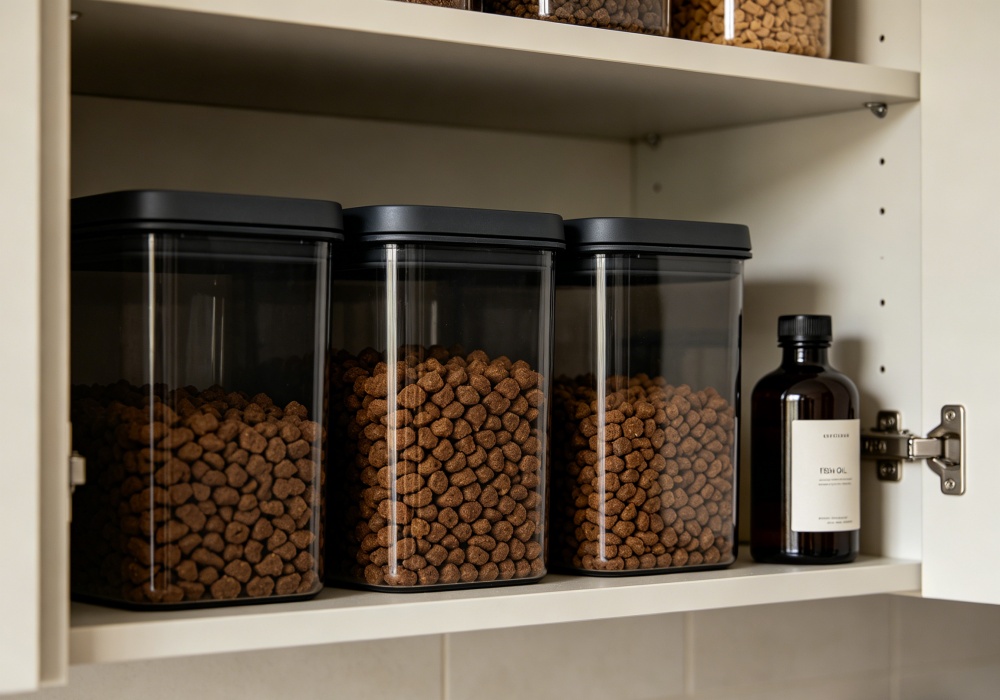
- Bag size reasonable for your usage (Omega-3 degrades after opening)?
- Goal matched? (Maintenance = food-level is often fine; therapeutic = vet-guided dose, likely supplement).
- If dog has fish allergy (yes, it exists) -> obviously skip, talk to vet about algal DHA.
Frequently Asked Questions
What dog food has omega-3 fatty acids?
Dog foods with fish oil, salmon oil, herring oil, sardine meal, anchovy oil, krill oil, or algal oil are more likely to provide useful omega-3s. The strongest signal is not just a fish ingredient on the front of the bag, but a label or nutrient sheet that lists EPA and DHA.
Is salmon dog food enough omega-3 for dogs?
Sometimes. Salmon-based food can be enough for general maintenance if it includes marine oil and the dog is otherwise healthy. For arthritis, kidney disease, heart disease, or skin disease, ask your veterinarian whether the EPA/DHA intake is high enough for the goal.
Is fish oil better than omega-3 dog food?
Fish oil is easier to dose precisely because the EPA and DHA amounts are usually listed on the label. Omega-3 dog food may be simpler for daily feeding, but the actual EPA/DHA level is often less clear unless the brand publishes a nutrient profile.
Sources and Methodology
This guide is informational and not sponsored. We do not rank dog food brands by payment, affiliate commission, or brand partnership. Brand examples were selected because they publicly discuss fish oil, omega-3 fatty acids, EPA, DHA, or fish-forward recipes. Formulas can change, so always verify the current bag, guaranteed analysis, and brand nutrient sheet before choosing a food.
- Tufts Petfoodology: Essential fatty acids and inflammation — used for the EPA/DHA vs. ALA explanation and why marine omega-3 sources matter.
- WSAVA Global Nutrition Guidelines — used for general veterinary nutrition principles and the recommendation to evaluate food in context with the individual dog.
- AAFCO: Reading Pet Food Labels — used for label-reading principles and understanding guaranteed analysis claims.
- Today’s Veterinary Practice: Fish Oil Dosing in Pet Diets and Supplements — used for safety context around EPA/DHA supplementation and why therapeutic dosing should be vet-guided.
- Hill’s Prescription Diet j/d official nutrient profile — used to verify published EPA and total omega-3 values for this veterinary diet example.
- Purina Pro Plan Sensitive Skin & Stomach Salmon official page — used to verify fish oil and omega-3 positioning for this over-the-counter example.
- ORIJEN Six Fish official guaranteed analysis — used to verify published omega-3, DHA, and EPA values.
Beyond the Gloss
Ultimately, omega-3 is not simply a “more is better” nutrient. The useful question is whether your dog is getting the right source and amount for the goal. A flax-only food and a fish-oil-rich formula can be very different, but the best choice still depends on your dog’s health history, current diet, and your veterinarian’s guidance.
When in doubt, bring the bag or a photo of the Guaranteed Analysis panel to your vet and ask: “Is this delivering enough EPA and DHA for what we’re trying to do?” That one question will take you further than any marketing claim on the front of the bag.
Related Articles

When to Switch Puppy to Adult Dog Food
Puppy nutrition guide When Should You Switch a Puppy to Adult Dog Food? The right time is based less on a birthday and more on your puppy's expected adult size,

Adult vs. Senior Dog Food: What’s the Difference and When Should You Switch?
The difference between adult and senior dog food is rarely obvious from one ingredient or one number on the label. Adult food covers maintenance after growth. Senior formulas often try

How to Choose Dog Food for a Senior Golden Retriever
The gray muzzle often arrives before a Golden Retriever starts acting old. That can make a food change feel premature. Yet an older Golden may already be using fewer calories,