
How to Choose Dog Food for Gastroenteritis Recovery
When a dog has been vomiting or passing loose stool, food can feel like a guessing game: feed too soon, wait longer, try chicken and rice, or buy a veterinary diet? A sensible recovery plan starts with food that is easy to digest, fits the dog’s medical history, and can be served in small meals. Just as important, you need to know when feeding at home is no longer the safe option.
For most dogs, recovery food should be easy to digest and simple to divide into several small meals. A complete veterinary gastrointestinal diet is often the most practical choice. Chicken and rice or another homemade bland meal may work for a few days in an otherwise healthy adult dog with mild symptoms, but it is not balanced enough for long-term use. Pancreatitis, food sensitivity, dehydration, and the cause of the illness all change what belongs in the bowl.
Vomiting and diarrhea can also occur with an intestinal obstruction, toxin exposure, pancreatitis, parasites, infection, Addison’s disease, or another systemic illness. Do not use a diet change to delay veterinary care when your dog appears weak, painful, dehydrated, or seriously unwell.
Why food matters during recovery
Gastroenteritis is inflammation of the stomach, intestines, or both. An irritated intestinal lining does not digest and absorb nutrients as well as usual. Food may move through too quickly, and fluid can collect in the bowel. Meanwhile, vomiting and diarrhea carry away water and electrolytes.
That is why the old advice to “rest the gut” for a set number of hours does not fit every dog. Once repeated vomiting is under control and a veterinarian agrees that feeding is safe, a little food supplies energy to the cells lining the intestine. The meal has to be small enough for the dog to handle. A heaped bowl is not a recovery plan.
A fixed fast can be risky
A brief pause from food may make sense while uncontrolled vomiting is assessed. It is a different matter for a puppy, toy breed, diabetic dog, frail senior, or dog with another illness. These dogs can run into trouble during an unsupervised fast, so the clock should not make the decision.
Start smaller than a normal meal
A full bowl stretches the stomach and sends a large load of fat, protein, and carbohydrate into an already irritated gut. Smaller meals are usually easier to handle. They also make the next decision clearer: if a small portion stays down, you can cautiously offer another.
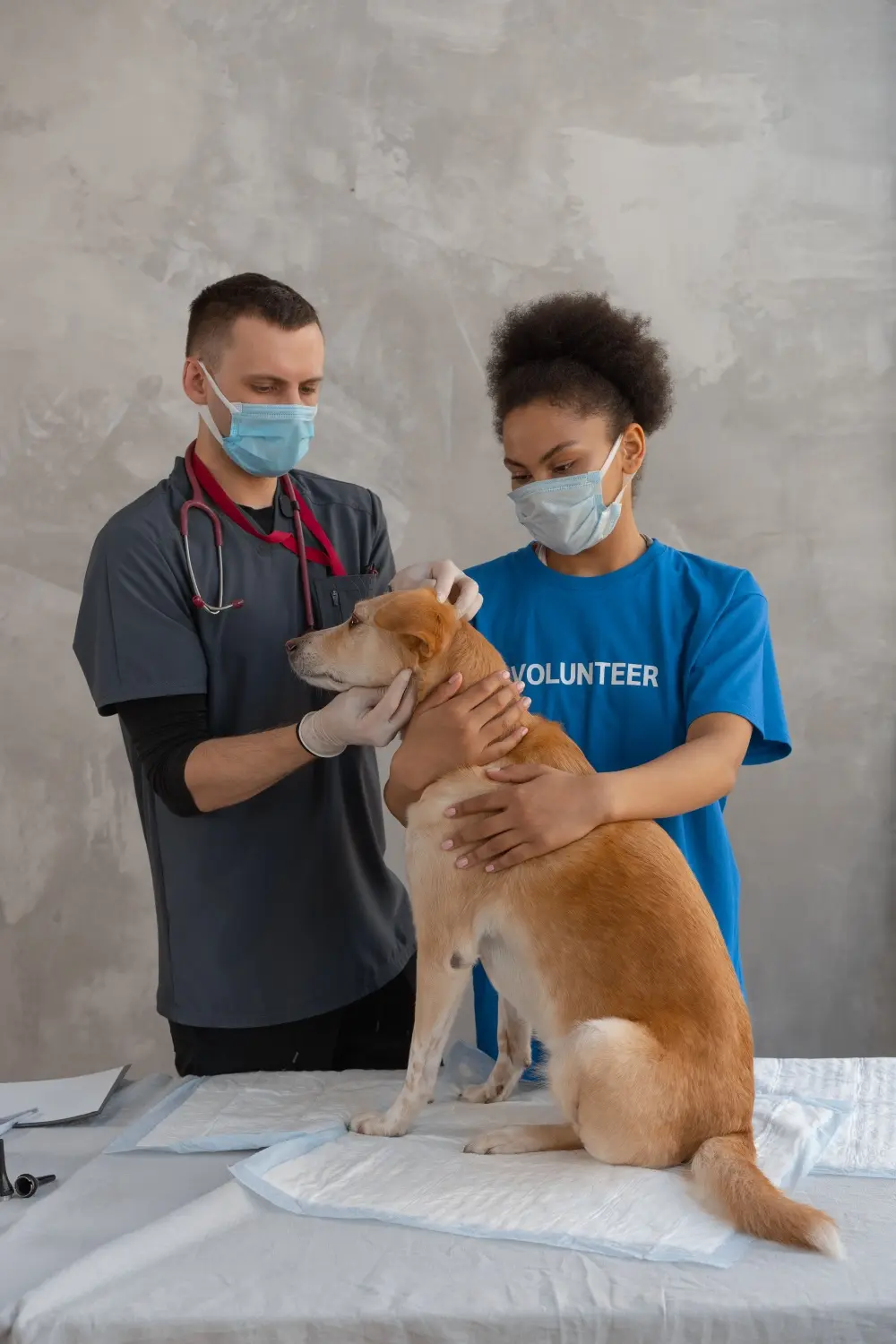
What should recovery food provide?
Ignore the pastoral packaging for a moment. A useful recovery food has to work in the dog in front of you. Digestibility, fat, protein, fiber, and nutritional balance tell you far more than words such as “premium” or “natural.”
High digestibility
Highly digestible nutrients leave less undigested material in the intestine. That may reduce excessive fermentation, gas, and the amount of material contributing to loose stool.
Appropriate fat content
Rich, fatty food may worsen nausea or diarrhea in some dogs. Dogs with pancreatitis, high blood lipids, or known fat intolerance may need a specifically fat-restricted veterinary diet.
Suitable protein
Some dogs tolerate a familiar lean protein. Others with suspected food-responsive disease may need a veterinarian-guided novel-protein or hydrolyzed-protein diet.
Controlled fiber
Fiber is not simply good or bad. Soluble and fermentable fibers may support stool quality and beneficial gut microbes, while too much poorly tolerated fiber may increase gas or stool volume.
Complete nutrition
If recovery lasts more than a brief period, the food should provide adequate amino acids, fatty acids, vitamins, minerals, and calories rather than only chicken and rice.
Medical suitability
The food must fit the whole dog. Kidney disease, diabetes, pancreatitis, food allergy, growth, pregnancy, and medication use can change what is safe or appropriate.
| Characteristic | Why it may help | Important limitation |
|---|---|---|
| Highly digestible nutrients | Reduce the digestive workload and intestinal residue | “Natural” or “premium” on a label does not prove digestibility |
| Low or moderate fat | May be easier to tolerate during nausea or diarrhea | Not every dog requires an extremely low-fat diet |
| Selected protein source | Supports repair while matching the dog’s history | Food trials require consistency and veterinary guidance |
| Appropriate fiber blend | May support stool formation and the intestinal microbiome | The ideal amount varies with small- versus large-bowel disease |
| Complete and balanced formula | Supports recovery beyond the first few days | A complete food still may not suit every medical condition |
Which gastrointestinal diet fits the situation?
The words “gastrointestinal food” cover several quite different formulas. One may restrict fat; another changes the protein or fiber. The useful question is not which package looks most clinical, but which nutritional profile matches the suspected problem.
| Situation to discuss with your veterinarian | Diet category that may be considered | Why supervision matters |
|---|---|---|
| Short-term acute vomiting or diarrhea after serious causes have been excluded | Highly digestible gastrointestinal diet | Persistent symptoms may require testing rather than repeated food changes |
| Pancreatitis or documented fat intolerance | Fat-restricted gastrointestinal diet | Fat targets should be compared on a calorie or dry-matter basis |
| Suspected adverse food reaction | Hydrolyzed-protein or carefully selected novel-protein diet | Unplanned treats and flavored products can invalidate a diet trial |
| Recurring large-bowel diarrhea or constipation tendency | Fiber-modified gastrointestinal diet | Different fiber types can have very different effects |
| Poor appetite or inability to eat enough | Energy-dense recovery food or assisted nutrition plan | Force-feeding can be unsafe; nausea, pain, and aspiration risk must be assessed |
Either can work. Wet food adds water and is easy to portion or warm slightly for aroma. Dry food is convenient and can be just as digestible. Check the formula, fat level, calorie density, and your dog’s response instead of choosing by texture alone.
Homemade bland food or a veterinary diet?
Temporary homemade bland food
A veterinarian may suggest a lean cooked protein with an easy-to-digest carbohydrate for a few days. The ingredients are familiar and inexpensive. Still, a recipe that suits a healthy adult dog may be a poor choice for one with a chicken allergy, pancreatitis, diabetes, or kidney disease.
Main limitation: common chicken-and-rice mixtures are usually deficient in calcium and other essential nutrients. They should not become a long-term diet unless formulated by a board-certified veterinary nutritionist.
Complete veterinary GI food
These formulas give the dog a predictable nutrient profile from one meal to the next. Some restrict fat. Others use selected fibers, prebiotics, or hydrolyzed protein. The differences matter more than the label design.
Main advantage: a complete diet is more suitable when nutritional support is needed beyond a very brief period, provided the formula matches the dog’s diagnosis.
Raw or undercooked meat can expose a sick dog—and people in the household—to harmful bacteria. Keep preparation simple, fully cook ingredients, remove bones and skin, avoid seasoning, and prevent cross-contamination.
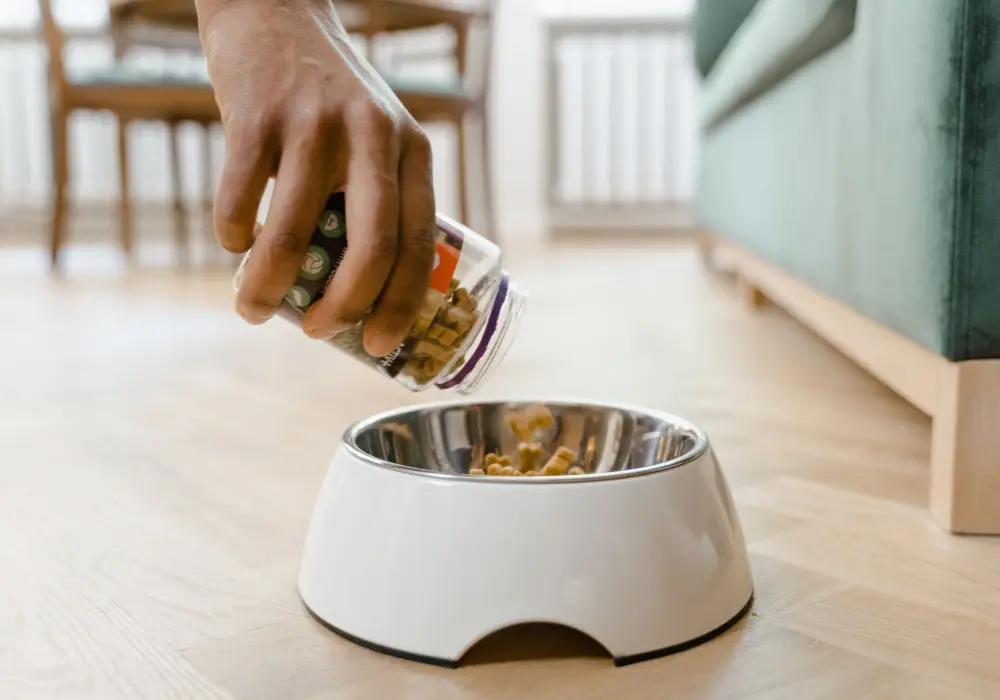
How to read the food label
Check the nutritional adequacy statement
Look for a statement showing whether the food is complete and balanced for your dog’s life stage. Products labeled only for intermittent or supplemental feeding may be useful in specific circumstances but should not automatically replace a complete diet.
Do not judge the food by the ingredient list alone
Ingredients are listed by weight before processing, so a water-rich ingredient can appear near the top. The list still cannot tell you how digestible the finished food is or whether its calorie density and fiber blend suit your dog. “Meat first” is not enough information.
Compare fat correctly
The guaranteed analysis usually lists minimums and maximums on an as-fed basis. Foods with different moisture levels cannot be compared fairly using those numbers alone. If fat restriction matters, ask the manufacturer or veterinarian for fat on a dry-matter or calorie basis.
Consider calorie density
A small volume of one food may contain far more calories than the same volume of another. Measure portions rather than assuming a cup, can, or handful is interchangeable. Your veterinarian can estimate an initial calorie target and adjust it according to body condition, illness severity, and food tolerance.
For a broader explanation, see our guide to reading dog food ingredient labels safely.
How to restart feeding
There is no honest one-size-fits-all portion. A large, otherwise healthy adult dog and a diabetic toy-breed senior do not share the same risks. Before trying the sequence below, rule out urgent problems and make sure oral feeding is appropriate.
Portion needs vary with calorie density, body size, age, body condition, disease, and the amount of weight already lost. A veterinarian can calculate a starting energy plan, while the dog’s tolerance determines how quickly that target is approached.
Food will not help if dehydration is getting worse
A dog can keep visiting the water bowl and still fall behind on fluids. This happens when vomiting or watery diarrhea removes water faster than the dog can replace it. Drinking also counts for little if the water comes straight back up.
Possible dehydration signs
- Dry or sticky gums
- Reduced energy or unusual weakness
- Sunken-looking eyes
- Reduced urination
- Poor appetite with ongoing fluid loss
- Skin that appears slower to return after gentle lifting
What not to do
- Do not force a large volume of water at once
- Do not give human sports drinks without veterinary direction
- Do not assume broth is safe; many contain onion, garlic, or excess sodium
- Do not delay care if water repeatedly triggers vomiting
Learn more from our dog dehydration symptoms checklist.
Moving back to regular food
Do not celebrate the first normal-looking stool by filling the bowl with the old food. Once vomiting has stopped and appetite and stool are improving, mix the foods gradually. If symptoms return, the slower pace also makes it easier to see when the setback began.
| Stage | Recovery food | Regular food | What to monitor |
|---|---|---|---|
| Starting transition | About 75% | About 25% | Appetite, nausea, vomiting, stool frequency |
| Middle transition | About 50% | About 50% | Stool consistency, comfort, energy |
| Late transition | About 25% | About 75% | Any return of diarrhea or abdominal discomfort |
| Regular feeding | 0% | 100% | Stable appetite and stool over the following days |
Many dogs can move through these stages over several days, but there is no required four-day timetable. Hold at the current stage or contact your veterinarian if symptoms return. Dogs with chronic gastrointestinal disease may need to remain on a therapeutic diet instead of returning to their previous food.
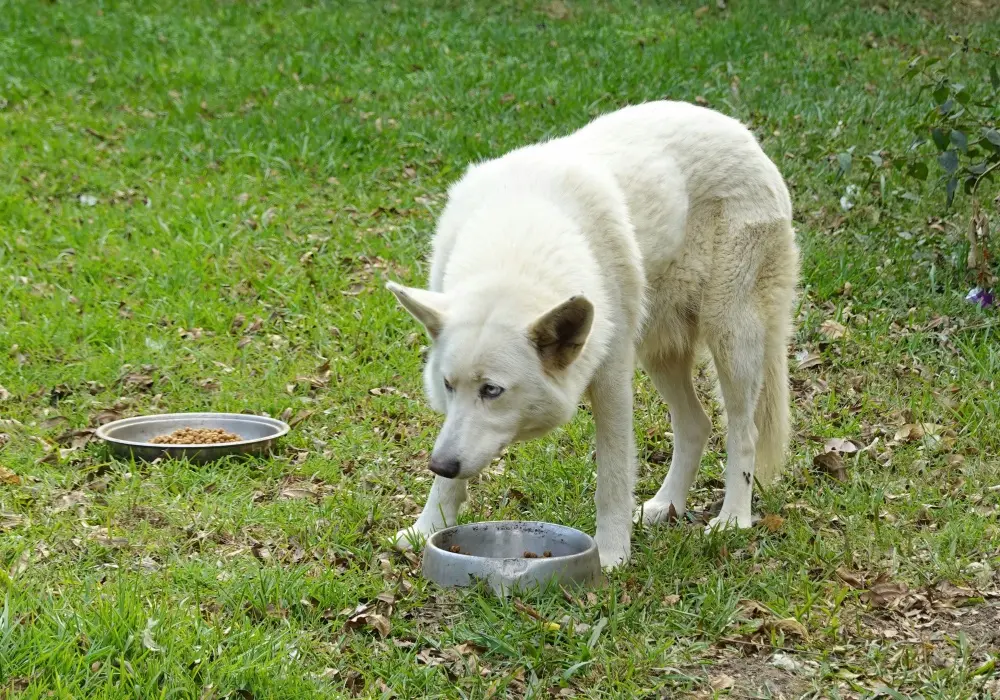
Keep a short recovery log
After a day of cleaning bowls and watching the back door, episodes blur together. Write them down. A simple log shows whether the dog is actually improving and gives the clinic better information if you need to call.
- Food offered and approximate amount eaten
- Time and number of meals
- Vomiting or retching episodes
- Stool frequency and consistency
- Water intake and ability to keep water down
- Urination frequency
- Energy and willingness to interact
- Abdominal pain, bloating, or restlessness
- Medication and supplement doses
- Body weight if your veterinarian requests it
Do not let one firmer stool outweigh everything else. A dog that is growing weaker, refusing water, or vomiting again is not recovering normally, even if the last bowel movement looked better.
What to leave out of the bowl
When to stop managing this at home
A different food cannot remove an obstruction or correct severe dehydration. Call a veterinarian promptly if you notice any of the following:
- Repeated vomiting or inability to keep water down
- Blood in vomit or significant blood in stool
- Black, tar-like stool
- Marked weakness, collapse, confusion, or pale gums
- A swollen, tense, or painful abdomen
- Repeated unproductive retching
- Suspected toxin, bone, toy, fabric, or foreign-object ingestion
- Signs of moderate or severe dehydration
- Rapid weight loss or refusal of food
- Symptoms in a puppy, toy breed, senior, pregnant dog, or dog with chronic illness
Even without an emergency sign, arrange veterinary care when symptoms are not clearly improving within roughly 48–72 hours, or sooner if your dog is worsening. Use our dog upset stomach symptoms checklist to organize your observations.
Possible underlying problems include intestinal obstruction, pancreatitis, acute hemorrhagic diarrhea syndrome, parvovirus and other infections, parasites, toxin exposure, liver or kidney disease, and Addison’s disease. Diagnosis may require an examination, blood tests, fecal testing, imaging, or other veterinary procedures.
When the same problem keeps coming back
If the chicken-and-rice pot keeps returning to the stove, it is time to look for a cause. Parasites, chronic enteropathy, pancreatic or endocrine disease, medication effects, and adverse food reactions can all produce recurring signs.
Your veterinarian may recommend fecal testing, bloodwork, imaging, or a structured diet trial. Depending on the pattern, that trial may use a hydrolyzed-protein, novel-protein, fat-restricted, or fiber-modified diet. The diet must usually be fed consistently; treats, table food, chews, supplements, and flavored medications can interfere with the result.
If pancreatitis is a concern, read our guide to pancreatitis symptoms in dogs.
Questions dog owners often ask
What is the best dog food for gastroenteritis?
There is no single best food for every dog. A highly digestible, complete gastrointestinal diet selected for the dog’s diagnosis is often the most dependable choice. Some dogs need low fat, while others need hydrolyzed protein or a different fiber profile.
Is chicken and rice good for a dog with gastroenteritis?
It may be used briefly for selected dogs when a veterinarian considers it appropriate, but it is not complete and balanced for long-term feeding. Chicken is also unsuitable for dogs with a chicken-related adverse food reaction, and skin or fatty preparation may be inappropriate for dogs with pancreatitis.
How soon can I feed my dog after vomiting?
There is no universal waiting period. Repeated or severe vomiting should be assessed before feeding. Once vomiting is controlled and feeding is considered safe, a small measured portion may be offered according to veterinary advice.
How many meals should a recovering dog eat?
Several smaller meals are often better tolerated than one or two large meals. The exact number and total amount depend on the dog, the calorie density of the food, and the severity of the illness.
Should recovery food be wet or dry?
Either can be appropriate. Wet food adds moisture and may be easier to portion, while dry therapeutic food can also be highly digestible. Nutrient profile and individual tolerance matter more than texture alone.
Can I add pumpkin, probiotics, or broth?
Do not add several remedies at once. Pumpkin changes fiber intake, probiotic products vary, and some broths contain unsafe ingredients. Ask your veterinarian whether a specific product fits your dog’s symptoms and diet.
How long should a dog remain on gastrointestinal food?
For a short acute illness, the food may be used through recovery and a gradual transition. Dogs with chronic or recurring disease may need a therapeutic diet longer. The duration should be based on diagnosis and response.
When is diarrhea an emergency?
Seek urgent care for collapse, weakness, pale gums, repeated vomiting, black stool, substantial blood, abdominal pain or swelling, suspected toxin or foreign-body ingestion, or inability to keep water down.
What to remember
Choose recovery food for the dog, not for the front of the bag. Start with a small amount of a digestible food that fits the dog’s medical history, then watch hydration, appetite, comfort, vomiting, and stool. A bland homemade meal has a narrow short-term role. Symptoms that are severe, keep returning, or fail to improve deserve a diagnosis rather than another round of dietary guesswork.
References and further reading
- Merck Veterinary Manual: Overview of Gastroenteritis in Small Animals
- Cornell University College of Veterinary Medicine: Diarrhea
- WSAVA Global Nutrition Guidelines
Related Articles
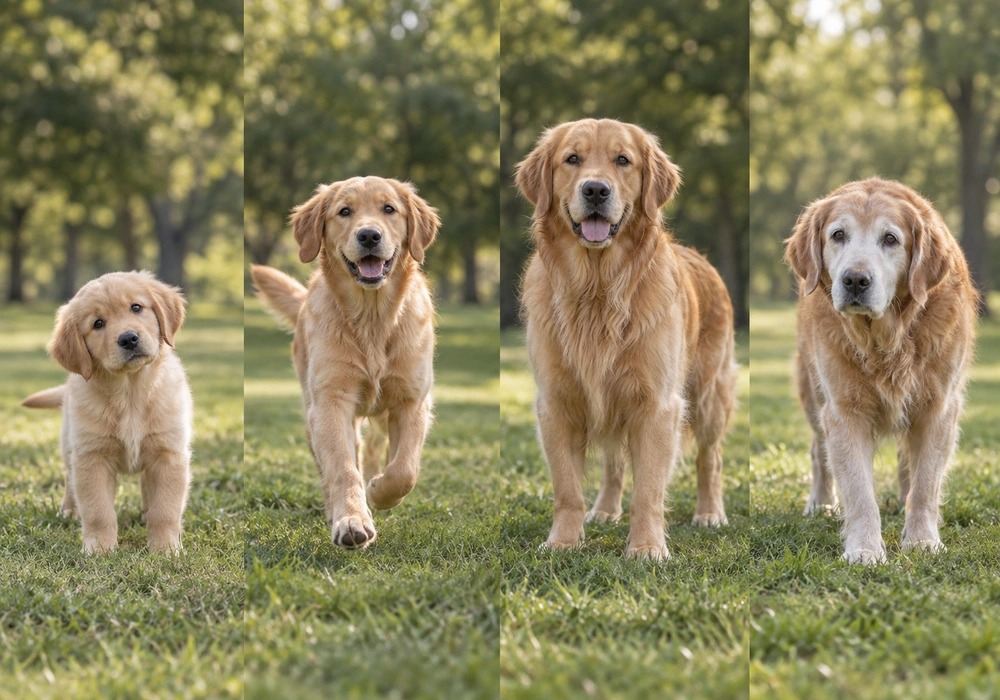
What Are Common Dog Behavior Changes with Age
Canine behavior and healthy aging Common Dog Behavior Changes with Age: What Is Normal and What Is Not? Dogs change throughout life, but age alone does not explain every new

Why Does My Dog Follow Me Everywhere?
DOG BEHAVIOR GUIDEIf you keep wondering, "Why does my dog follow me everywhere?", the answer is often quite ordinary: you are the safest and most rewarding part of your dog's
Hormonal Behavior in Dogs: Causes, Signs, and What to Do
Canine behavior and health guide Hormonal Behavior in Dogs: Causes, Signs, and What to Do Hormones can influence marking, roaming, mounting, nesting, appetite, sleep, and emotional responses. They are only