Hormonal Behavior in Dogs: Causes, Signs, and What to Do
Hormones can influence marking, roaming, mounting, nesting, appetite, sleep, and emotional responses. They are only one part of the picture, though. Pain, fear, stress, illness, and learned habits can produce many of the same changes.
Quick answer: Hormonal behavior in dogs is most likely when a change follows puberty, exposure to a dog in heat, a female dog’s reproductive cycle, or the weeks after heat. Behavior alone cannot confirm a hormone problem. A sudden personality change, especially with changes in thirst, appetite, weight, skin, sleep, or energy, should be discussed with a veterinarian.
What does “hormonal behavior” mean in dogs?
Hormones are chemical messengers involved in reproduction, metabolism, appetite, sleep, and the body’s response to stress. They can also change how strongly a dog reacts to something already happening around them.
That distinction matters. Testosterone does not automatically make a dog aggressive, and progesterone does not determine a dog’s personality. Hormones may alter arousal, motivation, frustration tolerance, or sensitivity. Health, previous experiences, the immediate environment, and reinforcement still shape what the dog does.
Sex hormones
Testosterone, estrogen, and progesterone can affect reproductive motivation, scent marking, mate seeking, and cycle-related behavior.
Prolactin
Prolactin is closely involved in milk production and the maternal behaviors sometimes seen during pseudopregnancy.
Cortisol
Cortisol is part of the stress-response system. Long-term excess caused by disease can affect hunger, sleep, and activity.
Thyroid hormones
Thyroid hormones help regulate metabolism and nervous-system function. Deficiency often causes low energy and physical changes.
Owners generally cannot identify the responsible hormone by watching behavior. A veterinarian may need to examine the dog and look for physical clues before deciding whether laboratory testing is useful.
Common signs of hormonal behavior in dogs
Possible signs include urine marking, roaming, mounting, restlessness, changes around the heat cycle, nesting, or guarding objects as though they were puppies. The same behavior can have more than one explanation.
| Behavior or change | Possible hormonal context | Other causes to consider |
|---|---|---|
| Urine marking | Puberty, reproductive scent communication, nearby dog in heat | House-training gaps, anxiety, urinary disease, incontinence |
| Mounting | Sexual motivation in an intact dog | Play, excitement, stress, conflict, learned habit |
| Roaming or escape attempts | Seeking a potential mate | Boredom, separation distress, insufficient security |
| Nesting and caring for toys | Pseudopregnancy after a heat cycle | Comfort-seeking or ordinary play |
| Irritability or touch sensitivity | Cycle-related change may contribute | Pain, fear, skin disease, neurological illness |
| Increased hunger and night pacing | Possible cortisol disorder when physical signs are also present | Medication effects, diet, stress, cognitive decline |
Look at the whole dog. Indoor urination could be marking, but it could also indicate a urinary infection, bladder problem, diabetes, or loss of bladder control. The surrounding circumstances and physical symptoms are often more useful than the behavior by itself.
Hormonal behavior in adolescent dogs
Puberty often begins between six and twelve months of age, although breed and expected adult size affect the timing. Small dogs tend to mature earlier than large and giant breeds.
An adolescent dog may suddenly seem less focused, more interested in scents, or more reactive around other dogs. Intact males may begin lifting a leg to mark, tracking female dogs, mounting more often, or pushing boundaries that previously seemed settled.
Owners sometimes describe this as a puppy forgetting all their training. The skills have not disappeared. The young dog is facing stronger distractions while also learning which behaviors get results. If pulling toward another dog repeatedly succeeds, pulling becomes more likely on the next walk.
Keep training sessions short and reward attention generously. Distance is useful. A dog who is too excited to eat or respond is usually too close to the distraction for productive training.
Hormonal behavior in intact male dogs
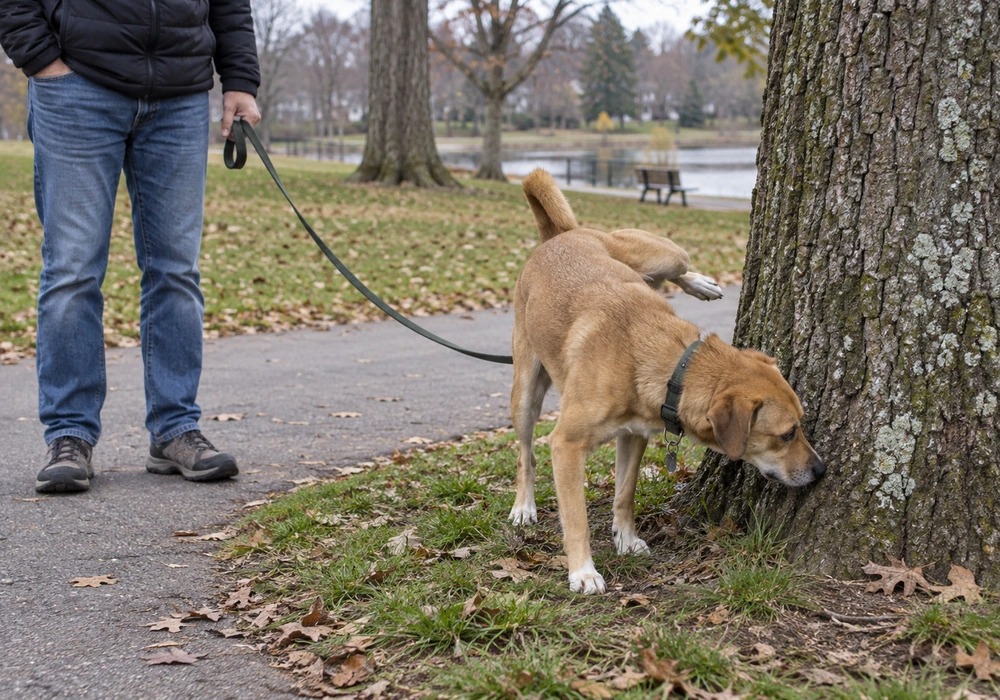
Testosterone is most clearly linked with reproductive motivation. Behaviors more likely to have a hormonal component include seeking females in heat, scent tracking, urine marking, roaming, sexually motivated mounting, and competitive posturing toward some unfamiliar intact males.
Context separates these behaviors from other possibilities. A dog who mounts only when an in-season female is nearby presents a different picture from one who mounts visitors whenever the house becomes noisy. The second dog may be overexcited or anxious, or the behavior may have become an attention-getting habit.
Aggression is less predictable. Hormones may influence arousal or competitive motivation, but they do not create one standard form of aggression. Pain, guarding, fear, frustration, poor social experiences, and neurological illness must remain on the list of possible causes.
Hormonal behavior during a female dog’s heat cycle
An intact female dog’s reproductive cycle has several phases. Owners usually notice changes during proestrus and estrus, the visible portion commonly called heat.
She may become restless, urinate more frequently, scent mark, show greater interest in going outside, or attract attention from male dogs. Some females become clingier. Others want more space and have less patience with other dogs. The pattern can differ between dogs and even between cycles in the same dog.
A female in heat needs close supervision outdoors. Leash walks and physical separation from intact males are safer than relying on recall or a familiar fence. A determined dog may climb, dig, or push through a weak point that has never been a problem before.
For a closer look at these cycle-related changes, read our guide to behavior changes when dogs are in season.
Pseudopregnancy and maternal behavior
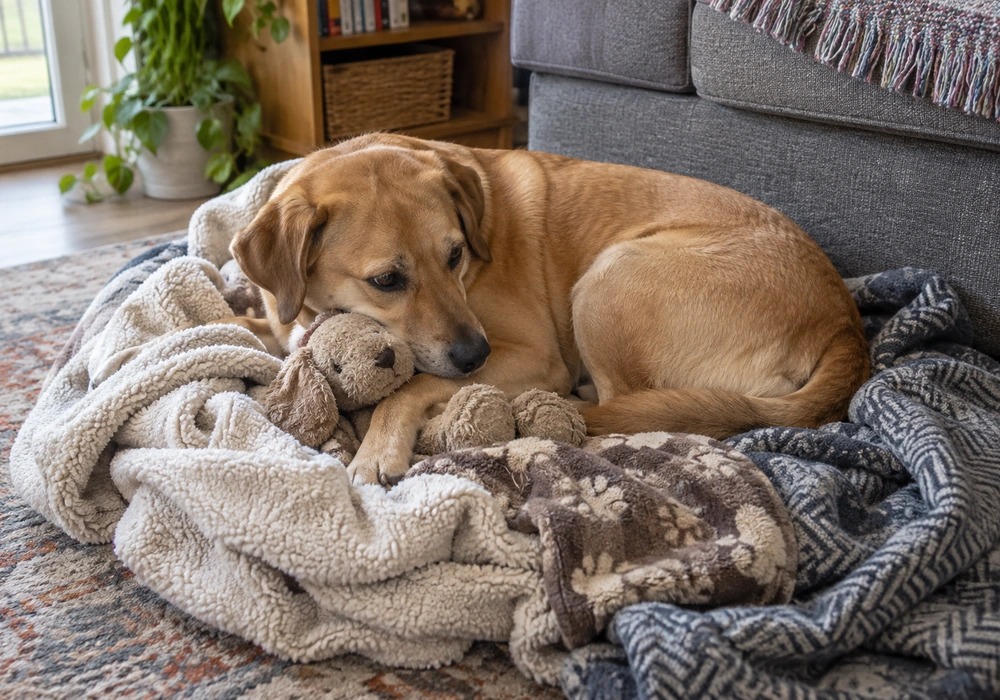
Pseudopregnancy, also called false pregnancy, can occur after an unspayed female’s heat cycle even when she has not mated. The condition is associated with the normal decline in progesterone and the effect of prolactin after diestrus.
Visible signs often appear about six to eight weeks after heat. A dog may gather blankets, build a nest, carry and groom toys, guard a resting area, eat less, or become quieter than usual. Mammary enlargement and milk production can occur too.
Do not squeeze or milk enlarged mammary glands. Stimulation may encourage continued milk production. Contact a veterinarian if the glands are hot, painful, firm, or discolored, or if the dog seems ill.
Most mild cases settle without treatment. If the dog repeatedly licks her mammary area, ask the veterinarian whether a recovery suit or other protective garment is suitable.
Do not reach for a toy that an agitated dog is guarding. Give her space. If removal is recommended, wait until she is elsewhere and collect the object quietly. Severe guarding, marked agitation, persistent symptoms, or signs of mastitis need professional care.
Spaying during the hormonally active part of the cycle may trigger or prolong pseudopregnancy in some dogs. Discuss timing with the veterinarian, particularly if the dog is already nesting, producing milk, or showing marked behavioral changes.
Does neutering stop hormonal behavior?
Neutering may reduce behavior closely tied to finding a mate. Roaming, sexual mounting, and some urine marking can improve after castration. The result is neither immediate nor guaranteed.
A behavior may begin with reproductive motivation and later continue as a habit. A dog who has spent years marking inside unfamiliar buildings may keep doing it after hormone levels fall because the behavior has been rehearsed so often.
Neutering is not a general treatment for aggression. Research into fear, anxiety, and aggressive behavior after gonadectomy has produced mixed results. A dog who bites because handling hurts will not improve until the pain is treated. A dog who lunges because strangers frighten him still needs a careful behavior plan.
Before using surgery as a behavior treatment: identify the triggers, rule out pain and illness, decide whether the behavior is truly reproductive, and discuss the dog’s age, sex, breed, size, health, and original temperament with the veterinarian.
When behavior could point to an endocrine disease
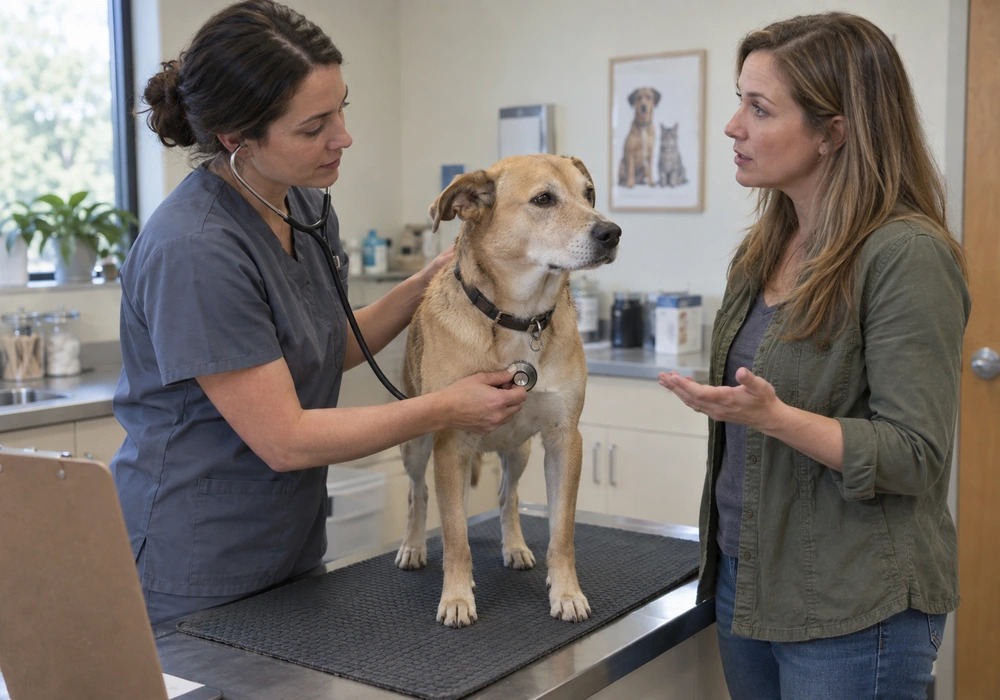
A sudden change in temperament is sometimes the first thing an owner notices. It is not enough to diagnose an endocrine disorder. Most hormonal diseases create physical changes as well.
Hypothyroidism
Hypothyroidism occurs when the body does not produce enough thyroid hormone. Common signs include low energy, unexplained weight gain, reduced interest in exercise, cold intolerance, a dry or thinning coat, and recurring skin or ear problems.
Owners may also notice that the dog seems dull, less engaged, or irritable. Claims that hypothyroidism routinely causes sudden aggression need caution. Aggression has many possible causes, and one low total T4 result does not prove that thyroid disease caused the behavior.
Other illnesses and several medications can lower measured thyroid values. When the history and examination support thyroid disease, the veterinarian may order a fuller thyroid assessment rather than relying on a single screening result.
Cushing’s syndrome
Cushing’s syndrome, or hyperadrenocorticism, exposes the body to excessive cortisol over time. Affected dogs commonly drink and urinate more, become unusually hungry, pant frequently, lose muscle, or develop a pot-bellied appearance and skin or coat changes.
Constant hunger may make food-related behavior more intense. A dog who starts stealing food or guarding the bowl may not have developed a purely behavioral problem. Increased appetite may be part of an illness.
Cushing’s disease cannot be confirmed from appearance or behavior. Veterinary testing is required, and the appropriate test depends on the clinical findings and initial laboratory results.
Reproductive disorders
Ovarian remnants, ovarian cysts, testicular tumors, and other reproductive conditions can cause persistent or unexpected signs. Arrange an examination if a spayed female appears to come into heat, heat signs last much longer than expected, a male has an undescended testicle, or other dogs suddenly show unusual sexual interest in the dog.
Hormones, stress, and cortisol
People often describe an anxious dog as having high cortisol. The relationship is more complicated.
Cortisol helps the body respond to stress. A temporary rise is normal during frightening, exciting, or physically demanding events. Chronic stress can affect sleep, appetite, digestion, and the ability to settle, but a stressed dog does not automatically have an adrenal disease.
Repeated exposure to overwhelming situations can keep a dog in a pattern of high arousal. Owners may notice pacing, panting, scanning the environment, barking at small noises, or taking a long time to recover after a trigger. Reduce avoidable triggers and work below the dog’s reaction threshold. Punishment usually adds more stress to an already difficult situation.
How to tell whether a behavior is hormonal
There is no dependable home test, but a short record can reveal useful patterns. Do not rely on memory alone, especially when episodes are infrequent.
Record the event. Note the date, time, location, people or animals nearby, and what happened immediately beforehand.
Describe the response. Record how long it lasted and whether the dog could eat, respond to a familiar cue, or move away.
Track the physical context. Include heat-cycle dates and changes in thirst, urination, appetite, weight, sleep, coat, or activity.
Check medications and supplements. Write down anything newly started, stopped, or adjusted.
Use video only when safe. A natural recording can help the veterinarian, but never provoke the dog to reproduce a dangerous behavior.
A pattern linked closely to heat, nearby in-season dogs, or the weeks following estrus supports a possible reproductive-hormone connection. Behavior that occurs when the dog is touched, climbs stairs, or rises from rest may point toward pain. Excessive thirst, weight change, or skin problems shift attention toward medical causes.
What owners can do at home
Start by preventing repeated practice of the behavior. For marking, supervise indoors, provide frequent outdoor breaks, and clean previous spots with an enzymatic cleaner. A belly band may protect the home temporarily, but it does not address the cause and should never remain wet against the skin.
For mounting, interrupt early and calmly. Call the dog away, offer a simple alternative activity, and provide a quiet break if excitement continues to rise. Shouting or physically wrestling the dog away can add more arousal.
For roaming, inspect gates and fences and use a leash. Do not assume a normally reliable recall will overcome the scent of a receptive female.
For nesting or toy guarding during pseudopregnancy, avoid reaching into the dog’s protected space. Keep children and other pets away. If there is a risk of a bite, involve a veterinarian or qualified behavior professional.
Predictable sleep, walks, meals, and quiet time can make day-to-day management easier. A dog coping with reproductive or physical changes may have less tolerance for noisy gatherings, rough play, or repeated handling.
When to call the veterinarian
Arrange an examination when a behavior change is sudden, severe, or unlike the dog’s usual personality. Call sooner when behavior changes appear alongside physical symptoms.
Seek prompt veterinary help for: sudden aggression or confusion, collapse, marked weakness, persistent panting at rest, excessive thirst or urination, rapid weight change, repeated vomiting, a painful or swollen abdomen, unusual vaginal discharge, painful mammary glands, stumbling, circling, or seizures.
A sudden bite from a previously tolerant dog is particularly important. Keep people and animals safe, avoid the trigger, and arrange an examination. Pain is a common contributor to unexpected defensive behavior.
What the veterinary assessment may include
The appointment usually starts with a detailed history. Reproductive status, heat-cycle timing, medication use, appetite, sleep, and the setting of each episode can help narrow the possibilities.
Depending on the findings, the veterinarian may recommend a physical, orthopedic, or neurological examination; blood and urine testing; a thyroid assessment; adrenal testing; or reproductive imaging and hormone tests.
Not every dog needs an extensive hormone panel. Testing is most helpful when it answers a specific clinical question. Once medical problems have been addressed, a veterinary behaviorist or qualified reward-based trainer can help with the learned and emotional parts of the behavior.
Frequently asked questions
What are the most common hormonal behaviors in male dogs?
Urine marking, roaming, persistent scent tracking, and sexually motivated mounting are commonly associated with testosterone in intact males. Excitement, anxiety, and learning may contribute to the same behaviors.
Can hormones make a dog aggressive?
Hormones may affect arousal or response thresholds, but they do not explain every aggressive incident. Pain, fear, guarding, frustration, neurological disease, and previous learning are common alternatives. Sudden aggression needs veterinary assessment.
Do female dogs act differently before or during heat?
Some females become restless, clingy, distracted, irritable, or more interested in leaving the home. Frequent urination and scent marking may occur as well. The degree of change varies between dogs and cycles.
How long can hormonal behavior last after a heat cycle?
Visible heat may end before all hormonal effects settle. Pseudopregnancy signs often appear about six to eight weeks later and can continue for several weeks. Prolonged, painful, or severe symptoms should be examined.
Will neutering calm my dog down?
It may reduce mate seeking, roaming, sexual mounting, and some marking. The result is less predictable for general excitement, fear, anxiety, or aggression. Those problems often require training, environmental changes, medical care, or a combination.
Why is my neutered dog still mounting?
Mounting is not always sexual. Dogs may mount during play, excitement, stress, or social conflict. It can also become a practiced habit. Look at what happens immediately before the behavior instead of assuming there is still a hormonal problem.
Can a spayed female still show hormonal behavior?
A recently spayed female may show temporary changes depending on where she was in her reproductive cycle. Repeated heat-like behavior months later warrants veterinary evaluation for ovarian remnant syndrome or another reproductive condition.
Can diet balance a dog’s hormones?
A complete and balanced diet supports general health, but ordinary food changes do not treat hypothyroidism, Cushing’s syndrome, reproductive tumors, or pseudopregnancy. Ask the veterinarian to review any supplement marketed for hormone balance before giving it to your dog.
The bottom line
Hormonal behavior in dogs is most plausible when the timing fits puberty, exposure to a dog in heat, the female reproductive cycle, or the weeks after estrus. Even then, hormones are only part of the assessment.
Record when the behavior happens and watch for physical changes. If the change is sudden, severe, or accompanied by problems involving thirst, weight, skin, sleep, appetite, reproduction, or coordination, start with a veterinarian. Behavior work is more effective once discomfort and disease have been addressed.
Related Articles
7 Fun Games for Dog Mental Stimulation
Mental stimulation for dogs is play and problem-solving that works the brain instead of just the legs: scent games, puzzle toys, hidden treats, new tricks. A physically tired dog can
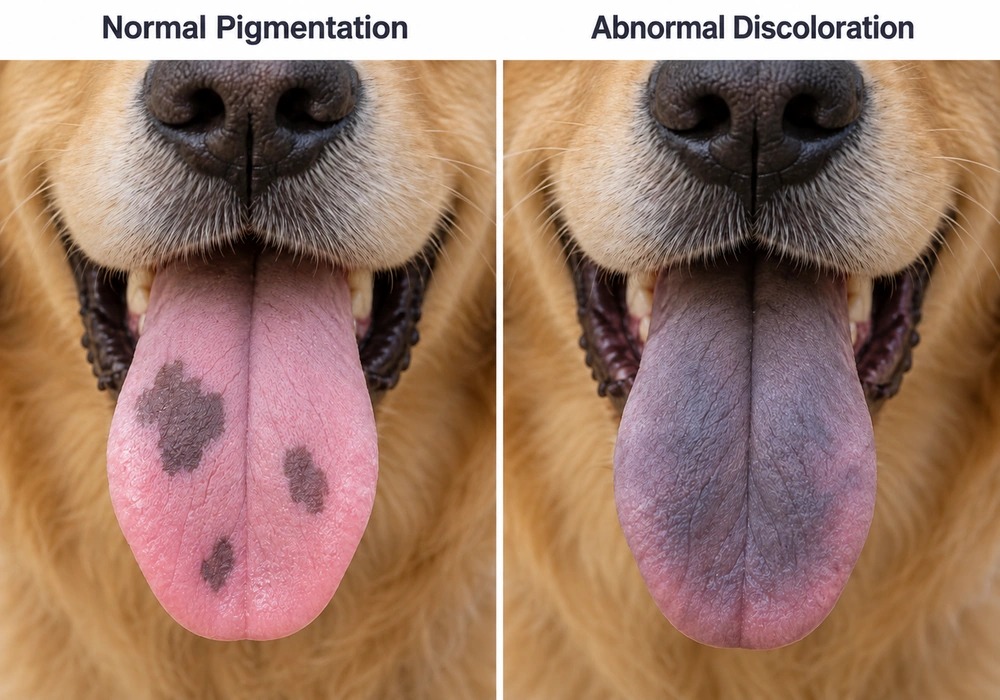
Why Is My Dog’s Tongue Grey?
Canine oral health and emergency triage Why Is My Dog's Tongue Grey? A grey tongue in dogs does not always mean the same thing. Some dogs are born with dark
How to Identify Canine Hormone Imbalance Symptoms
Canine endocrine health How to Identify Canine Hormone Imbalance Symptoms Hormones influence a dog's metabolism, appetite, thirst, skin, coat, muscles, stress response, blood sugar, and reproductive cycle. Most endocrine disorders