Quick answer
Possible canine hormone imbalance symptoms include unexplained weight change, unusual thirst or urination, a major appetite change, symmetrical hair loss, thin or darkened skin, persistent panting, muscle weakness, a pot-bellied appearance, repeated vomiting or diarrhea, abnormal heat cycles, and a marked change in energy or behavior. These signs are not specific enough for a home diagnosis. Record the pattern and arrange a veterinary examination, because thyroid disease, Cushing’s syndrome, Addison’s disease, diabetes, medication effects, and non-endocrine illnesses can look similar.
What Does a Canine Hormone Imbalance Mean?
Canine hormone imbalance is an umbrella term for an endocrine gland producing too much or too little of a hormone, or for the body responding abnormally to it. Familiar examples include an underactive thyroid, excess cortisol in Cushing’s syndrome, deficient cortisol and sometimes aldosterone in Addison’s disease, and insufficient insulin in diabetes mellitus.
These chemical messengers work throughout the body, so endocrine illness often develops gradually and affects several systems at once. An owner may first notice that a dog sleeps more, asks to go outside at night, drains the water bowl, gains weight despite eating the same amount, or develops a thin coat that no longer grows normally after clipping.
Look for a cluster, not a single clue
Hair loss by itself may be caused by parasites, allergy, infection, friction, genetics, or grooming. Increased thirst may come from kidney disease, medication, heat, or diet. Suspicion rises when two or more persistent changes appear together, such as increased thirst plus a pot belly and panting, or weight gain plus lethargy and symmetrical coat thinning.
How to Identify Canine Hormone Imbalance Symptoms
Start with what has changed in your own dog. A pattern that lasts for weeks tells you more than one unusually sleepy afternoon. Grouping the changes by skin, thirst, appetite, weight, movement, and behavior can make the pattern easier to describe to your veterinarian.
Symmetrical hair loss without intense itching
Endocrine hair loss often affects both sides of the trunk, flanks, back of the thighs, underside, or tail in a broadly symmetrical pattern. The skin may be smooth, thin, darker than usual, or slow to heal, and clipped hair may fail to regrow.
Severe itching, raw patches, papules, or patchy self-trauma point more strongly toward allergy, parasites, or infection. An endocrine disorder can still make secondary skin and yeast infections more likely, so an itchy dog is not automatically excluded.
Drinking and urinating more than usual
If the water bowl empties faster than usual, nighttime bathroom trips increase, urine clumps become larger, or accidents begin indoors, record the change and call your veterinarian. Increased thirst and urination can occur with Cushing’s syndrome, diabetes, Addison’s disease, kidney or liver disease, infection, and several medications.
Do not restrict water to test the problem. Measure what your dog drinks over 24 hours if your veterinarian asks, and include water from canned food, broth, multiple bowls, and shared bowls in your notes.
Weight change that does not fit the food intake
Hypothyroidism often causes weight gain without a larger appetite. Cushing’s syndrome may pair intense hunger with a rounded abdomen and muscle loss. Diabetes can cause weight loss even while the dog eats more, although several non-endocrine disorders can create a similar pattern.
Appetite loss is a different signal. It can accompany Addison’s disease, diabetic ketoacidosis, gastrointestinal illness, pain, infection, or organ disease and should not be casually attributed to a hormone problem.
Weakness, muscle loss, or reduced stamina
Watch for difficulty climbing stairs, lagging on familiar walks, a thinner head or limbs, trembling, stiffness, or repeated episodes of weakness. Cortisol excess can break down muscle over time, while thyroid deficiency may reduce energy and exercise tolerance.
Waxing-and-waning weakness with vomiting, diarrhea, poor appetite, or collapse is more urgent because Addison’s disease can mimic an ordinary stomach problem before progressing to shock.
Persistent panting or heat intolerance
New panting at rest and reduced exercise tolerance can accompany excess cortisol. A dog may also seek cool surfaces or appear unusually warm and uncomfortable. Pain, anxiety, obesity, heat, medication effects, and heart or respiratory disease can look similar, so panting needs to be interpreted alongside the dog’s other symptoms.
Marked behavior or reproductive changes
Endocrine illness may contribute to mental dullness, irritability, touch sensitivity, altered sleep, or reduced engagement. Behavior alone cannot identify a hormone disorder. A reproductive examination is appropriate when a dog has persistent heat signs after spaying, an unusually long estrus cycle, vulvar discharge, feminization of a male dog, enlarged mammary tissue, or unexpected attraction from other males.
For a separate discussion of sex-driven marking, mounting, roaming, and intact-dog behavior, see our guide to hormonal behavior in dogs.
A normal-looking appetite does not rule out disease
Some endocrine disorders increase appetite, some reduce it, and others leave it unchanged. Likewise, a dog can have Addison’s disease without the classic sodium and potassium abnormalities, or a low thyroid hormone result without true hypothyroidism. The overall history and examination must guide testing.
Common Hormone Disorders and Their Typical Patterns
Use this comparison to describe your dog’s changes to a veterinarian. The patterns overlap, and several non-endocrine illnesses can produce similar signs.
| Possible condition | Pattern owners may notice | Other useful clues |
| Hypothyroidism | Low energy, weight gain without increased appetite, cold intolerance, reduced stamina | Dull coat, symmetrical trunk or tail thinning, recurrent skin or ear problems, slow hair regrowth |
| Cushing’s syndrome | Increased thirst, urination and appetite; panting; pot-bellied appearance | Thin skin, easy bruising, blackheads, muscle loss, recurrent infections, symmetrical hair loss |
| Addison’s disease | Intermittent lethargy, appetite loss, vomiting, diarrhea, trembling or weakness | Symptoms may improve and return; severe cases can progress to dehydration, low blood pressure, slow heart rate and collapse |
| Diabetes mellitus | Increased thirst and urination, increased appetite with weight loss | Weakness, recurrent infection or rapidly developing cataracts; vomiting and profound lethargy can signal ketoacidosis |
| Sex-hormone disorder | Persistent heat signs, abnormal discharge, feminization, reproductive behavior changes | Perineal or flank hair loss, darkened skin, testicular asymmetry, enlarged mammary tissue or attraction from other dogs |
Why low thyroid hormone does not always mean hypothyroidism
Total T4 is useful as a screening measurement, but illness, certain medications, breed differences, age, and normal biological variation can lower it. Sighthounds commonly have lower baseline thyroid values than general canine reference intervals. Veterinarians diagnose hypothyroidism by matching the clinical pattern with appropriately selected thyroid tests; one low value is not enough.
Why Cushing’s testing should follow clinical suspicion
Stress and non-adrenal illness can cause false-positive cortisol test results. AAHA recommends testing for Cushing’s syndrome when clinical signs or laboratory findings support suspicion; an isolated elevation in a liver enzyme does not establish the diagnosis.
When Should You Call a Veterinarian?
Emergency care now
- collapse, severe weakness, or inability to stand;
- repeated vomiting or diarrhea with marked lethargy;
- pale gums, a weak pulse, cold limbs, or breathing difficulty;
- tremors, disorientation, seizures, or suspected low blood sugar;
- vomiting with excessive thirst, weight loss, or a sweet or acetone-like breath odor;
- heavy bleeding, widespread bruising, or pinpoint red spots on the skin or gums.
Prompt appointment
- new excessive thirst, urination, hunger, or nighttime accidents;
- steady weight gain or loss without a clear diet change;
- persistent panting at rest or a developing pot belly;
- symmetrical hair loss, thin skin, or failure of clipped hair to regrow;
- recurrent weakness, vomiting, diarrhea, or appetite loss;
- abnormal heat signs, reproductive discharge, or testicular changes.
Monitor and document
- a single mild change with normal energy, appetite, and hydration;
- brief panting after heat, exercise, or excitement that resolves normally;
- minor seasonal shedding without bald areas, skin disease, or systemic symptoms;
- an isolated unusual behavior that does not recur.
Do not wait for every textbook symptom
An Addisonian crisis or diabetic ketoacidosis can become life-threatening before an owner recognizes a hormone disorder. If a dog is collapsing, repeatedly vomiting, severely weak, confused, dehydrated, or struggling to breathe, seek emergency veterinary care rather than attempting to identify the gland involved at home.
How Veterinarians Diagnose a Canine Hormone Imbalance
There is no single general “hormone imbalance test.” Veterinarians first use the history, physical examination, and routine laboratory work to decide which endocrine pathway deserves targeted testing.
History and physical examination
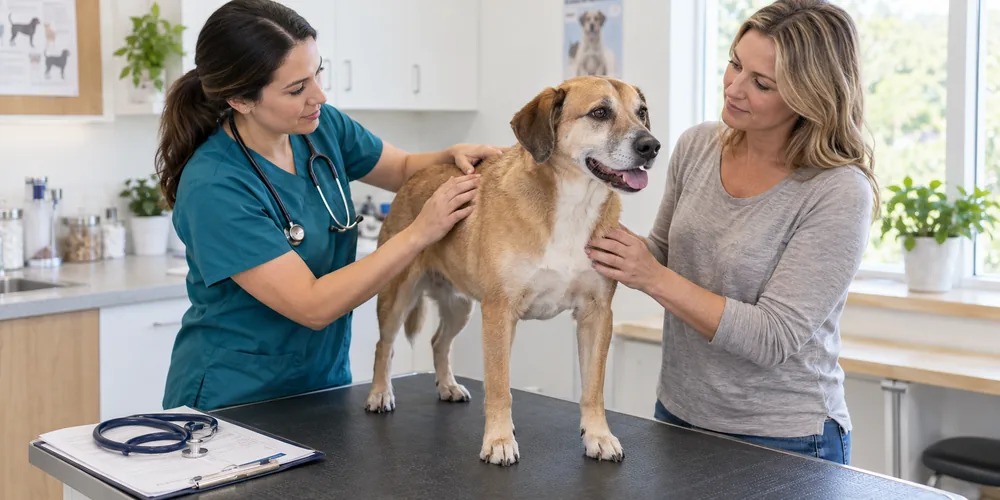
The veterinarian may ask about thirst, urine volume, appetite, weight trend, nighttime accidents, panting, skin infections, hair regrowth, reproductive history, medication exposure, and whether symptoms come and go. Steroids deserve special attention, including tablets, injections, skin creams, ear drops, and eye medications.
The minimum database
A complete blood count, serum chemistry panel, and urinalysis help identify patterns and rule out common mimics. These tests may reveal anemia, blood-glucose abnormalities, liver-enzyme changes, cholesterol elevation, sodium and potassium disturbances, dilute urine, glucose or ketones in urine, protein loss, or a urinary infection.
These findings support a direction; they rarely establish the endocrine diagnosis by themselves. A sodium-to-potassium ratio, for example, can raise suspicion for Addison’s disease but can also be altered by several other serious conditions.
Disease-specific testing
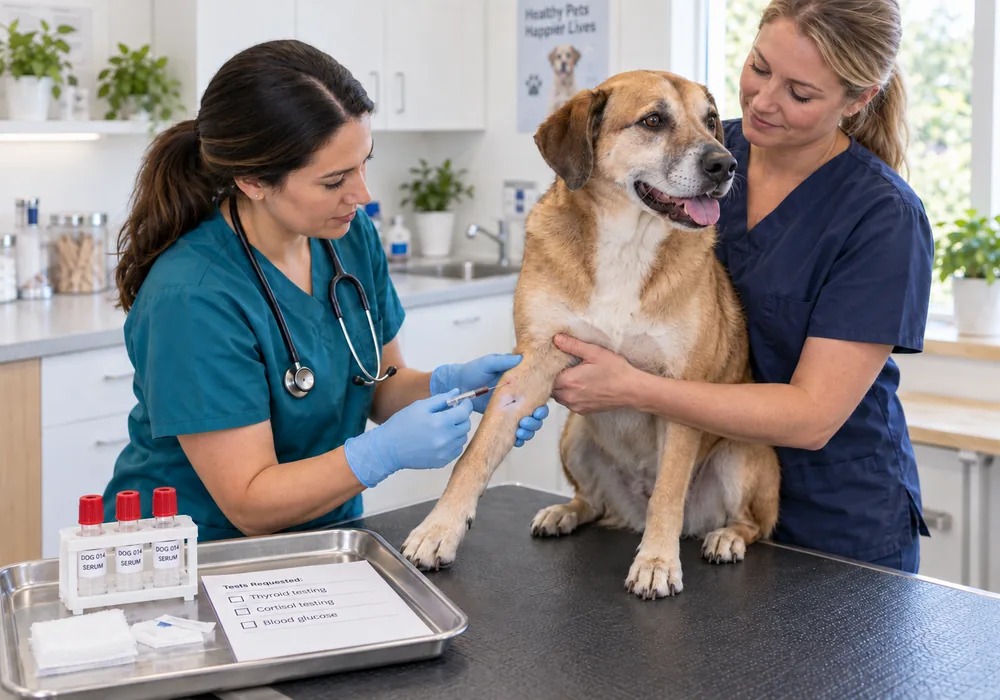
- Suspected hypothyroidismTotal T4 may be used for screening, followed by a more complete interpretation that can include free T4 by equilibrium dialysis and canine TSH. Concurrent illness and medication effects must be considered.
- Suspected Cushing’s syndromeA low-dose dexamethasone suppression test is commonly used when clinical suspicion is appropriate. No cortisol test is perfect, and acute illness can distort results.
- Suspected Addison’s diseaseAn ACTH stimulation test evaluates the adrenal response. A resting cortisol measurement may sometimes help rule the disease out, but the veterinarian decides whether confirmation is needed.
- Suspected diabetesPersistent blood glucose elevation is interpreted alongside urinalysis and often fructosamine, which reflects average glucose control over the preceding weeks.
- Suspected reproductive hormone disorderVaginal cytology, progesterone, anti-Müllerian hormone, luteinizing hormone, or other targeted tests may be selected according to sex, neuter status, cycle timing, and suspected tissue.
Imaging when location matters
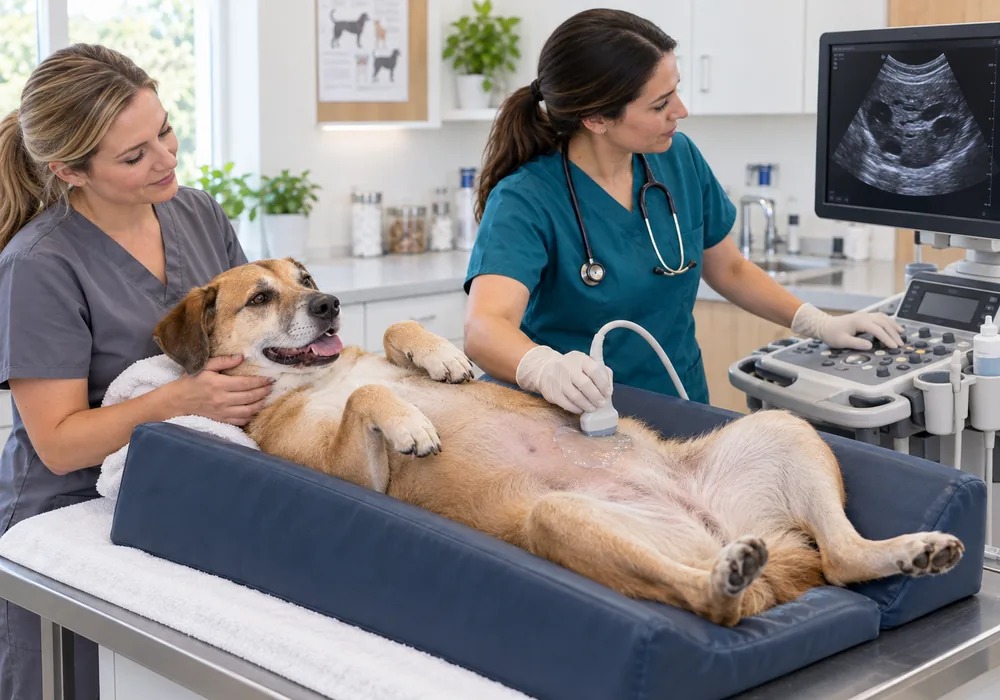
Ultrasound may be used to examine the adrenal glands, search for a retained testicle or ovarian remnant, and assess other abdominal organs. CT or MRI may be recommended when a pituitary mass or another complex structural problem is suspected. Imaging is usually chosen after laboratory evidence has narrowed the question.
Why veterinarians test in stages
Running every hormone test at once can create confusing false positives. A safer approach is to stabilize any acute illness, identify a compatible clinical pattern, complete foundational laboratory work, and then select the test most likely to answer the specific diagnostic question.
What to Record Before the Veterinary Visit
A short, accurate record often contributes more than trying to name the disease yourself. Bring the following information:
- the date each change began and whether it is steady, worsening, or episodic;
- weekly body weights when available;
- 24-hour water intake if it can be measured without restricting access;
- changes in appetite, urine volume, accidents, stool, vomiting, and sleep;
- clear photographs of hair loss, skin color, bruising, abdominal shape, or reproductive changes;
- short videos of weakness, trembling, unusual gait, panting, or behavior changes;
- all prescription medicines, supplements, ear drops, eye drops, creams, and recent steroid exposure;
- neuter status, date of surgery, heat-cycle history, and any prior endocrine diagnosis.
Do not stop prescribed steroids, insulin, thyroid medication, trilostane, or other endocrine treatment without veterinary instructions. Abrupt changes can be dangerous and may also interfere with diagnostic testing.
Frequently Asked Questions
Can a dog have a hormone imbalance with normal blood work?
Routine blood and urine tests can be normal or nonspecific early in some endocrine disorders. They are still important because they reveal competing explanations and determine whether specialized testing is appropriate. Diagnosis depends on the clinical pattern plus correctly chosen confirmatory tests.
Can hormone imbalance cause aggression in dogs?
Endocrine illness can contribute to irritability, reduced tolerance, cognitive dullness, discomfort, or behavior change, but aggression has many possible medical and behavioral causes. A sudden personality change deserves a veterinary examination, especially when accompanied by weight, skin, appetite, thirst, sleep, or activity changes.
Does symmetrical hair loss prove an endocrine disorder?
No. A symmetrical, minimally itchy pattern raises suspicion, but genetics, recurrent flank alopecia, grooming, friction, medication exposure, and other skin disorders can look similar. Skin cytology, parasite testing, culture, biopsy, or endocrine tests may be needed depending on the examination.
Can a spayed or neutered dog still have a sex-hormone problem?
Yes. Retained ovarian tissue, a retained testicle, functional gonadal tissue, adrenal disease, medication exposure, or a hormone-producing tumor can cause signs after an apparent spay or neuter. Persistent heat behavior, vulvar swelling or discharge, male attraction, feminization, or testicular asymmetry should be evaluated.
Can diet or supplements correct a canine hormone imbalance?
Diet can support body condition and treatment, but it does not replace diagnosis or correct most gland disorders on its own. Avoid iodine, thyroid, adrenal, melatonin, or “hormone balance” products unless your veterinarian has identified the condition and confirmed that the product is appropriate.
How long does it take for endocrine treatment to improve symptoms?
It depends on the disease and the symptom. Energy, thirst, urination, or appetite may change before coat and skin recover. Hair growth can take several months because follicles must complete a new growth cycle. Treatment also requires scheduled monitoring to confirm that hormone control is safe and effective.
What to Do If You Suspect a Hormone Problem
Most dogs do not show one decisive symptom. Concern grows when several changes persist together, such as increased thirst, altered appetite, weight change, skin problems, muscle weakness, or unusual behavior. A dog that suddenly asks to go outside at 2 a.m., empties the water bowl, and pants while resting gives the veterinarian a more useful pattern than simply “seems off.”
Write down what changed, when it began, and which medications your dog receives. The examination and initial laboratory results will help the veterinarian choose the right endocrine tests. Collapse, repeated vomiting, severe weakness, breathing difficulty, seizures, or profound lethargy require urgent care.
References
- American Animal Hospital Association. 2023 AAHA Selected Endocrinopathies of Dogs and Cats Guidelines.
- American Animal Hospital Association. Canine Hypercortisolism Diagnostic Testing and Monitoring.
- Cornell University College of Veterinary Medicine. Addison’s Disease.
- Merck Veterinary Manual. Endocrine Diseases in Animals.
Related Articles
7 Fun Games for Dog Mental Stimulation
Mental stimulation for dogs is play and problem-solving that works the brain instead of just the legs: scent games, puzzle toys, hidden treats, new tricks. A physically tired dog can
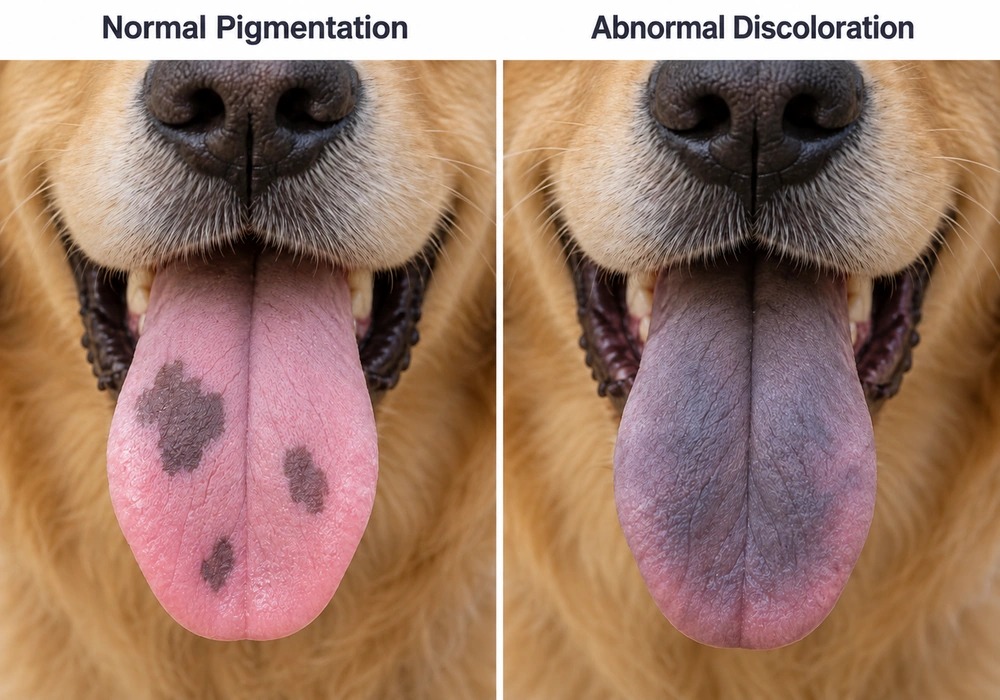
Why Is My Dog’s Tongue Grey?
Canine oral health and emergency triage Why Is My Dog's Tongue Grey? A grey tongue in dogs does not always mean the same thing. Some dogs are born with dark
How to Identify Canine Hormone Imbalance Symptoms
Canine endocrine health How to Identify Canine Hormone Imbalance Symptoms Hormones influence a dog's metabolism, appetite, thirst, skin, coat, muscles, stress response, blood sugar, and reproductive cycle. Most endocrine disorders