
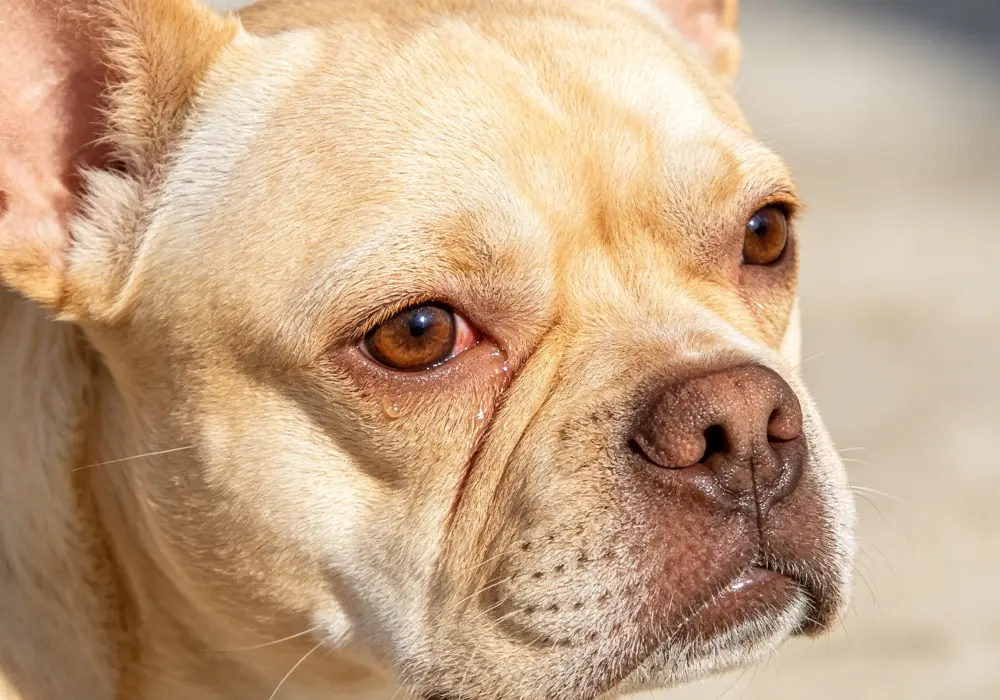
A red or watery eye can make a dog owner nervous quickly. One moment your dog seems fine, and the next you notice squinting, pawing at the face, yellow discharge, or an eye that looks swollen and uncomfortable.
This dog eye infection symptoms checklist is meant to slow the moment down. It does not diagnose the problem, and it does not replace a veterinary eye exam. Many eye problems can look similar from the outside, including infection, allergy, dry eye, a scratch on the cornea, a foreign object, eyelid irritation, or a more serious pressure problem inside the eye.
Important: if your dog is holding an eye closed, seems painful, has cloudy vision, has thick yellow or green discharge, or the eye suddenly looks worse, contact a veterinarian promptly.
Start With One Simple Rule
Eye problems can change faster than many other common dog symptoms. A mild watery eye may be irritation. A painful, cloudy, or tightly closed eye may need same-day veterinary care.
Do not put human eye drops, leftover antibiotic drops, steroid drops, essential oils, hydrogen peroxide, or home remedies into your dog’s eye unless your veterinarian has told you to use that exact product. Some eye medications can make certain conditions worse, especially if the cornea is scratched or ulcerated.
If you need a broader health baseline, you can also compare your dog’s overall behavior with these signs of a healthy dog.
Dog Eye Infection Symptoms Checklist
Work through the signs below. You do not need every symptom for the eye to be important. One painful eye is enough reason to take the situation seriously.
Dog Eye Symptom Urgency Checker
Select what you are seeing. This tool does not diagnose the eye problem. It only helps you decide how urgently to contact a veterinarian.
Score 0
Start with careful observation
If your dog is bright, comfortable, and the eye is clear with no discharge or pain, keep the area clean and monitor closely.
Quick Urgency Guide
| WHAT YOU SEE | WHAT IT MAY MEAN | WHAT TO DO |
|---|---|---|
| Mild clear tearing, no redness, dog acts normal | Mild irritation or breed-related tearing | Monitor briefly and keep the area clean |
| Redness plus watery discharge | Irritation, allergy, early infection, or inflammation | Call your vet if it persists or worsens |
| Yellow or green discharge | Possible infection or significant inflammation | Arrange a veterinary exam |
| Squinting or holding the eye closed | Pain, scratch, ulcer, foreign body, or pressure problem | Seek prompt veterinary care |
| Cloudy eye, vision change, severe swelling, or obvious pain | Potentially serious eye condition | Treat as urgent |
What Owners Can Do Safely at Home
Common Causes That Can Look Like an Eye Infection
Not every red or runny eye is a simple infection. Possible causes include bacterial infection, viral irritation, allergies, dust, smoke, shampoo, dry eye, corneal scratches, foreign material under the eyelid, eyelid problems, cherry eye, trauma, glaucoma, or inflammation inside the eye.
This is the main reason a dog eye infection symptoms checklist should guide your decision to seek help, not replace diagnosis.
If the same dog is also shaking the head or scratching the ears, check whether an ear problem is part of the pattern. This dog ear infection symptoms checklist may help you review those signs separately.
When To Call a Vet Today
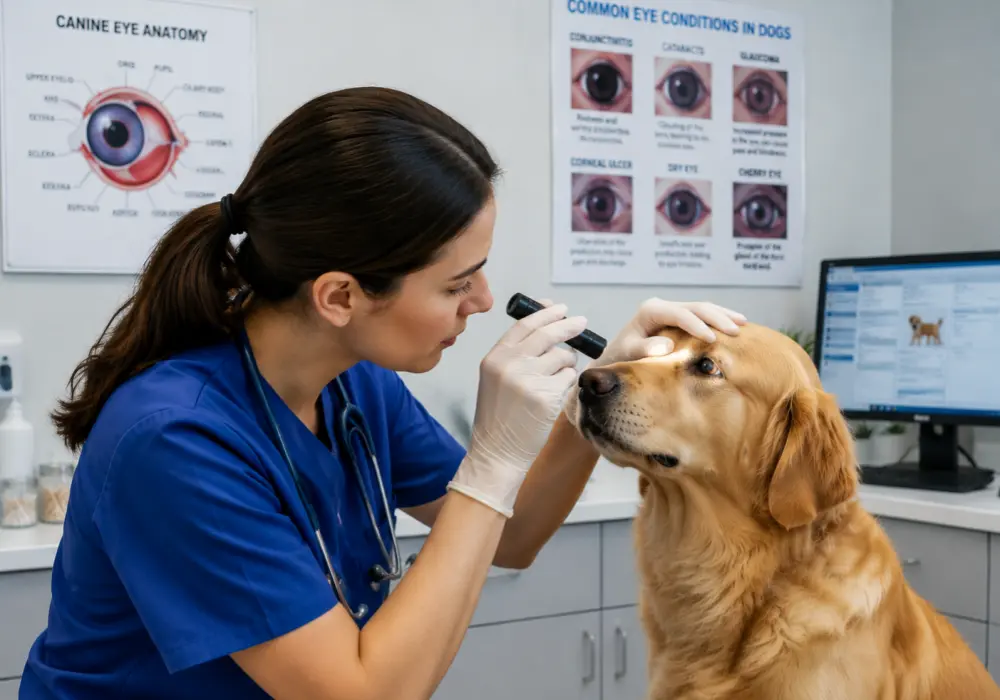
Call a veterinarian today if you notice squinting, thick yellow or green discharge, cloudiness, sudden swelling, suspected injury, blood, vision change, different pupil size, repeated pawing, or symptoms that are getting worse instead of better.
If vomiting, diarrhea, poor drinking, or low energy is also present, think about the whole dog, not just the eye. You can use this dog upset stomach symptoms checklist and this dog dehydration symptoms checklist to decide whether the wider situation is becoming more urgent.
What To Tell the Vet
Before calling, quickly note when the eye problem started, whether one eye or both eyes are affected, the color and thickness of discharge, whether your dog is squinting, whether your dog is rubbing the eye, and whether there was recent bathing, grooming, outdoor play, dust, smoke, or injury.
Also mention any vomiting, diarrhea, coughing, low appetite, low energy, or medication already used. These details help the clinic decide how quickly your dog should be seen.
Frequently Asked Questions
What To Do Next
A useful dog eye infection symptoms checklist should make you more careful, not more confident about treating the eye at home. Look for the pattern: redness, discharge, squinting, rubbing, swelling, cloudiness, and whether your dog is acting normally.
If the eye is painful, cloudy, swollen, producing thick discharge, or getting worse, call your veterinarian. Eyes are delicate, and early care can protect comfort and vision.
Related Articles
What Are Common Dog Behavior Changes with Age
Canine behavior and healthy aging Common Dog Behavior Changes with Age: What Is Normal and What Is Not? Dogs change throughout life, but age alone does not explain every new

Why Does My Dog Follow Me Everywhere?
DOG BEHAVIOR GUIDEIf you keep wondering, "Why does my dog follow me everywhere?", the answer is often quite ordinary: you are the safest and most rewarding part of your dog's
Hormonal Behavior in Dogs: Causes, Signs, and What to Do
Canine behavior and health guide Hormonal Behavior in Dogs: Causes, Signs, and What to Do Hormones can influence marking, roaming, mounting, nesting, appetite, sleep, and emotional responses. They are only