
If you are asking, “Is OFF bug spray safe for dogs?” the answer is no. Do not apply an OFF! spray made for people to your dog unless the label on that exact product says it can be used on animals. OFF! sells formulas with DEET, picaridin, PMD, and essential-oil blends. “DEET-free” does not mean “safe for dogs.”
If an accident just happened, move your dog away from the spray and stop them from licking contaminated fur. Call your veterinarian if your dog licked the product, was sprayed in the eyes, chewed the container, or breathed a concentrated mist. Repeated vomiting, breathing trouble, weakness, stumbling, tremors, confusion, or seizures need urgent care.
Start with the bottle: OFF! is a brand, not one formula. Find the active ingredient and its concentration, then keep the label nearby when you call for advice. Risk also depends on how much product reached the dog, how the contact occurred, and the dog’s size and health.
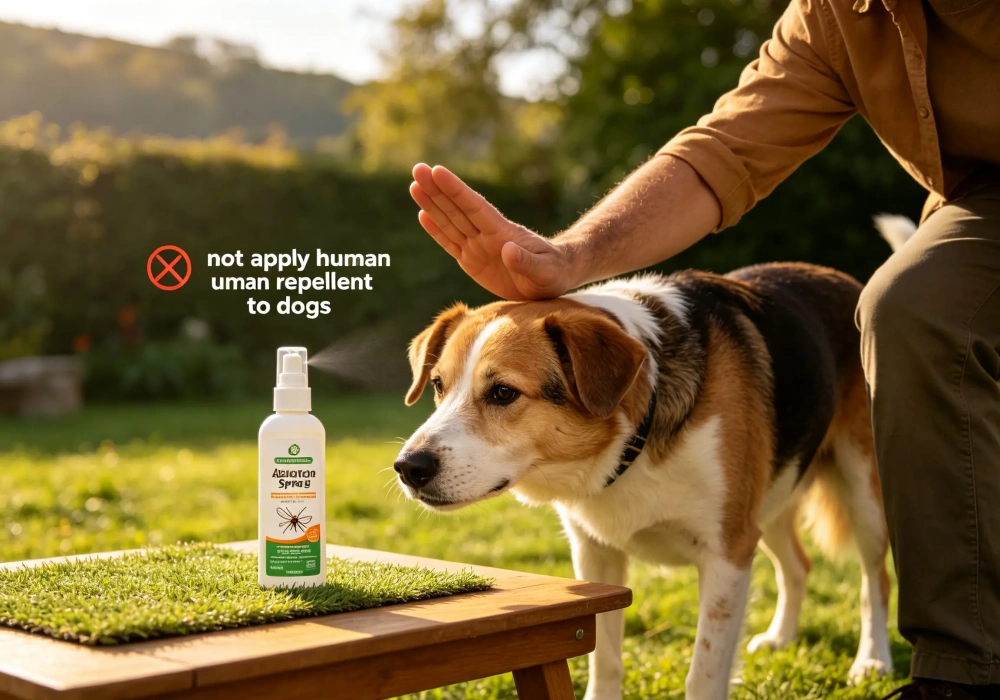
Why OFF! Bug Spray Can Be Risky for Dogs
The OFF! name appears on several personal repellents. Many contain DEET at different concentrations; others use picaridin or another active ingredient. Read the individual label rather than relying on the brand name. A label written for human skin is not an instruction sheet for treating a dog’s coat.
The U.S. Environmental Protection Agency puts it plainly: do not use an insect repellent on a pet unless the label says it is intended for animals. Human-use directions do not account for a dog’s skin, coat, body weight, or habit of licking whatever lands on the fur.
Most accidents fall into one of these categories:
- Oral exposure: licking freshly treated human skin, clothing, or their own contaminated fur
- Dermal exposure: being sprayed directly or brushing against a wet treated surface
- Eye exposure: walking into a spray cloud or being misted near the face
- Inhalation: breathing aerosol in a small or poorly ventilated area
- Container exposure: chewing a bottle, wipe packet, or pressurized can
How the contact happened often gives the first clue. Licking commonly leads to drooling or vomiting. Spray in the eye is more likely to cause tearing and squinting. With a larger exposure, those signs may overlap.
DEET and Dogs
DEET, also known as N,N-diethyl-meta-toluamide or N,N-diethyl-3-methylbenzamide, works well as a mosquito and tick repellent for people. The EPA considers registered DEET products acceptable for human use when the label is followed. Dogs are a different use case, and human DEET products are not meant to be sprayed on them.
Veterinary toxicology references advise against putting DEET on dogs. Some can pass through the skin, and a dog grooming wet fur can swallow more. Reported signs include:
- Skin irritation or redness
- Excessive drooling
- Nausea, vomiting, or diarrhea
- Restlessness or unusual agitation
- Weakness or lethargy
- Stumbling or loss of coordination
- Muscle tremors
- Disorientation
- Seizures in serious cases
A stronger product usually raises the risk, although the percentage on the bottle is only part of the story. Picture a small dog licking a broad patch of wet fur versus a large dog that briefly steps in a few drops. The first dog may receive far more product for its body weight. The formula, amount, route, timing, and the dog’s health all change the assessment.
You cannot settle that assessment with a home dose calculator. If DEET reached your dog’s mouth, eyes, skin, or lungs, call a veterinarian or animal poison-control service and have the container with you.
Are DEET-Free OFF! Products Safe for Dogs?
Not necessarily. The phrase “DEET-free” tells you nothing about whether the rest of the formula was tested for dogs.
Picaridin
Some OFF! products replace DEET with picaridin. Picaridin is registered by the EPA for use on human skin, not automatically for use on pets. The finished spray may also contain alcohol, fragrance, propellants, and other ingredients that can irritate a dog’s skin, eyes, mouth, or airway. Use it on a dog only if the label specifically allows it.
PMD and oil of lemon eucalyptus
PMD is a repellent ingredient derived from, or made to resemble, a compound found in lemon eucalyptus. It is not the same thing as rubbing eucalyptus essential oil on a dog’s coat. A plant-based description may sound reassuring, but it does not show that the finished product is safe for dogs.
Essential-oil formulas
Essential oils are concentrated chemicals, even when the label calls them natural. Their effects depend on the oil, concentration, amount, formula, and route of exposure. Homemade mixtures are hard to dose, and anything put on a dog’s coat is likely to be licked.
Rather than trying to pick the least concerning human spray, ask your veterinarian for a dog-specific product that covers the pests found where you live.
Signs of Bug Spray Exposure in Dogs
Signs may appear quickly, but there is no single timetable. Pay attention to your dog’s eyes, skin, stomach, breathing, behavior, and balance.
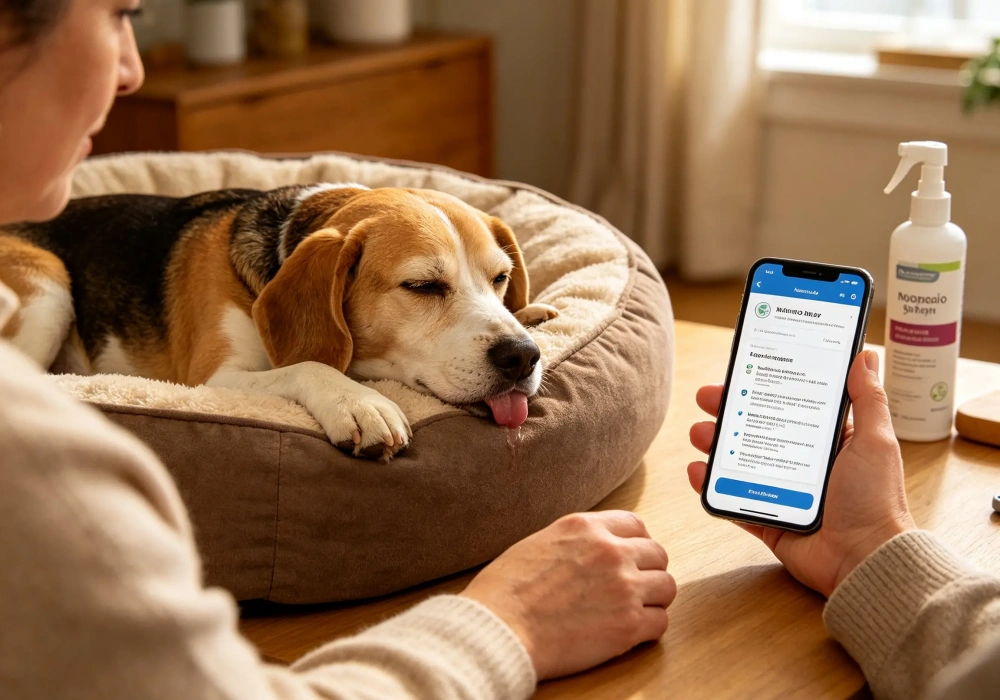
| Exposure route | Signs you may notice | Why it matters |
| Eyes | Squinting, redness, tearing, pawing at the face, keeping an eye closed | Chemical irritation can damage the eye surface |
| Skin and coat | Redness, itching, flaking, discomfort, repeated licking | Product may remain on the coat and continue to be swallowed |
| Mouth or stomach | Drooling, lip-smacking, gagging, vomiting, diarrhea, poor appetite | Common after licking treated skin, fur, or a leaking container |
| Inhalation | Coughing, wheezing, rapid or labored breathing | Aerosol droplets and solvents may irritate the airway |
| Nervous system | Agitation, weakness, stumbling, tremors, confusion, seizures | These signs can indicate a serious systemic exposure |
Call before the symptoms become dramatic. The product name, label, and a clear account of what happened are useful even when your dog still looks normal.
What to Do If Your Dog Is Exposed to OFF! Bug Spray
1. Stop the exposure
Move your dog into fresh air and away from the spray, treated object, spill, or damaged container. Prevent licking if the product is on the coat. Keep other animals away from the area as well.
2. Save the product information
Photograph the front label, active ingredients, concentration, EPA registration number, and first-aid panel. Write down:
- Product name and formulation, such as aerosol, pump, wipe, or lotion
- Approximate amount involved
- Time of exposure
- How the exposure occurred
- Your dog’s weight, age, symptoms, and medical conditions
Telling the veterinarian only that the product was “OFF!” is not enough because the formulas differ.
3. For eye exposure, rinse immediately
ASPCA Poison Control recommends flushing exposed eyes with sterile saline for at least 15 minutes. If you do not have saline, begin a gentle rinse with clean, lukewarm water while someone calls the veterinarian.
Do not use medicated, redness-relief, or homemade eye drops unless a veterinarian directs you. Persistent squinting, pain, redness, cloudiness, or pawing at the eye warrants an examination because the cornea may need to be checked.
4. For skin or coat exposure, wash the product off
Wear gloves if possible. Wash the contaminated area with lukewarm water and a mild liquid dishwashing detergent, taking care to keep soap and runoff out of the eyes, nose, and mouth. Rinse thoroughly and do not scrub irritated skin aggressively.
A bath can wait if your dog is trembling, weak, struggling to breathe, seizing, or too distressed to handle safely. Go to an emergency veterinarian.
5. Do not make your dog vomit
Do not give hydrogen peroxide, salt, oil, milk, activated charcoal, or another home remedy unless a veterinarian or animal poison specialist gives instructions for this exact exposure. ASPCA guidance specifically advises against inducing vomiting after oral DEET exposure because insect-repellent formulations may be aspirated into the lungs.
The risk of material entering the lungs is even higher when a dog is drowsy, uncoordinated, trembling, seizing, coughing, or already vomiting.
6. Call for professional guidance
Contact your veterinarian, an emergency veterinary hospital, or an animal poison-control service. In the United States, the ASPCA Animal Poison Control Center and Pet Poison Helpline provide professional poison consultations; consultation fees may apply.
When Is It an Emergency?
Seek immediate veterinary care if your dog develops:
- Repeated or forceful vomiting
- Marked drooling that does not settle
- Difficulty breathing, wheezing, or blue or pale gums
- Weakness, collapse, or inability to stand
- Stumbling or obvious loss of coordination
- Muscle tremors
- Disorientation or extreme agitation
- A seizure
- Severe eye pain or an eye that remains closed
- Exposure to a concentrated product or a chewed pressurized can
Call sooner for a puppy, toy breed, senior dog, or a dog with liver, kidney, breathing, or neurological problems. Treat an unknown amount as a reason to call too.
What Will a Veterinarian Do?
Treatment depends on the product, route, amount, symptoms, and time elapsed. There is no single home antidote for OFF! exposure.
At the clinic, the team may finish washing the skin or eyes, check the cornea, control nausea, give fluids, support breathing, or treat tremors and seizures. The choice depends on the dog in front of them. Drug names and doses from a toxicology chart are not home-treatment instructions.
Prompt care gives many dogs a good chance of recovery. Severe neurological signs, material in the lungs, a large exposure, or a long delay make the outlook less predictable.
Can I Use OFF! on Myself Around My Dog?
You can still use a human repellent on yourself. A few practical habits keep most of it away from your dog:
- Apply the spray outdoors and away from pets.
- Avoid creating a mist near bowls, bedding, toys, crates, and food.
- Follow the product label and let treated skin or clothing dry.
- Wash your hands before touching treats, medication, or your dog’s mouth.
- Do not let your dog lick freshly treated skin or clothing.
- Wash treated skin when the label recommends it and before prolonged close contact.
- Store sprays and wipes in a closed cabinet, not in a backpack or bag your dog can open.
- Dispose of used wipes where pets cannot retrieve them.
Never spray the room, your dog’s bed, a bandana, harness, collar, or coat unless the product label specifically allows that use.
Safer Ways to Protect Dogs From Mosquitoes and Ticks
Start with the pest you need to prevent. A mosquito problem calls for a different plan than fleas or ticks, and no single product covers every risk. Your veterinarian can match a labeled product to your dog’s age, weight, health, and location.
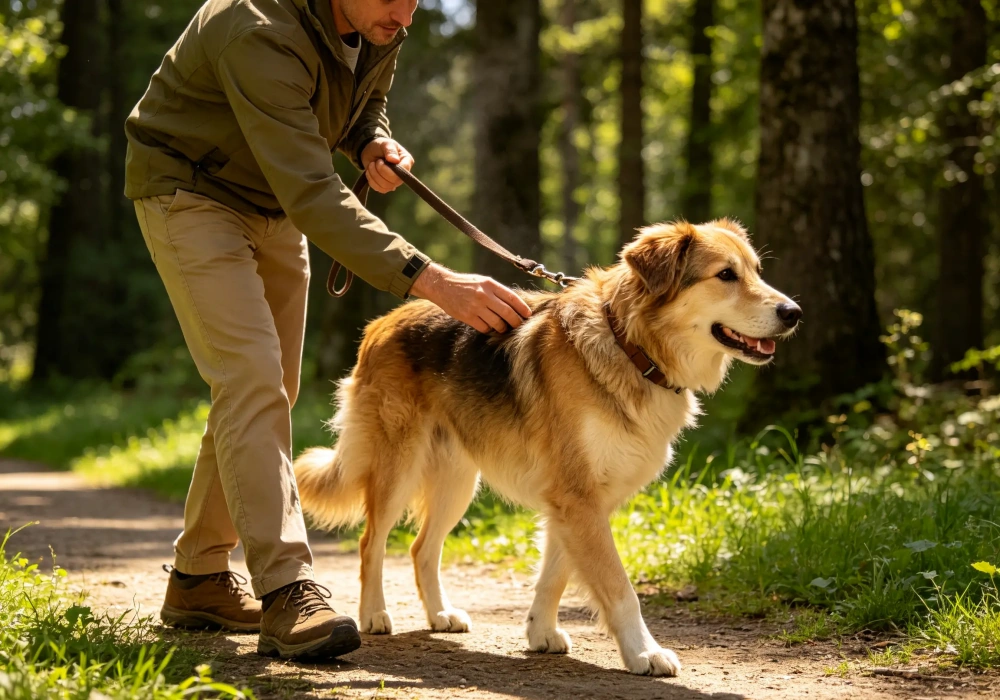
Depending on those factors, the plan might include:
- Veterinary-labeled topical repellents or preventives
- Prescription or over-the-counter oral parasite preventives
- Veterinary-approved collars
- Heartworm prevention, because mosquitoes transmit heartworm disease
- Reducing outdoor activity around dawn and dusk when mosquitoes are active
- Removing standing water from buckets, saucers, gutters, and yard containers
- Using intact window and door screens
- Checking the coat and skin after walks in tick habitat
Some canine products contain permethrin and can be safe for dogs when used exactly as labeled, but concentrated permethrin exposure can be extremely dangerous to cats. In a dog-and-cat household, ask your veterinarian how long animals must remain separated and how to prevent the cat from contacting a recently treated dog.
Do not assume that one flea or tick medication also repels mosquitoes. Parasite products cover different organisms, and their claims are stated on the label.
Frequently Asked Questions
My dog licked a small amount of OFF! from my leg. What should I do?
Prevent further licking, check the product label, and contact your veterinarian or an animal poison-control service. Do not induce vomiting. Have the product name, active ingredient, concentration, time, and your dog’s weight ready. Seek urgent care if drooling, vomiting, weakness, stumbling, tremors, breathing difficulty, or other abnormal signs develop.
Is dried OFF! spray still dangerous to dogs?
Drying reduces the chance of transferring a wet dose, but it does not turn the product into dog-safe repellent. Do not encourage licking of treated skin or clothing. Follow the human product label for washing, and keep treated items away from dogs that chew or lick fabric.
Can I spray OFF! on my dog’s collar or bandana?
Not unless the exact product label says it is approved for that animal use. A dog may inhale the vapor, absorb product through the skin, or lick and chew the fabric.
Is picaridin safer than DEET for dogs?
Picaridin has a different toxicology profile, but a human picaridin repellent is not automatically approved for dogs. Inactive ingredients and accidental ingestion still matter. Use a veterinary-labeled product instead.
What natural mosquito repellent can I put on my dog?
“Natural” is not a safety standard. Essential oils can irritate skin and may be harmful if swallowed or improperly concentrated. Ask your veterinarian for a product with a canine label and evidence for the pest you need to prevent.
Can OFF! kill a dog?
Serious DEET exposure can cause dangerous neurological or respiratory complications. The outcome depends on the formulation, concentration, amount, route, body weight, and speed of treatment. Any dog showing tremors, seizures, collapse, breathing difficulty, or severe incoordination needs emergency veterinary care.
What dog owners should remember
Do not spray a human OFF! repellent on your dog. If an accident happens, end the exposure and check the bottle. Rinse contaminated eyes, wash product from the coat when the dog can be handled safely, and call for veterinary advice. Do not induce vomiting.
For routine protection, use a product labeled for dogs and chosen for the mosquitoes, fleas, or ticks in your area. Keep the human spray for human skin.
Medical Review Note
This article provides general educational information and is not a substitute for veterinary diagnosis or treatment. Product formulations and labels can change. Always follow the current label and contact a veterinary professional after a suspected poisoning.
Related Articles

What Are Common Dog Behavior Changes with Age
Canine behavior and healthy aging Common Dog Behavior Changes with Age: What Is Normal and What Is Not? Dogs change throughout life, but age alone does not explain every new

Why Does My Dog Follow Me Everywhere?
DOG BEHAVIOR GUIDEIf you keep wondering, "Why does my dog follow me everywhere?", the answer is often quite ordinary: you are the safest and most rewarding part of your dog's
Hormonal Behavior in Dogs: Causes, Signs, and What to Do
Canine behavior and health guide Hormonal Behavior in Dogs: Causes, Signs, and What to Do Hormones can influence marking, roaming, mounting, nesting, appetite, sleep, and emotional responses. They are only