
Reactive Dog Laws: Leashes, Bites, and Liability
What the word “reactive” means legally, when prior behavior matters, and how owners can reduce the chance that one difficult moment becomes a legal and financial crisis.
Bite liability
Insurance
Incident response
A dog that barks, freezes or lunges on walks is not automatically a “dangerous dog” in the eyes of the law. But once an owner knows that a dog may chase, snap or bite, that history can affect what happens after an incident. Laws for reactive dogs depend heavily on location: state liability statutes, city leash ordinances and even an insurance policy may all apply.
Important: This article provides general U.S. educational information, not legal advice. Dog-control rules, defenses, reporting deadlines and insurance requirements differ by state and municipality. Contact your local animal-control agency, insurer or a licensed attorney for advice about a specific dog or incident.
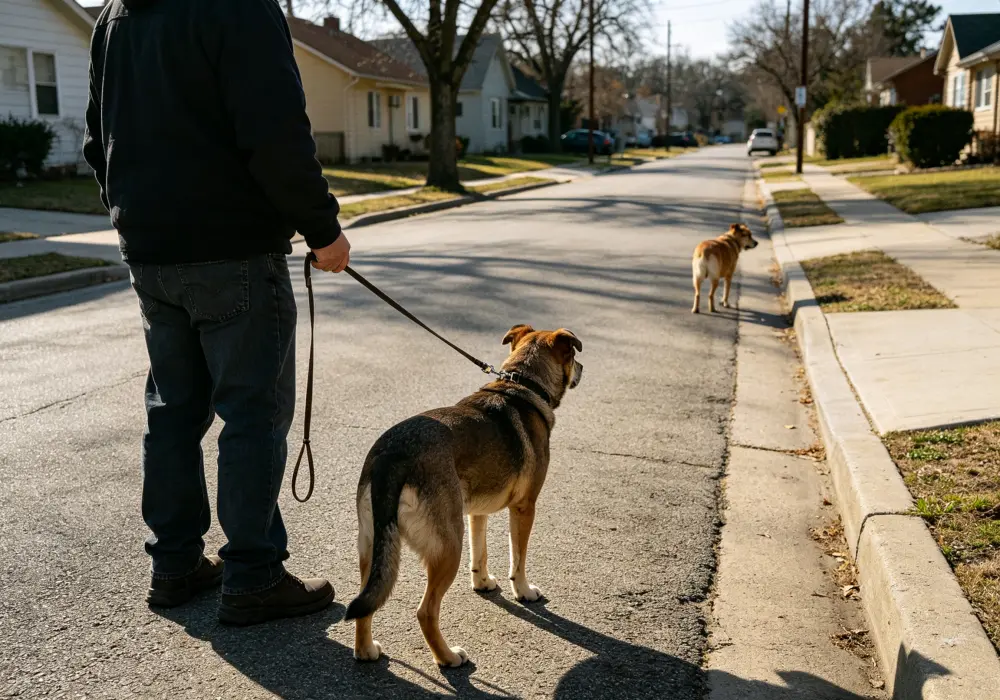
What Does “Reactive Dog” Mean in Law?
Trainers and veterinary behavior professionals use reactivity to describe an intense response to a trigger. One dog may bark at strangers; another may lunge toward dogs or panic when someone comes too close. Fear and frustration are common causes, though pain, excitement and learned behavior can also play a part. Reactivity is not a legal diagnosis.
Legal codes use different terms, including nuisance dog, potentially dangerous dog, dangerous dog and vicious dog. These labels are tied to conduct defined in the law, such as a bite, an unjustified attack, a serious threat or injury to another animal. New York, for example, permits a dangerous-dog proceeding after an attack or threatened attack. The person bringing the case must prove dangerousness at a hearing. Ohio separately defines dangerous and vicious acts and now includes certain serious injuries caused without physical contact.
Calling a dog reactive does not make the dog legally dangerous. Still, a record of lunging, snapping, escaping, complaints or earlier bites can show that the owner knew about a risk. That knowledge may matter if someone is later injured.
The Three Main Liability Models Owners May Encounter
Dog-injury cases draw on state statutes, court decisions and local ordinances. Most claims fall into one of the following three models, although the details differ from state to state.
A prior bite or warning may not be required when the elements of the state statute are met.
The case may turn on what the owner knew, or should have known, about the dog’s behavior.
Restraint, reasonable care and violations of local safety ordinances can affect the outcome.
| Liability model | What the injured person generally must show | Why reactivity matters |
| Statutory strict liability | The elements required by the statute, often including a bite and lawful presence | Prior good behavior may not prevent liability when the statute applies |
| Common-law “one-bite” or knowledge rule | The owner knew or should have known about the dog’s harmful propensity | Earlier lunging, snapping, biting or credible complaints may help establish notice |
| Negligence or mixed model | The owner failed to use reasonable care, violated a safety rule or met another statutory test | Known triggers can influence what precautions were reasonable |
Strict liability does not always require a previous incident
California Civil Code Section 3342 is a clear example. It makes an owner liable when the dog bites someone in a public place or while that person is lawfully on private property, regardless of the dog’s former viciousness or the owner’s prior knowledge. The statute also contains exceptions, including provisions for certain police or military dog work.
Ohio Revised Code Section 955.28 uses broader language. It makes an owner, keeper or harborer liable for injury, death or property loss caused by a dog, subject to listed exceptions involving certain criminal conduct or the teasing, tormenting or abuse of the dog. California and Ohio are both described as strict-liability states, yet their statutes do not work in exactly the same way.
The “one-bite rule” is not a free bite
Despite its name, the rule does not give every dog one consequence-free bite. A previous bite can establish notice, but it is not always required. Snapping, repeated menacing lunges, escape attempts, an attack on another animal or warnings from neighbors may also show that the owner knew about the same behavior that later caused an injury.
Repeated warning behavior deserves attention before anyone is hurt. Once that behavior is documented, a later incident becomes harder to describe as unforeseeable.
Leash Laws for Reactive Dogs Are Usually Local
There is no nationwide leash length for reactive dogs. A city, county, park, apartment community or state-managed trail may set its own requirements. Some places demand a physical leash, while designated areas may allow dogs under effective voice control. A dangerous-dog order can be stricter than the rule that applies to other dogs in the same location.
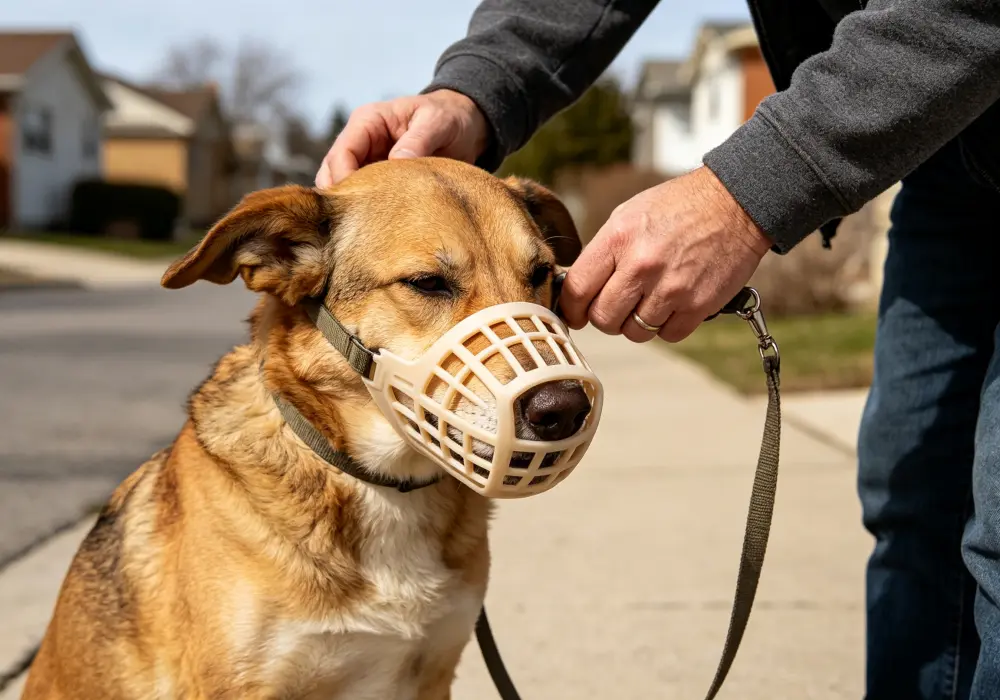
Before taking a reactive dog into public, check:
- whether a physical leash is mandatory;
- the maximum permitted leash length, if one is specified;
- whether retractable leads satisfy the local definition of restraint;
- rules for parks, trails, elevators and shared residential areas;
- whether a muzzle or warning sign is required after a formal designation; and
- licensing, rabies vaccination and identification requirements.
A leash violation can have consequences beyond a citation. In a civil case, it may support negligence per se or help show that the owner failed to use reasonable care. Whether it does so depends on the local rule and the state’s negligence law.
Can an Owner Be Liable If the Dog Does Not Bite?
Yes. An off-leash dog may charge a cyclist, causing the rider to swerve and fall. A pedestrian may step into traffic to avoid a dog at the end of a long lead. In cases like these, the claim can turn on negligence, foreseeability and causation rather than a dog-bite statute.
Non-bite liability is not automatic. A court would examine whether the dog was loose, whether the person’s reaction was reasonable, what the owner knew and whether the dog’s behavior caused the injury. Lack of physical contact does not end that inquiry.
When Can a Reactive Dog Be Declared Dangerous?
A formal designation follows conduct defined in state or municipal law, not a trainer’s choice of words. Depending on the jurisdiction, that conduct may include:
- an unjustified bite or attack on a person;
- a menacing approach or credible threat of serious injury;
- serious injury to, or the killing of, another domestic animal;
- repeated aggressive incidents after an earlier warning or designation; or
- failure to comply with an existing restraint or containment order.
Many statutes contain exceptions for circumstances such as provocation, police work or trespass. Some also address veterinary treatment or a dog acting in lawful protection of a person or property. The wording matters, so an exception that applies in one state may not exist in another.
What may happen after a designation?
An owner may receive notice and an opportunity for an administrative or court hearing. If the dog is classified as dangerous or vicious, possible conditions include secure confinement, a fixed leash, a basket muzzle in public, microchipping, warning signs, special registration, sterilization, training or liability insurance. Severe or repeated incidents can lead to impoundment, transfer restrictions, criminal penalties or, in the most serious cases, an order concerning euthanasia.
These requirements are not universal. New York Section 123 gives courts several options after a dangerous-dog finding. Ohio’s current framework sets out specific duties for owners of designated dogs, including liability coverage in certain cases.
Dog-Bite Liability and Homeowners Insurance
Insurance is easiest to sort out before there is a claim. The Insurance Information Institute and State Farm reported that U.S. insurers paid approximately $1.86 billion for 28,450 dog-related injury claims in 2025. The average claim was $65,450. The figures include fractures and other dog-related trauma, not only bite wounds.
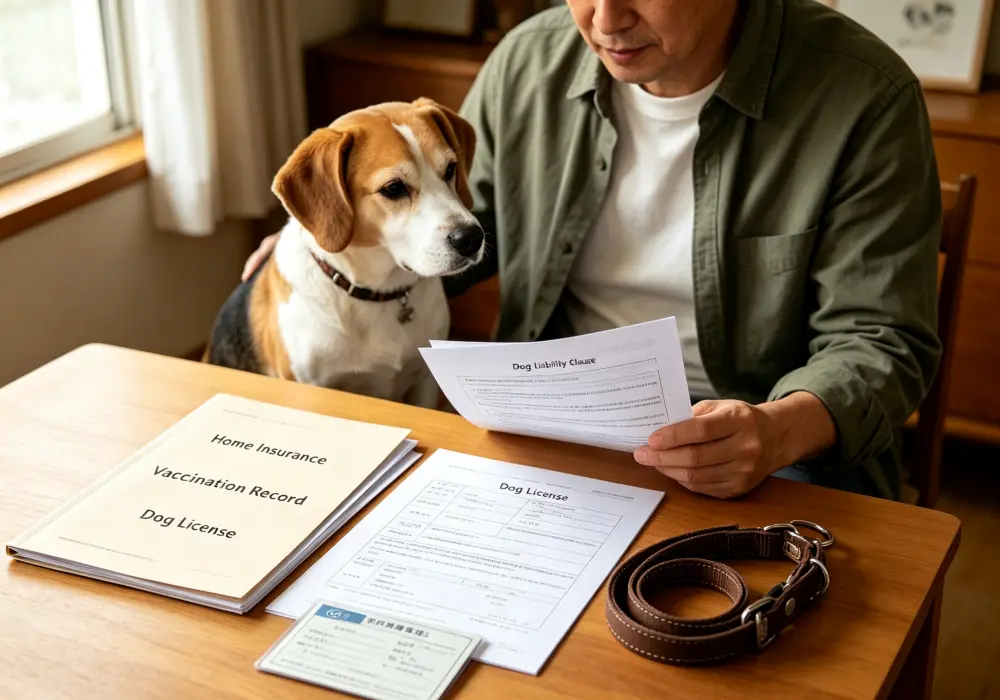
A homeowners or renters policy may include personal-liability coverage, but owners need to read the exclusions. Some insurers consider breed; others focus on the individual dog’s bite or complaint history. Several states restrict insurers from relying on breed alone. Coverage can also be narrowed by a canine exclusion, a lower liability limit or a disclosure requirement.
Ask the insurer or licensed agent these questions in writing:
- Does my personal-liability coverage include injuries caused by my dog?
- Is there a breed, bite-history or canine-liability exclusion?
- Does coverage include non-bite injuries and incidents away from home?
- What is the per-occurrence limit?
- Must I report a bite, animal-control complaint or dangerous-dog designation?
- Would an umbrella policy actually cover the dog, or repeat the underlying exclusion?
- Is standalone canine-liability insurance available if the standard policy excludes the risk?
Answer application and renewal questions truthfully. Hiding a bite history or misidentifying a dog can create serious coverage problems. Pet health insurance is different: it usually pays eligible veterinary expenses for the insured pet, not the owner’s liability for injury to another person.
What to Do After a Bite or Serious Incident
- Prevent a second incident. Secure the dog in a closed room, crate, vehicle or other safe enclosure without placing additional people at risk.
- Help the injured person obtain care. Serious wounds, facial or hand injuries, uncontrolled bleeding and possible infection need prompt medical attention. Call emergency services when appropriate.
- Exchange accurate information. Provide contact details and available rabies-vaccination information. Avoid arguments or speculation at the scene.
- Contact the proper local authority. Reporting rules and deadlines differ. Animal control, law enforcement or the local health department can explain the required process.
- Follow rabies instructions. The CDC advises that a healthy dog, cat or ferret that exposes a person should generally be confined and observed for 10 days in coordination with public-health authorities. The authority decides where and how observation occurs; do not move, vaccinate or release the dog contrary to instructions.
- Notify the insurer promptly. Follow the policy’s notice requirements and preserve claim correspondence.
- Keep factual records. Save vaccination records, photographs, witness details, notices, training records and communications. Do not alter or invent a behavior history.
- Obtain appropriate advice. A veterinarian or qualified behavior professional can address safety and welfare. A licensed attorney can explain rights, deadlines and hearing procedures.
A Practical Risk-Reduction Plan for Reactive Dog Owners
| Risk area | Action to take now | Record to keep |
| Public control | Use equipment that satisfies local law and gives the handler reliable physical control | Applicable ordinance and equipment details |
| Home containment | Repair gates and fencing; separate the dog from visitors and delivery access | Repairs, photographs and household safety plan |
| Behavior | Arrange a veterinary examination and qualified behavior assessment; avoid known trigger overload | Veterinary notes and training plan |
| Muzzle training | Condition a properly fitted basket muzzle using reward-based methods | Fit information and training progress |
| Insurance | Confirm canine liability and exclusions in writing | Policy, endorsements and agent correspondence |
| Legal compliance | Check city, county, state, housing and park rules | Licenses, vaccination certificate and current codes |
The right setup depends on the dog and the home. For a dog that reacts to people on the sidewalk, a solid fence may help more than another obedience class. In a busy household, a locked gate and a clear delivery note may prevent the mistake that matters most: someone opening a door while the dog is loose. Training improves handling, but a certificate does not replace physical management or change the governing statute.
If your dog struggles around unfamiliar people or dogs, see our guides to helping a reactive dog stay calm in public and positive reinforcement dog training. If guarding is part of the behavior pattern, read our resource-guarding training guide.
Frequently Asked Questions
Are there special laws for reactive dogs?
Usually, reactivity alone is not a standalone legal classification. General leash, licensing, nuisance and negligence rules still apply. A bite, serious threat, animal attack or repeated violation may trigger a dangerous-dog proceeding under local or state law.
Does a reactive dog have to wear a muzzle?
Not everywhere. A muzzle may be required by a dangerous-dog order, a specific local ordinance, a transit rule or a property policy. Even when it is not legally required, properly conditioned basket-muzzle use can be a sensible safety measure for some dogs.
Can my dog be declared dangerous without biting?
Possibly. Some laws cover a threatened attack, menacing approach or serious injury caused without physical contact. The definition and proof required depend on the jurisdiction.
Does a “Beware of Dog” sign protect an owner from liability?
Do not rely on a sign as a complete defense. A warning may be relevant in limited situations, but it generally does not cancel a strict-liability statute, excuse negligent containment or override duties owed to people lawfully on the property.
Does training protect me from a lawsuit?
Training records can demonstrate responsible management and may help with insurance or behavior planning, but they do not guarantee immunity. Owners must continue following applicable restraint, containment, reporting and insurance requirements.
Can a landlord be liable for a tenant’s dog?
In some jurisdictions and circumstances, a landlord or property manager may face a claim if they knew about a dangerous condition and had sufficient control to address it. The standard varies, particularly for incidents in common areas versus inside a tenant’s unit.
What Owners Should Remember
The label reactive does not decide whether an owner is liable. The law looks at the incident, the rules in that location, what the owner already knew and how the dog was managed. Start with three practical checks: look up the local restraint ordinance, confirm canine liability coverage in writing and make sure everyone in the household follows the same door, gate and walking routine. If the dog’s behavior is changing or getting harder to control, involve a veterinarian and a qualified behavior professional before an incident forces the issue.
Authoritative Sources
- California Civil Code Section 3342
- Ohio Revised Code Section 955.28
- New York Agriculture & Markets Law Section 123
- CDC: Rabies Information for Veterinarians
- Insurance Information Institute: 2025 Dog-Related Injury Claims
- National Association of Insurance Commissioners: Breed-Specific Legislation
- American Veterinary Medical Association: Dog Bite Prevention Policy
Related Articles
7 Fun Games for Dog Mental Stimulation
Mental stimulation for dogs is play and problem-solving that works the brain instead of just the legs: scent games, puzzle toys, hidden treats, new tricks. A physically tired dog can
Why Is My Dog’s Tongue Grey?
Canine oral health and emergency triage Why Is My Dog's Tongue Grey? A grey tongue in dogs does not always mean the same thing. Some dogs are born with dark

How to Identify Canine Hormone Imbalance Symptoms
Canine endocrine health How to Identify Canine Hormone Imbalance Symptoms Hormones influence a dog's metabolism, appetite, thirst, skin, coat, muscles, stress response, blood sugar, and reproductive cycle. Most endocrine disorders