
Canine nutrition guide
DHA in dog food helps build and maintain the brain, eyes, and nervous system. Puppies have the greatest nutritional demand because their brains and vision are developing quickly, but DHA may also be useful in well-formulated diets for adult and senior dogs.
The confusing part is the label. “Contains omega-3,” “made with fish,” and “includes flaxseed” do not mean the same thing. Different ingredients provide different fatty acids, and dogs cannot efficiently turn every type of omega-3 into DHA.
To judge a food properly, start with the life-stage statement, look for a direct marine source, and find out how much DHA or combined EPA and DHA the finished food actually contains.
Quick answer: DHA, short for docosahexaenoic acid, is a long-chain omega-3 fatty acid found mainly in marine ingredients. It is concentrated in the brain and retina and is especially relevant during pregnancy, nursing, and puppy growth.
In this guide
What is DHA?
DHA stands for docosahexaenoic acid. It is a long-chain polyunsaturated omega-3 fatty acid, sometimes written as 22:6 n-3. The numbers describe its molecular structure: 22 carbon atoms and six double bonds.
That structure gives DHA an unusual degree of flexibility. Once incorporated into cell membranes, it helps create the physical conditions needed for receptors, ion channels, and other signaling proteins to work normally.
DHA is found throughout the body, but particularly high concentrations occur in:
- Brain tissue and nerve-cell membranes
- The retina, especially photoreceptor cells
- Reproductive tissues
- The developing nervous system of puppies
DHA also provides raw material for specialized lipid mediators involved in the body’s resolution of inflammation. This does not make it a drug or a cure for inflammatory disease. Its effects depend on the dog’s health, the rest of the diet, and the amount consumed.
DHA, EPA, and ALA are different fats
Dog food packaging often groups all omega-3 fatty acids together. Nutritionally, that can hide an important difference.
| Fatty acid | Common sources | Main role in the diet |
| ALA | Flaxseed, chia seed, canola oil, and soybean oil | A plant-based omega-3 precursor that also contributes to skin and coat nutrition |
| EPA | Fish oil, oily fish, krill, and some marine algae | Commonly associated with inflammatory regulation and support for joints, skin, heart, and kidneys |
| DHA | Fish oil, fish meal, algal oil, and DHA-rich marine microalgae | A structural fatty acid in the brain, retina, and nervous system |
ALA is the main omega-3 found in plants. Dogs have enzymes that can convert some ALA into EPA and DHA, but the process is limited, especially at the final step that produces DHA.
Flaxseed is still a useful dog food ingredient. It provides ALA, fiber, and other nutrients. It simply should not be treated as equivalent to fish oil or DHA-rich algal oil when the goal is to provide preformed DHA.
EPA and DHA are often found together in marine ingredients. Their functions overlap, although DHA is usually discussed in connection with neural and retinal tissue, while EPA is more often associated with inflammatory pathways.
Our guide to dog foods with omega-3 fatty acids explains these sources in more detail.
Why do dogs need DHA?
DHA supports a puppy’s developing brain
A puppy’s brain develops rapidly before birth and during the first months of life. DHA becomes part of the membranes surrounding developing nerve cells, where it helps maintain normal membrane function.

Before birth, puppies receive DHA through the placenta. After birth, they receive it through their mother’s milk. Once they are weaned, their food becomes the main source.
A study of 48 Beagle puppies compared foods containing low, moderate, and higher levels of DHA-rich fish oil. Puppies fed the higher-DHA food performed better on selected tests of reversal learning, visual discrimination, and early psychomotor development.
What the study can and cannot tell us
The high-DHA food also contained more vitamin E, taurine, choline, and L-carnitine. The results support a carefully formulated developmental diet, but they do not prove that DHA alone caused every improvement.
You can read the puppy DHA study on PubMed. This is one reason choosing a complete puppy food makes more sense than trying to recreate the formula with a bottle of fish oil.
DHA is part of the retina
The retina contains a large amount of DHA, particularly in the outer portions of photoreceptor cells. These cells detect light and send visual information to the brain.
Research in developing dogs found that preformed long-chain omega-3 fatty acids were more effective than ALA alone at increasing plasma DHA and supporting retinal responses. A direct marine source produced a different result from relying only on plant omega-3. The retinal-development study is available on PubMed.
DHA is nutrition, not treatment for vision loss
DHA cannot be expected to reverse an inherited retinal disorder, cataract, injury, or untreated infection. A dog that begins bumping into furniture, hesitates in dim light, squints, or develops cloudy eyes needs a veterinary examination.
DHA helps nerve-cell membranes work normally
DHA’s flexible structure affects how tightly fats can pack together inside a cell membrane. This matters in the brain because receptors and signaling proteins need an appropriate membrane environment to function.
It is best to think of DHA as part of the construction material of nervous tissue. It is not a stimulant, sedative, or quick behavioral fix.
If a diet change affects cognitive or inflammatory function, the change usually develops gradually as fatty acids are incorporated into tissues. One meal will not make a puppy easier to train or an older dog suddenly more alert.
Senior dogs may benefit from DHA-containing diets
Older dogs can develop changes in memory, sleep, orientation, and social behavior. DHA is often included in senior cognitive-support diets along with antioxidants, B vitamins, arginine, phosphatidylserine, or other nutrients.
Studies in aged dogs have found improvements in certain learning tasks after feeding diets that contain DHA. DHA-rich marine microalgae improved DHA status and some measures of visual discrimination learning in aged Beagles, but it did not improve every measured cognitive outcome. You can review the aged-dog DHA study on PubMed.
Many senior-dog studies use a mixture of nutrients, so it is difficult to separate DHA’s effect from the rest of the formula.
Behavior changes deserve a closer look
Apparent “mental decline” is not always cognitive dysfunction. Pain, hearing loss, poor vision, kidney disease, endocrine disorders, and neurological disease can all change an older dog’s behavior.
Which dogs are most likely to need DHA?
Gestation and nursing
Pregnant and nursing dogs
A pregnant or nursing dog must support both her own body and the development of her puppies. Her food should be formulated for gestation and lactation.
Adding fish oil on your own is not necessarily an improvement. Oil adds fat and calories and changes the balance of an already complete diet.
Development
Puppies
Puppies are the life stage for which DHA has the clearest nutritional role. Look for a nutritional adequacy statement confirming that the food is complete and balanced for growth.
For a large-breed puppy, the statement should specifically confirm suitability for the growth of large-size dogs.
Maintenance
Healthy adult dogs
A healthy adult dog may receive DHA from fish meal, fish oil, or algal ingredients in a regular maintenance food. That does not mean every adult needs a separate supplement.
Check the existing DHA and EPA content before buying another product.
Healthy aging
Senior dogs
Some senior foods provide DHA as part of a broader cognitive-support formula. This may be useful, but “senior” is not a diagnosis.
Therapeutic diets may already contain concentrated EPA and DHA, making additional capsules unnecessary.
About AAFCO growth foods
AAFCO dog food nutrient profiles include a minimum combined EPA and DHA concentration for foods formulated for growth and reproduction. Owners do not need to calculate and add oil when an appropriate complete puppy food already meets the standard.
How to find DHA on a dog food label
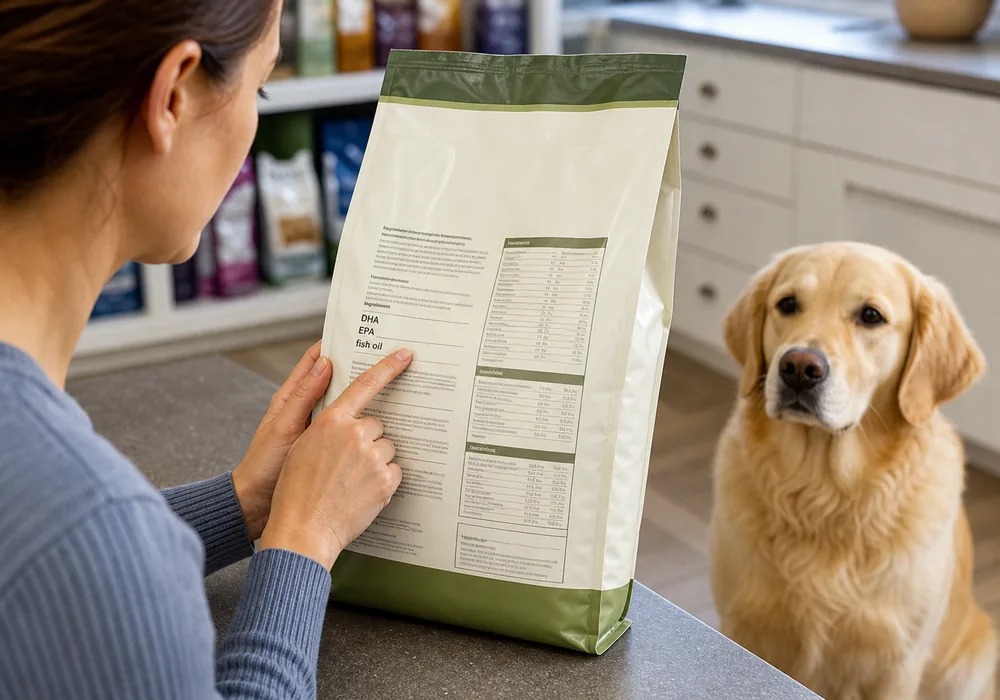
Check the nutritional adequacy statement first
The most important information may be printed in small type on the back or side of the package.
Look for a statement showing that the food is complete and balanced for the appropriate life stage. A food can contain DHA and still be unsuitable if the rest of its nutrient profile does not meet the dog’s needs.
Words such as “natural,” “premium,” or “brain support” do not replace that statement.
Look for a recognizable DHA source
- Fish oil, including salmon, sardine, anchovy, or menhaden oil
- Fish meal or krill oil
- Algal oil
- Marine microalgae such as Schizochytrium species
An ingredient’s presence does not reveal how much DHA reaches the finished food. A formula may contain a tiny amount of fish oil or use fish mainly for flavor.
Find the actual amount
Some manufacturers list DHA, EPA, or total omega-3 fatty acids in the guaranteed analysis. If the information is missing, contact the company.
Ask how much DHA the finished food provides per 100 kilocalories. You can also ask for combined EPA and DHA because many nutrition references report the two together.
- How much DHA does the finished food provide per 100 kcal?
- What is the combined EPA and DHA content?
- Is the figure guaranteed, calculated, or based on product testing?
- Does the company test the finished food for fatty-acid content?
- How are the oils protected from heat, air, and light?
- Does the company screen marine ingredients for contaminants?
Comparing values per 100 kcal is usually easier than comparing percentages. Two foods can have similar percentages but very different calorie densities and serving sizes.
Our dog food ingredient label guide can help you evaluate the rest of the package.
Is fish oil better than algal DHA?
Both can supply preformed DHA. The better choice is the one that delivers a measured amount in a properly formulated and well-tested food.
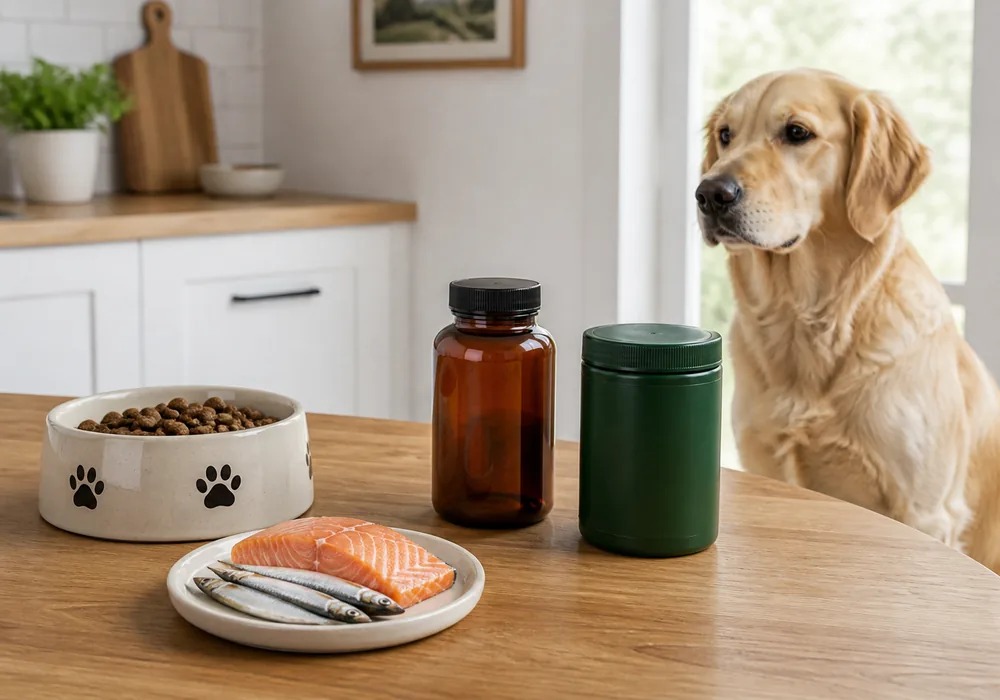
Marine source
Fish oil
Fish oil usually contains EPA and DHA. Oils made from sardines, anchovies, salmon, or menhaden are common in dog food.
Freshness matters. Reliable manufacturers use antioxidants, suitable packaging, and quality-control testing to limit oxidation.
Cultivated marine source
Algal oil
Certain marine microalgae naturally produce DHA. They can be grown under controlled conditions and provide a consistent, fish-free source.
Some algal oils contain little EPA, so check the analysis when both fatty acids are needed.
Flaxseed and other plant sources
Flaxseed and chia contain ALA rather than DHA. They may be reasonable ingredients, but they do not provide the same fatty-acid profile as fish oil or DHA-rich algae.
If a package promotes omega-3 but lists only plant sources, ask the manufacturer whether the finished food contains a measurable amount of DHA.
How much DHA should a dog get?
There is no sensible one-size-fits-all DHA dose.
A dog’s appropriate intake depends on age, body weight, daily calories, current food, health history, medication, and the reason DHA is being considered. Recommendations for a growing puppy are not interchangeable with therapeutic omega-3 amounts used under veterinary supervision.
A formulation standard is not a supplement dose
AAFCO’s growth and reproduction profile includes a minimum of 0.05% combined EPA and DHA on a dry-matter basis. This standard is used to formulate complete food. It is not an instruction for owners to add that amount at home.
Nutritional references also describe safe upper limits for combined EPA and DHA. An upper limit is a boundary, not an intake goal.
Before using a supplement, find out:
- How much food the dog actually eats each day
- How much DHA and EPA that portion already supplies
- Whether treats or other supplements contain fish oil
- Whether the dog is eating a therapeutic diet
- How much active EPA and DHA the proposed supplement contains
The amount printed on the front of a fish oil bottle often refers to total oil, not active EPA and DHA. A 1,000 mg fish oil capsule may provide only a few hundred milligrams of those two fatty acids.
Can dogs get too much DHA?
Yes. Most problems arise from adding concentrated oil without accounting for the food.
Possible effects include loose stool, vomiting, reduced appetite, or unwanted weight gain. High intakes may also affect platelet function and bleeding time. Dogs with pancreatitis or disorders of fat metabolism may tolerate added oil poorly.
Ask a veterinarian before supplementing
Use extra caution if your dog has had pancreatitis, has a bleeding disorder, takes medication that affects clotting, is preparing for surgery, has a chronic medical condition, is pregnant or nursing, or already eats a therapeutic diet.
Stop the supplement and call your veterinarian if your dog develops persistent diarrhea, vomiting, abdominal discomfort, unusual bruising, or bleeding.
A practical checklist for choosing a DHA dog food
| What to check | What you want to find |
| Life-stage statement | Complete and balanced nutrition for the dog’s actual life stage |
| Source of DHA | A named fish oil, fish meal, algal oil, or DHA-rich marine microalgae |
| Measured amount | DHA or combined EPA and DHA listed per serving or per 100 kcal |
| Quality control | Finished-product testing and protection against oxidation |
| Calorie content | A feeding amount that maintains a healthy body condition |
| Medical suitability | No conflict with current medication, disease management, or therapeutic food |
A food does not need to advertise DHA in large letters to be a good product. What matters is whether the complete formula suits the dog and whether the manufacturer can answer straightforward questions about its nutrient content.
What about DHA for arthritis, skin disease, heart disease, or kidney disease?
Marine omega-3 fatty acids have been studied in dogs with osteoarthritis, inflammatory skin disease, heart conditions, and chronic kidney disease. These studies generally evaluate combined EPA and DHA, not DHA alone.
Therapeutic diets control far more than their omega-3 content. A renal diet, for example, may adjust phosphorus, sodium, protein, calorie density, and several other nutrients. Pouring fish oil over ordinary food does not reproduce that formula.
If your dog has a diagnosed condition, ask the veterinarian whether a therapeutic diet or supplement is appropriate. The veterinarian will need to consider the current food, its active EPA and DHA content, medication, and the dog’s tolerance of additional fat.
Common label mistakes
Treating every omega-3 source the same
ALA from flaxseed is not the same as preformed DHA from marine ingredients. A label may accurately say “omega-3” while providing very little DHA.
Comparing total fish oil weight
Total oil weight is not the most useful figure. Compare the active EPA and DHA content instead.
Adding oil to fortified food
Joint and cognitive-support formulas may already supply enough marine omega-3 to make another supplement unnecessary.
Expecting DHA to fix behavior
DHA supports normal nutrition. It will not resolve fear, poor socialization, pain, sensory loss, or an untreated medical problem.
Ignoring the extra calories
Oil is calorie-dense. Regular supplementation without adjusting the rest of the diet can contribute to weight gain.
Frequently asked questions
Is DHA necessary in adult dog food?
DHA can be part of a healthy adult diet, but a healthy dog eating complete and balanced adult food does not automatically need a separate supplement. Check what the food already provides.
Is DHA especially important for puppies?
Yes. DHA is incorporated into the developing brain and retina. Controlled puppy studies have linked DHA-rich developmental diets with better results in selected learning, visual, and psychomotor tests.
Is fish meal a reliable DHA source?
Fish meal can provide DHA, but the amount varies with the fish species, processing, storage, and finished formula. Ask the manufacturer for the DHA or combined EPA and DHA content of the finished food.
Can dogs make DHA from flaxseed?
Dogs can convert some plant-based ALA into longer-chain omega-3 fats, but the conversion to DHA is inefficient. Flaxseed should not be treated as a direct replacement for fish oil or algal DHA.
Is algal DHA safe for dogs?
DHA-rich marine algae are used in commercial dog foods and have been studied in dogs. Safety depends on the amount and the quality of the complete formulation.
Should I give my dog a DHA supplement?
Check the food first. If the diet already supplies EPA and DHA, another supplement may add calories without providing a clear benefit. Ask a veterinarian before giving it to a puppy, pregnant dog, medically managed dog, or a dog on a therapeutic diet.
How should DHA-rich food be stored?
Keep dry food sealed inside its original bag and store it in a cool, dry place. Follow the label after opening liquid oils or softgel containers. Do not use oil that smells sharply rancid or has been stored longer than the manufacturer recommends.
The bottom line
DHA has its clearest nutritional role during pregnancy, nursing, and puppy growth. It is part of the brain and retina, and preformed DHA from marine ingredients is more dependable than relying on a dog to convert plant-based ALA.
For most owners, choosing an appropriate complete and balanced food is safer than calculating a supplement at home. Check the life-stage statement, identify the DHA source, and ask the manufacturer for the amount per 100 kcal.
If the dog has a medical condition or already eats a therapeutic diet, let the veterinarian review the total EPA and DHA intake before adding anything.
Related Articles
7 Fun Games for Dog Mental Stimulation
Mental stimulation for dogs is play and problem-solving that works the brain instead of just the legs: scent games, puzzle toys, hidden treats, new tricks. A physically tired dog can
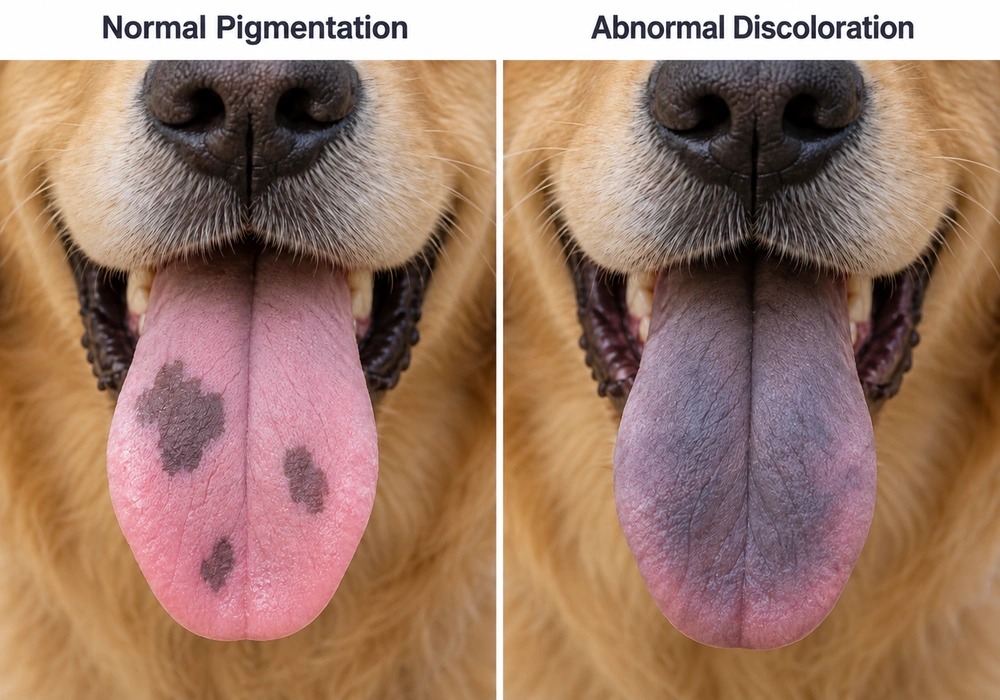
Why Is My Dog’s Tongue Grey?
Canine oral health and emergency triage Why Is My Dog's Tongue Grey? A grey tongue in dogs does not always mean the same thing. Some dogs are born with dark
How to Identify Canine Hormone Imbalance Symptoms
Canine endocrine health How to Identify Canine Hormone Imbalance Symptoms Hormones influence a dog's metabolism, appetite, thirst, skin, coat, muscles, stress response, blood sugar, and reproductive cycle. Most endocrine disorders