
What these fats do, why ALA is not the same as EPA or DHA, and what is worth checking before you add an oil to your dog’s food.
When choosing omega 3 and 6 for dogs, the largest number on the package is rarely the most useful one. You need to know which fatty acids are present, where they come from, how much the finished food contains, and how many calories an added oil will contribute. The answer also changes with the dog. Omega-6 helps maintain the skin barrier and normal cell function. The omega-3 family contains several fats with different jobs in the body.
Here, the practical question is how to compare sources and make sense of the label. If you want a separate list of dietary sources, see our guide to dog foods with omega-3 fatty acids. We also have a closer look at why DHA is used in dog food.
What Are Omega-3 and Omega-6 Fatty Acids for Dogs?
Omega-3 and omega-6 are families of polyunsaturated fatty acids. Dogs need both because they cannot make every required fatty acid themselves. The names refer to the position of a double bond in the molecule. They are chemical descriptions, not “good fat” and “bad fat” labels.
| Fatty acid | Family | Common sources | Why it matters |
|---|---|---|---|
| Linoleic acid (LA) | Omega-6 | Poultry fat and corn, soybean, sunflower or safflower oil | Supports the skin barrier, coat and normal cell function |
| Gamma-linolenic acid (GLA) | Omega-6 | Borage, evening primrose and blackcurrant seed oils | A specialized fatty acid sometimes included in skin-focused formulas |
| Alpha-linolenic acid (ALA) | Omega-3 | Flaxseed, chia, canola and camelina oils | An essential plant omega-3 and metabolic precursor |
| Eicosapentaenoic acid (EPA) | Omega-3 | Fish oil and some marine algae products | Participates in pathways that influence inflammatory signaling |
| Docosahexaenoic acid (DHA) | Omega-3 | Fish oil and marine algae | A structural component of the brain and retina |
Omega-3 vs. Omega-6 for Dogs: What Is the Difference?
Omega-6 supports the barrier
Linoleic acid helps form skin lipids that limit water loss and protect the body from environmental irritants. Omega-6 also contributes to normal immune responses and tissue repair.
Omega-3 changes the available signals
EPA and DHA can become incorporated into cell membranes. EPA competes with arachidonic acid in pathways that produce lipid mediators, while DHA is important in neural and retinal membranes.
You may have read that omega-6 is inflammatory and should be avoided. That leaves out half the story. Linoleic acid is essential, and too little of it can contribute to scaling, a dull coat and a weakened skin barrier. Removing omega-6 is not a sensible goal.
Poultry fat and vegetable oils are common in commercial dog food, so most formulas already contain plenty of linoleic acid. In practice, the unanswered question is usually which form of omega-3 the food contains and how much.
ALA vs. EPA and DHA: Why the Form Matters
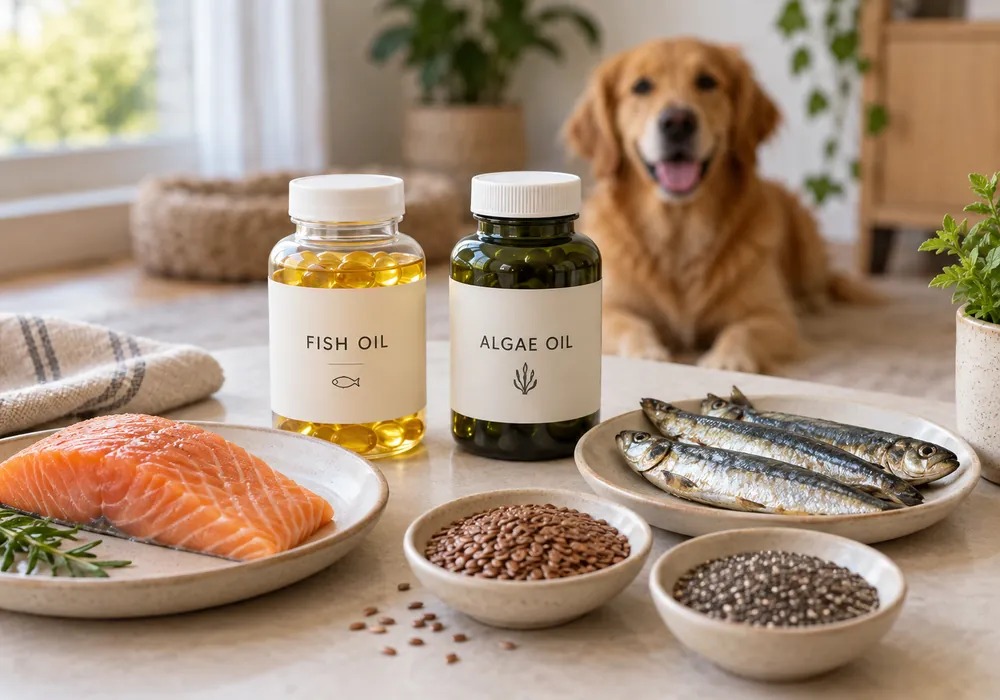
A package that says “contains omega-3” has not told you enough. Flaxseed and camelina mainly provide ALA. Fish oil usually provides EPA and DHA in forms the dog can use directly. Algae products vary: some supply DHA alone, while others contain both EPA and DHA.
Dogs convert some ALA into longer-chain fatty acids, but not efficiently. ALA and linoleic acid also compete for parts of the same metabolic pathway. A spoonful of flaxseed oil therefore cannot be treated as the nutritional equivalent of a measured amount of EPA and DHA.
If you are interested in brain or retinal development, or your veterinarian is using omega-3 as part of a treatment plan, look for the actual amount of EPA and DHA. When the label mentions only flaxseed or total omega-3, ask the manufacturer for the finished food’s EPA and DHA content per 1,000 kcal.
Which Dogs May Have Different Fatty-Acid Needs?
| Dog’s situation | Fatty acids to notice | What to check first |
|---|---|---|
| Puppy growth | DHA | A complete growth diet suitable for the puppy’s expected adult size |
| Dry coat or skin concerns | LA, EPA and DHA | Diet adequacy and possible parasites, infection or allergies |
| Osteoarthritis | EPA and DHA | Total intake from food plus supplements under veterinary direction |
| Senior dog | EPA and DHA | Calories, body and muscle condition, cognition and existing disease |
| Heart or kidney disease | EPA and DHA | Prescription diet, medications and an individualized veterinary plan |
Puppies
DHA supports brain and retinal development. Select food formulated for growth rather than attempting to balance a puppy diet by adding oil at home. Large-breed puppies have additional energy and mineral considerations. Our guide explains when to switch from puppy to adult food without rushing the growth stage.
Dogs with skin or coat concerns
Skin health depends on adequate linoleic acid as well as protein, vitamins, minerals and overall diet quality. EPA and DHA may support some dogs with inflammatory skin disease, but oil cannot diagnose or treat parasites, infection, allergy or endocrine disease.
Dogs with osteoarthritis or chronic disease
Some veterinary diets use EPA and DHA for dogs with osteoarthritis, heart disease or kidney disease. The amount and the rest of the diet differ by condition, so this is not a useful place for guesswork. Omega-3 does not replace prescribed medication, weight management or diagnostic care. Any change is also likely to take time.
Older dogs
For a senior dog, calories, muscle condition, dental comfort and existing disease may matter more than a single supplement. Our senior dog food guide covers those broader decisions.
How to Choose Dog Food with Omega-3 and Omega-6
Confirm nutritional adequacy
Choose a complete and balanced diet for the correct life stage. The ingredient list may look appealing, but it cannot show whether the finished food supplies every nutrient in a suitable amount.
Identify the source
Fish oil, fish meal and certain algae products may supply EPA and DHA. Flaxseed, chia, camelina and canola provide mainly ALA. Poultry fat and many seed oils provide linoleic acid.
Find the active amount
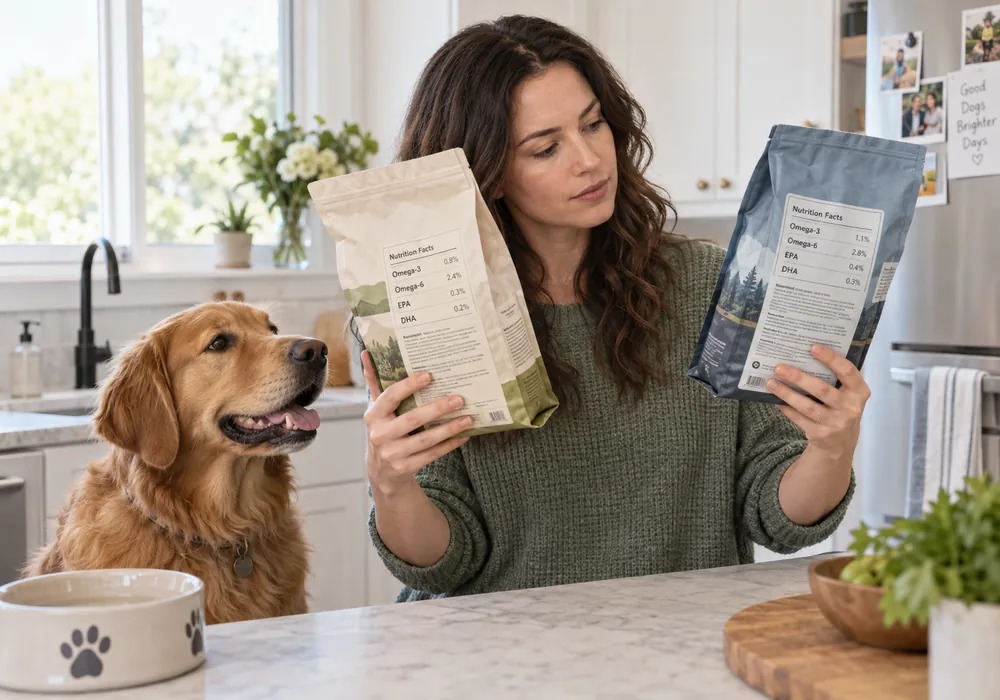
Look for EPA and DHA as percentages or milligrams. “1,000 mg fish oil” does not equal 1,000 mg EPA+DHA because the oil contains other fats.
Compare on the same basis
A percentage on a can is not directly comparable with the same percentage on a bag of kibble because their moisture and calorie levels differ. Ask for EPA and DHA per 1,000 kcal or on a dry-matter basis.
Count the calories
Oil is energy dense. Even a modest-looking daily pour can undermine weight control or displace balanced food, especially in a small dog.
Before choosing a food or supplement, check:
- Is the food complete and balanced for the correct life stage?
- Does the label identify ALA, EPA or DHA?
- Are EPA and DHA stated as an amount?
- How many calories will the added oil provide?
- Is the current veterinary diet already enriched?
- Does the manufacturer test quality and oxidation?
- Are there medications or health conditions to consider?
- Has the total daily intake been professionally reviewed?
What if the label does not disclose EPA and DHA?
Contact the manufacturer and ask for the typical EPA and DHA content per 1,000 kcal of finished food. It is also worth asking whether that number is a formulation target or comes from testing the finished product. The position of fish oil in the ingredient list does not answer either question.
What Is a Healthy Omega-6-to-Omega-3 Ratio for Dogs?
The ratio is useful context, but it can hide more than owners expect. Two foods may advertise the same ratio while providing very different amounts. The calculation may also group ALA, EPA and DHA together even though a dog does not use them in the same way.
Confirm that the food is complete and balanced, then identify the omega-3 forms and their actual amounts. Calories, life stage and medical needs come next. Treat the omega-6-to-omega-3 ratio as one piece of information, not proof that a food is better.
A regulatory limit for complete food addresses nutritional adequacy in a broad population. It is not a treatment target for every dog. A food is not poor simply because it contains omega-6, and the lowest advertised ratio does not automatically win.
How to Choose an Omega-3 Supplement for Dogs
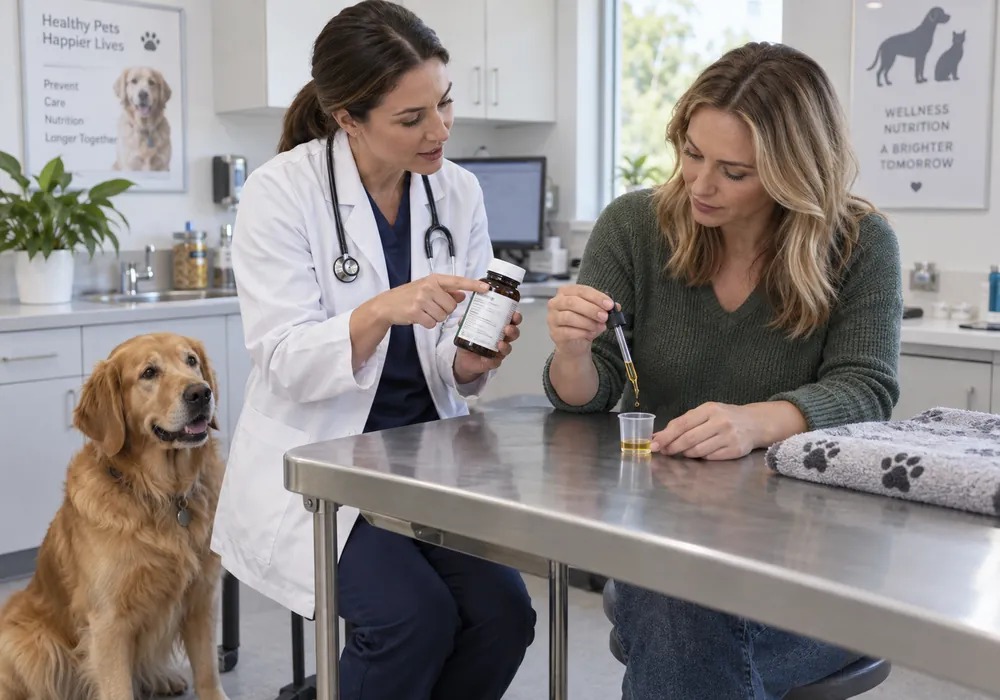
If your veterinarian recommends a supplement, the label should answer a few basic questions:
- The label states EPA and DHA separately or as a clear combined amount.
- Serving directions can be calculated from active fatty acids rather than total oil.
- Packaging protects the product from light, heat and air.
- The manufacturer provides contaminant and oxidation testing information.
- The package carries a lot number, expiration date and storage directions.
- The ingredient list contains no unsafe sweeteners or unnecessary flavorings.
Fish-body oil and algal oil can supply EPA and/or DHA. Cod-liver oil is not a direct substitute because it may add substantial vitamins A and D. Human gummies and flavored liquids may contain xylitol or other ingredients unsuitable for dogs.
Can Dogs Get Too Much Omega-3?
Yes. Body weight is only part of the calculation. The veterinarian also needs to account for EPA and DHA already present in the food, daily calorie intake, the reason for using it, medications and health history.
has pancreatitis, fat intolerance or high blood lipids; has a bleeding disorder or bruises easily; takes medicine that affects clotting; eats an enriched therapeutic diet; is preparing for surgery; or is pregnant, very young or managing several medical conditions.
Concentrated oil can cause loose stool, vomiting or unwanted weight gain. At high intakes, omega-3 may also affect platelet function. Store the oil as directed because polyunsaturated fats oxidize easily; if it smells rancid or has been stored badly, discard it. Do not add high-dose vitamin E or change a supplement before surgery unless the veterinary team tells you to.
Introduce an approved oil gradually and give it with food. Stop and contact your veterinarian if your dog develops persistent diarrhea, vomiting, appetite loss, unusual bruising or bleeding. If loose stool is already present, consult our guide to choosing food for dogs with loose stools rather than assuming more oil will help.
A Practical Decision Guide
Healthy adult
Check the complete diet before adding anything. Extra oil may offer little value when the food already supplies appropriate fatty acids.
Puppy
Choose a growth-appropriate food with declared DHA rather than formulating with oil at home.
Skin or coat concern
Consider the complete diet and investigate parasites, infection and allergy before relying on supplementation.
Arthritis or chronic disease
Ask for a veterinarian-directed target that includes EPA and DHA already supplied by therapeutic food.
Homemade diet
Work with a board-certified veterinary nutritionist. Adding fish oil does not make an incomplete recipe balanced.
Already on a veterinary diet
Do not stack products until the diet’s existing fatty-acid content and total calorie intake have been reviewed.
Frequently Asked Questions
Do dogs need both omega-3 and omega-6?
Yes. Both families support normal physiology. Omega-6 is important for the skin barrier and other functions. Omega-3 includes ALA as well as the longer-chain EPA and DHA. The goal is appropriate intake, not eliminating either family.
Is fish oil better than flaxseed oil for dogs?
It depends on the purpose. Flaxseed provides ALA, but dogs convert only limited amounts into EPA and DHA. When the intended nutritional effect specifically depends on EPA or DHA, a clearly quantified fish or algal source is more direct.
What is the best omega-6-to-omega-3 ratio for dogs?
No single ratio fits every dog. A useful assessment also considers the actual EPA and DHA intake, calories, life stage, health and the rest of the diet. Regulatory limits for complete foods should not be mistaken for a treatment target.
Can I give my dog a human omega-3 supplement?
Only after checking the formulation with your veterinarian. Concentrations and inactive ingredients vary, and flavored products may contain unsafe ingredients. The label must disclose the actual EPA and DHA content.
How long does omega-3 take to work?
Do not expect an immediate change. Fatty acids take time to become incorporated into tissues, so any benefit may take several weeks and will vary with the condition. Painful, severe or worsening symptoms need veterinary care now, not a trial of fish oil.
Can a dog get enough omega-3 from food alone?
Many complete foods provide omega-3, and some therapeutic diets contain substantial EPA and DHA. Whether that amount fits a particular goal depends on the finished-food analysis and the individual dog. Check the label or ask the manufacturer before adding another source.
The Bottom Line
Start with the food your dog already eats. Omega-6 is essential and is plentiful in most commercial diets. If you specifically want the functions associated with long-chain omega-3s, check that the product gives a measurable amount of EPA and DHA. A broad “omega-3” claim is not enough.
Compare foods on a calorie or dry-matter basis and include the calories from any added oil. Dogs eating an enriched veterinary diet may already receive a substantial amount, so check before adding more. When omega-3 is being used for a medical reason, your veterinarian should set the amount and monitor how the dog tolerates it.
Related Articles
7 Fun Games for Dog Mental Stimulation
Mental stimulation for dogs is play and problem-solving that works the brain instead of just the legs: scent games, puzzle toys, hidden treats, new tricks. A physically tired dog can
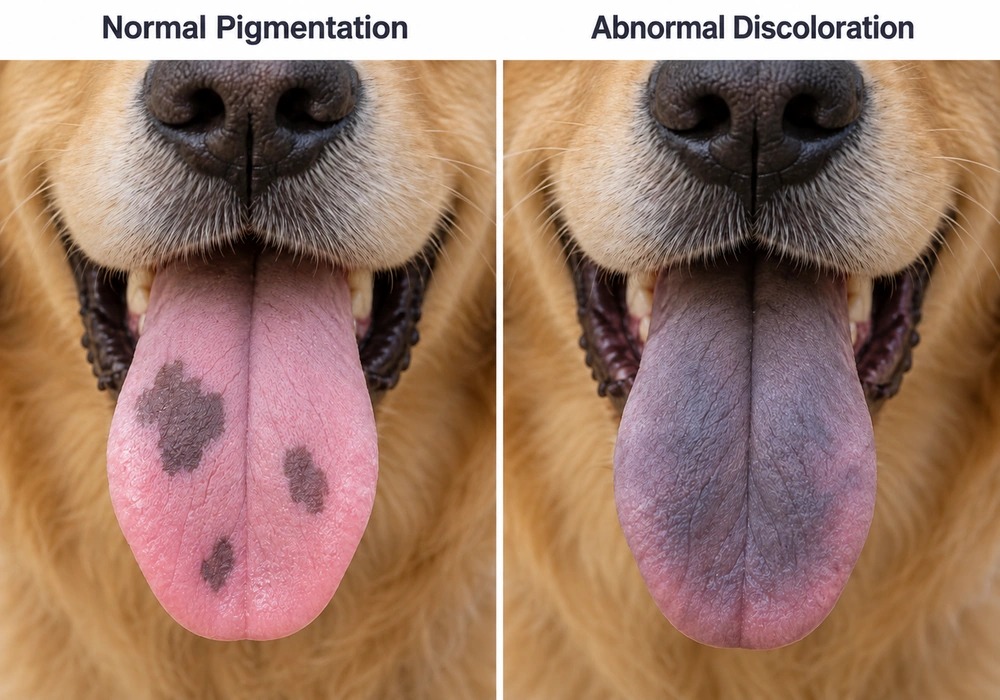
Why Is My Dog’s Tongue Grey?
Canine oral health and emergency triage Why Is My Dog's Tongue Grey? A grey tongue in dogs does not always mean the same thing. Some dogs are born with dark
How to Identify Canine Hormone Imbalance Symptoms
Canine endocrine health How to Identify Canine Hormone Imbalance Symptoms Hormones influence a dog's metabolism, appetite, thirst, skin, coat, muscles, stress response, blood sugar, and reproductive cycle. Most endocrine disorders