
Your first week together
If your puppy won’t settle at night, set up a safe place to sleep near you and take them for one last potty break before bed. Keep the evening quiet. If they wake up crying, offer a quick potty break. If they’ve just been out and still seem worried, sit nearby. Check right away if the crying gets louder or they try to scramble out.
A good first night doesn’t have to be a quiet one. But when you hear your puppy stir at 2 a.m., it helps to know where the leash is and where you’ll take them to pee.
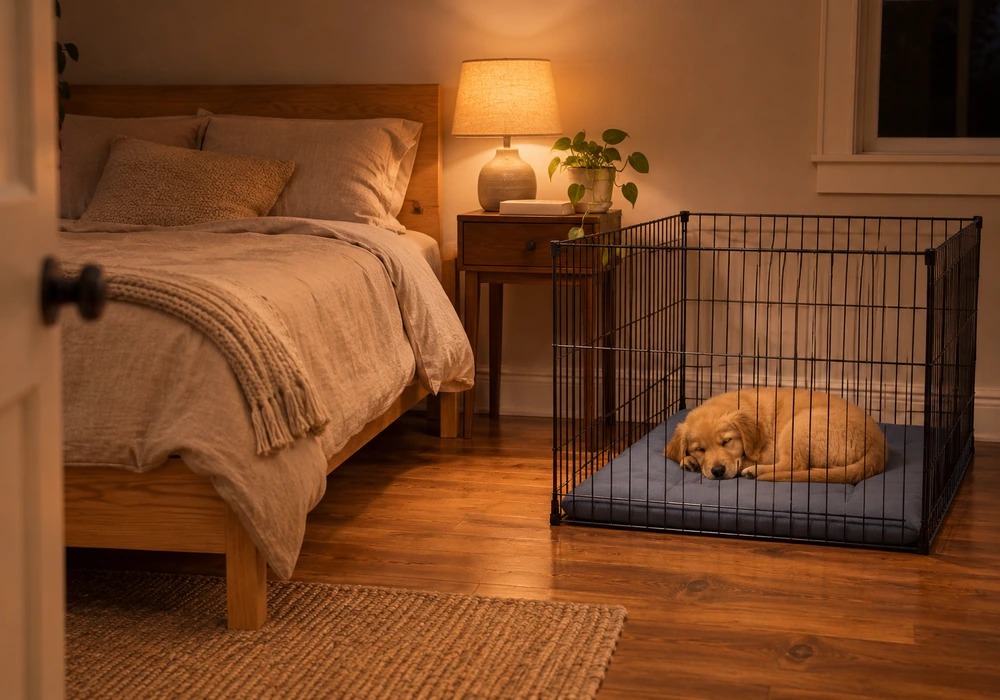
Getting Ready for Your Puppy’s First Night
A secure pen beside your bed lets you hear your puppy stir. If you put a crate inside the pen, secure the door open so your puppy can come and go. Want them to sleep in another room eventually? You can sleep near their bed for the first few nights instead. PDSA’s first-night guide recommends staying in the same room at first and comforting your puppy if they’re upset.
Choose bedding your puppy isn’t likely to shred and keep cords and loose items out of reach. Remove their collar or harness before they go into a crate so it can’t snag. Before bed, decide who’s on potty duty and set out the leash, shoes and a flashlight.
A bedtime routine you can repeat
- Wind down before bed. Save chase games and rough play for earlier in the evening.
- Take one last potty break. Go with your puppy to the spot they’ll use overnight. Wait quietly so you can see whether they pee.
- Help them settle. Dim the lights and sit nearby if that helps. Leave drinking water available; don’t take it away to try to skip a potty break.
If your puppy is wary of the crate, let them explore it with the door open during the day. Help them get used to the door closing before you try it at bedtime. VCA’s crate training guide shows how to introduce it gradually.
What to Do When Your Puppy Cries at Night
A whimper as your puppy rolls over is different from crying after a stretch of sleep. Notice when it starts and whether it fades or gets louder. PDSA’s advice is to check whether they need to pee or poop and offer quiet reassurance.
- A quick whimper, then quiet Pause and watch. If your puppy lies back down and the noise fades, let them settle.
- They wake up crying or didn’t pee last time Offer a potty break. Sniffing the floor or circling can be clues. When in doubt, a quick trip beats guessing from bed.
- They cry louder, scratch frantically or try to get out Check on them right away and make sure they haven’t caught a paw or gotten stuck. If they’re panicking in a closed crate, let them out calmly and move them to a secure spot near you. Don’t wait for the crying to stop before you help.
If your puppy has just been out and still seems worried, sit beside the pen and speak softly. Keep the lights low and save playtime for morning.
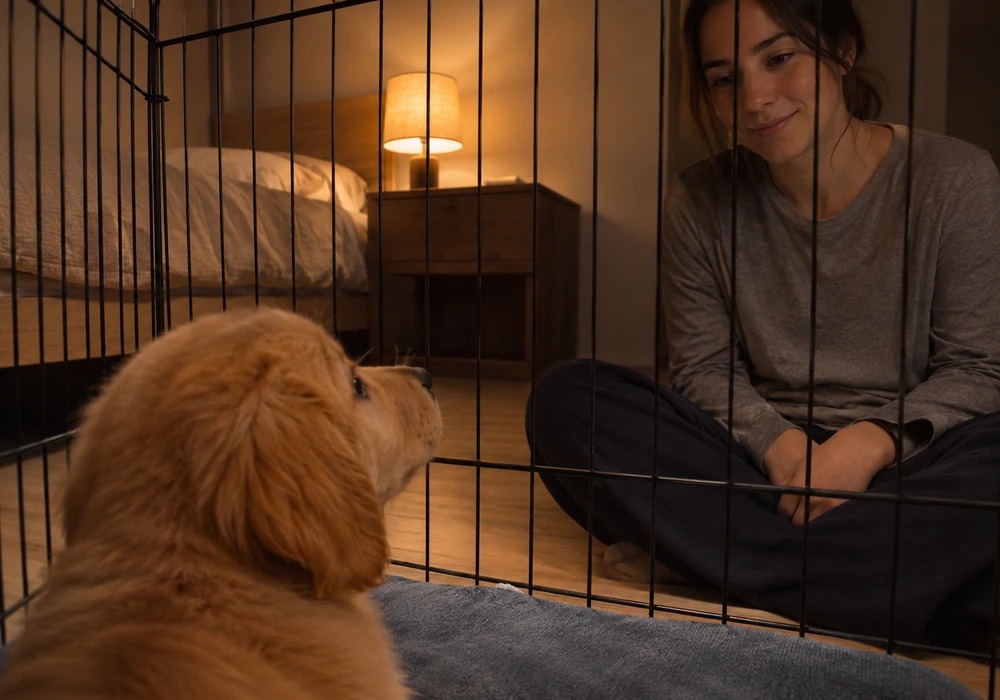
How to Handle Nighttime Potty Breaks
- Go to the same spot. Use the same route and enough light to see safely. For outdoor trips, keep your puppy on a leash and skip the yard tour.
- Wait quietly for a few minutes. If they go, praise them softly right there. If they don’t, head back in and supervise. Try again soon if they start sniffing, circling or getting restless.
- Go straight back to bed. Take the leash off before returning your puppy to their bed or pen.
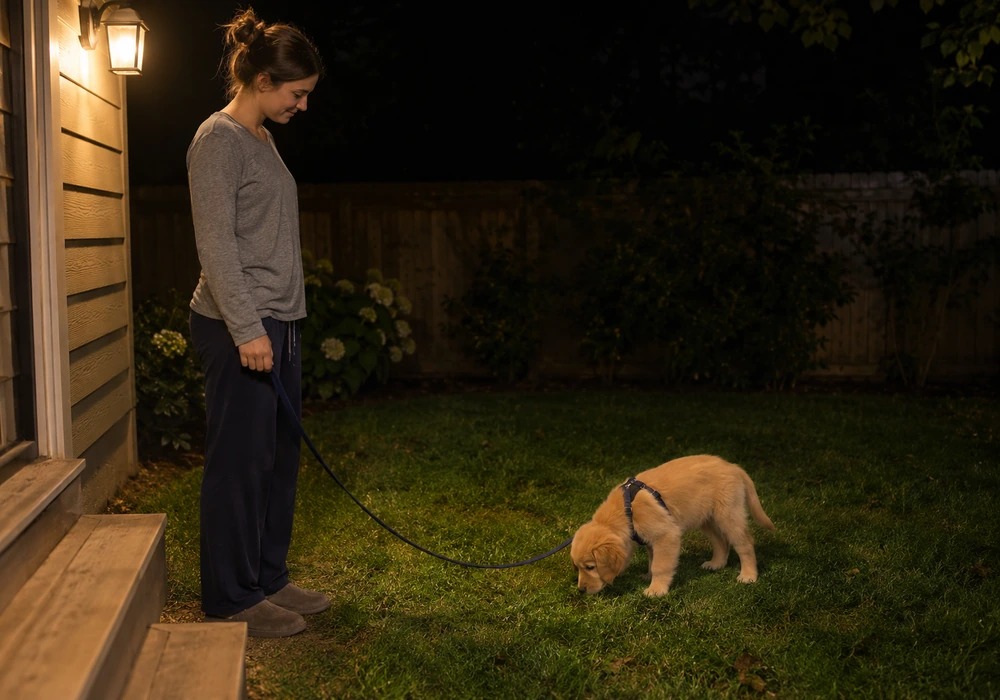
Should you set an alarm? If your puppy wakes around the same time each night and pees as soon as you take them out, try setting an alarm just before then. Take them out sooner if they wake early. Let your notes guide the timing rather than following a fixed schedule. See VCA’s housetraining guide for more on potty cues and rewards.
If you live in an apartment: Pick a potty spot before the first night. If your puppy isn’t fully vaccinated, ask your vet where it’s safe to take them. Don’t assume a spot used by other dogs is safe. If there’s no suitable outdoor option yet, ask about a temporary indoor potty spot away from the bed. See PDSA’s vaccination guidance.
If there’s an accident: Clean up with an enzymatic pet cleaner without scolding. Try taking your puppy out a little sooner next time, or make the potty spot easier to get to.
What to Change as the First Week Goes On
Use the first week to learn what works. Your puppy doesn’t need to sleep through the night by day seven.
- Night 1: Keep it simple Stay close and note when your puppy last peed before bed.
- Nights 2–3: Look for a pattern Jot down when your puppy wakes, whether they pee, and what helps them settle. If they sleep better in the pen, keep using it while they get used to the crate during the day.
- Nights 4–7: Change one thing at a time If your puppy settles easily at bedtime and after potty breaks, try sitting a little farther from the pen. If they get upset again, move back. Don’t move the bed and shift the potty break on the same night.
Example night log: 10:20 p.m. last pee → 1:40 a.m. woke and cried → peed at the usual spot → settled with someone sitting beside the pen. Look for a pattern across several nights before changing the alarm.
If evenings are getting harder, let your puppy nap during the day and try winding down a little earlier. Dogs Trust’s first-nights guide has more on bedtime routines and helping your puppy sleep apart gradually.
For feeding, puppy-proofing and the first vet visit, see our new puppy care guide. If a dog that already knows the household routine suddenly starts pacing at night, our separate guide to nighttime restlessness covers that situation.
When Crying Needs a Vet Call
Call your veterinarian promptly if crying comes with vomiting, diarrhea, poor appetite, unusual tiredness, apparent pain or painful urination. Vomiting and diarrhea are especially concerning in a young puppy, including one who hasn’t finished their vaccines. Don’t wait for the end of the first week to see if these signs pass.
Get emergency veterinary care for trouble breathing, collapse, a puppy who’s very difficult to wake, or repeated straining with no urine. See Cornell’s veterinary emergency guidance.
If your puppy otherwise seems well but repeatedly panics in the sleep area, change the setup rather than repeating the same difficult night. Ask your veterinarian or a qualified reward-based trainer for help.
First-Week Bedtime FAQs
How many nights will my puppy cry?
There’s no set number, and one rough night doesn’t erase progress. Notice whether your puppy is taking less time to lie back down or waking less often as the week goes on.
What if my puppy cries again right after peeing?
Check whether they finished peeing and whether their bedding is dry. If your puppy seems well and quiets down when you’re close, sit nearby. If they keep trying to pee and seem uncomfortable, see when to call the vet.
Related Articles
Puppy Won’t Settle at Night? A First-Week Bedtime Guide
Your first week together If your puppy won't settle at night, set up a safe place to sleep near you and take them for one last potty break before bed.

How Long Do Chihuahuas Live? Chihuahua Lifespan and Life Stages
Evidence-based Chihuahua longevity guide How Long Do Chihuahuas Live? Chihuahua Lifespan and Life Stages A Chihuahua may share your home well into its teens, but one number cannot predict an
What Is a Normal Chihuahua Heart Rate?
Chihuahua heart health What Is a Normal Chihuahua Heart Rate? A Chihuahua's heartbeat can feel surprisingly fast beneath your fingers. That does not automatically mean something is wrong. Age, activity,