
Emergency answer
Go to an emergency veterinary hospital now if the tongue color is new and widespread, or if your dog is gasping, breathing noisily, extending the neck to breathe, unable to settle, weak, confused, collapsed, overheated, or swollen around the face or tongue.
Call the clinic as you leave so the team can prepare. Keep your dog quiet and the car comfortably cool. Do not muzzle a dog that is struggling to breathe, force the mouth open, or lose time trying medication or home remedies.
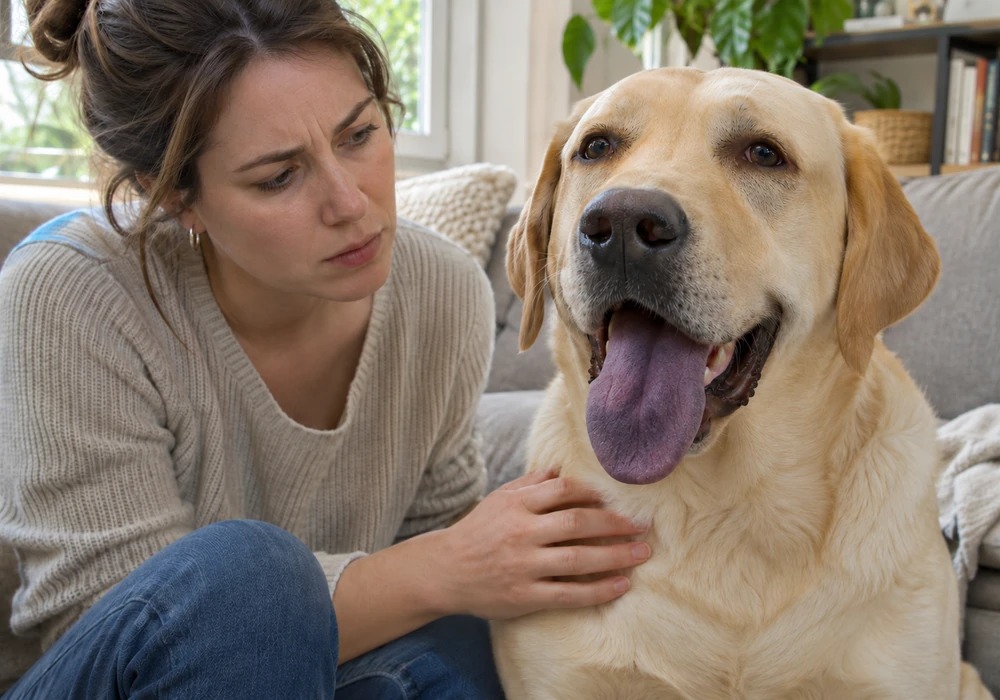
When Is a Purple Tongue an Emergency?
When most of a previously pink tongue turns purple, the change may be cyanosis: a bluish or purple cast caused by inadequate oxygen delivery. VCA Animal Hospitals lists both heart and respiratory disease among the causes. Visible discoloration is a late and worrying sign, not something to watch overnight.
Leave for an emergency clinic immediately if a new purple tongue occurs with:
- open-mouth breathing at rest, gasping, stridor, wheezing, or unusually loud breathing;
- an extended neck, widely placed elbows, strong abdominal effort, or an inability to lie down;
- collapse, fainting, disorientation, extreme weakness, or poor response to you;
- heat exposure, frantic panting, vomiting, wobbliness, or a very hot body;
- facial swelling, hives, sudden vomiting, or swelling of the tongue or throat;
- known or possible access to acetaminophen, numbing gels, mothballs, pesticides, or other chemicals;
- a protruding, severely swollen tongue or a visible groove caused by string, thread, a rubber band, or a hair tie.
Do not wait for a darker shade. Tongue color is only one clue: severe anemia may limit oxygen delivery without producing an obvious blue-purple tongue, and natural pigment can hide a change. How the dog is breathing and behaving matters just as much.
Could a Purple Tongue Be Normal?
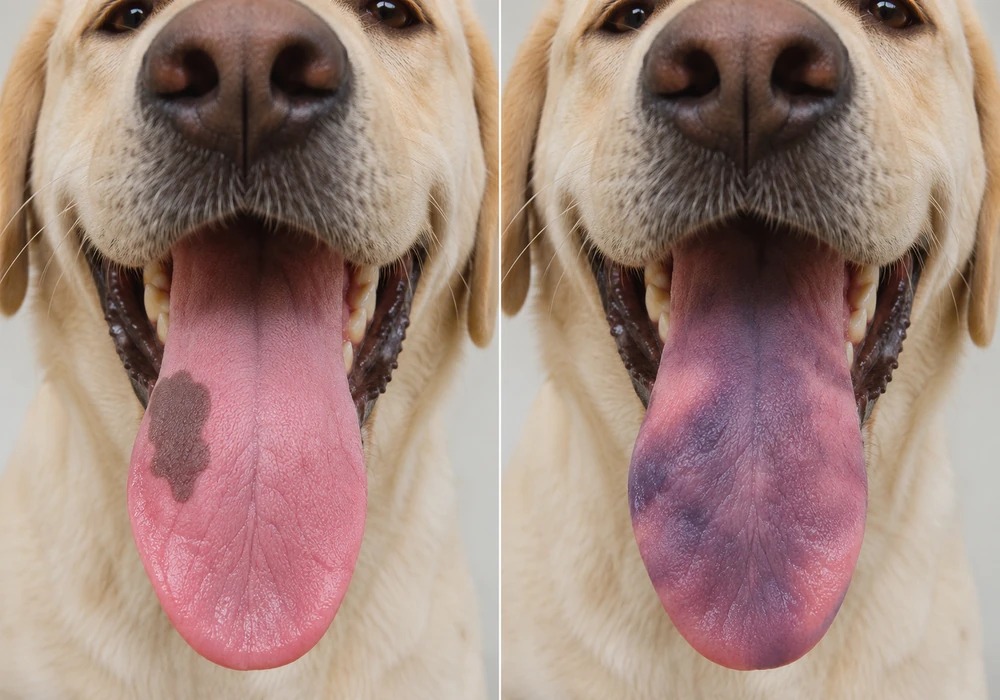
Yes. Chow Chows and Chinese Shar-Peis are well known for blue-black or deep purple oral pigmentation. Flat, dark spots can also appear in many other breeds and mixed-breed dogs. The American Kennel Club notes that a dark tongue spot does not by itself prove Chow Chow ancestry.
Features that favor normal pigment
- present since puppyhood or unchanged for years;
- flat and level with the surrounding tissue;
- not painful, swollen, ulcerated, or bleeding;
- normal eating, breathing, activity, and gum color.
Features that need veterinary attention
- new color in a mature dog with a previously pink tongue;
- rapid spread across the tongue or gums;
- a raised, firm, irregular, or enlarging lesion;
- pain, bad breath, drooling, bleeding, or difficulty eating.
This article focuses on a purple tongue specifically. For a side-by-side overview of other oral colors, use our dog tongue color chart. If the change looks more grey than purple, our guide to a grey tongue in dogs explains the overlapping but slightly different possibilities.
What Causes a Purple Tongue in Dogs?
Start with the pattern. Purple color across the tongue and gums raises concern about oxygen or circulation. A swollen dark tip points more toward trapped tissue or blocked blood flow. One raised spot needs an oral examination, while color sitting only on the surface may be food dye or berry stain.
1. Inadequate oxygen from an airway or lung problem
A lodged object or severe allergic swelling can narrow the upper airway within minutes. Laryngeal paralysis, advanced tracheal collapse, and brachycephalic airway disease may also reach a crisis point. Problems deeper in the chest, including severe pneumonia, fluid around the lungs, trauma, or a collapsed lung, keep oxygen from moving normally into the blood. Many dogs work visibly hard to breathe. A dog that is running out of strength may instead become unusually still and quiet.
2. Poor circulation, shock, or advanced heart disease
The lungs may be working, yet the tissues still receive too little oxygen because circulation is failing. This can happen with severe shock, cardiac tamponade, hypothermia, some congenital heart defects, or advanced heart disease. The tongue may look cool and dusky rather than bright blue. Cold feet, weak pulses, slow gum refill, or collapse make the situation more urgent.
Some dogs have warning signs beforehand, such as nighttime coughing, fainting, shorter walks, or a sleeping respiratory rate that keeps rising. Our guides to congestive heart disease signs and normal resting breathing rate explain what to track. Once the tongue turns purple, stop monitoring and seek immediate care.
3. Oxidative poisoning and abnormal hemoglobin
Some toxins change hemoglobin into a form that cannot transport oxygen normally. This condition, called methemoglobinemia, may make the tongue and gums look muddy brown, slate-colored, or dark purple. Freshly drawn blood may appear chocolate brown rather than dark red.
Possible exposures include acetaminophen, benzocaine-containing numbing products, mothballs, nitrates or nitrites, and some pest-control chemicals. The Merck Veterinary Manual notes that acetaminophen poisoning in dogs can cause methemoglobinemia along with rapid breathing, lethargy, swelling of the face or paws, and liver injury. Bring the package to the clinic. Do not induce vomiting or improvise an antidote unless a veterinarian or animal poison service tells you to do so.
4. A trapped tongue, strangulating object, or severe swelling
Thread, a rubber band, hair tie, or toy part can wrap around the tongue or become wedged beneath it. Blood enters the tissue but cannot drain normally, so the tongue swells and darkens fast. You may see a sharp groove, heavy drooling, gagging, or repeated pawing at the mouth. Do not pull embedded string or reach in with scissors. The object may extend deeper than you can see, and a painful dog may bite.
5. A localized lesion, tissue death, or oral tumor
One raised or ulcerated purple area is a local problem rather than classic cyanosis. It may be a bruise, damaged tissue, inflammation, a vascular growth, or an oral tumor such as melanoma. Arrange a prompt examination if the spot bleeds, hurts, grows, or comes with bad breath, drooling, dropped food, or facial swelling. A photograph can document change, but color cannot identify a tumor. Diagnosis may require a tissue sample.
6. Temporary food or dye staining
Blueberries, blackberries, frosting, colored treats, ink, and dyed toys can leave purple color on the tongue’s surface. With a simple stain, the dog acts and breathes normally, while the gums and underside of the tongue stay pink. A little color may come off on damp white gauze. Skip this check if the dog is distressed, painful, likely to bite, or having trouble breathing.
What Should You Do Right Now?
- Step back and look at the whole dog. Labored breathing, an unusual posture, weakness, swelling, or collapse tells you more than the exact shade of purple.
- If your dog is calm and breathing comfortably, glance at the gums and underside of the tongue. Purple or blue color in several areas is more concerning than one old, flat pigment spot.
- Think about when the change started. Tell the clinic if it followed running, heat, choking, an injury, or access to medication or chemicals.
- Call ahead, then leave. Mention any breathing change and what your dog may have eaten or chewed.
- Take the medication packet, chemical label, or a quick photograph if it is already within reach. Do not delay transport to gather evidence.
Do not:
- force an anxious or air-hungry dog onto its side;
- place a muzzle on a dog with breathing difficulty or vomiting;
- offer food, water, supplements, aspirin, acetaminophen, or sedatives;
- rely on a consumer pulse oximeter to rule out an emergency;
- spend time repeatedly checking capillary refill when emergency signs are already present.
| What you notice | What it may suggest | How urgent? |
|---|---|---|
| Most of the tongue and gums suddenly turn purple, blue, or dusky | Low oxygen, airway or lung disease, shock, heart failure, or toxin-related hemoglobin change | Emergency now |
| Tongue tip is swollen, protruding, dark purple, or divided by a groove | Strangulation, trapped foreign material, trauma, or severe swelling | Emergency now |
| One new raised, firm, painful, ulcerated, or bleeding purple lesion | Injury, vascular lesion, tissue damage, inflammation, or oral tumor | Prompt veterinary exam |
| Flat stable patch present for years with no symptoms | Normal melanin pigmentation | Document at routine visit |
| Color is only on the top surface, transfers to gauze, and the dog is completely normal | Food, berry, ink, or dye staining | Monitor; call if it does not clear or symptoms appear |
How Will a Veterinarian Find the Cause?
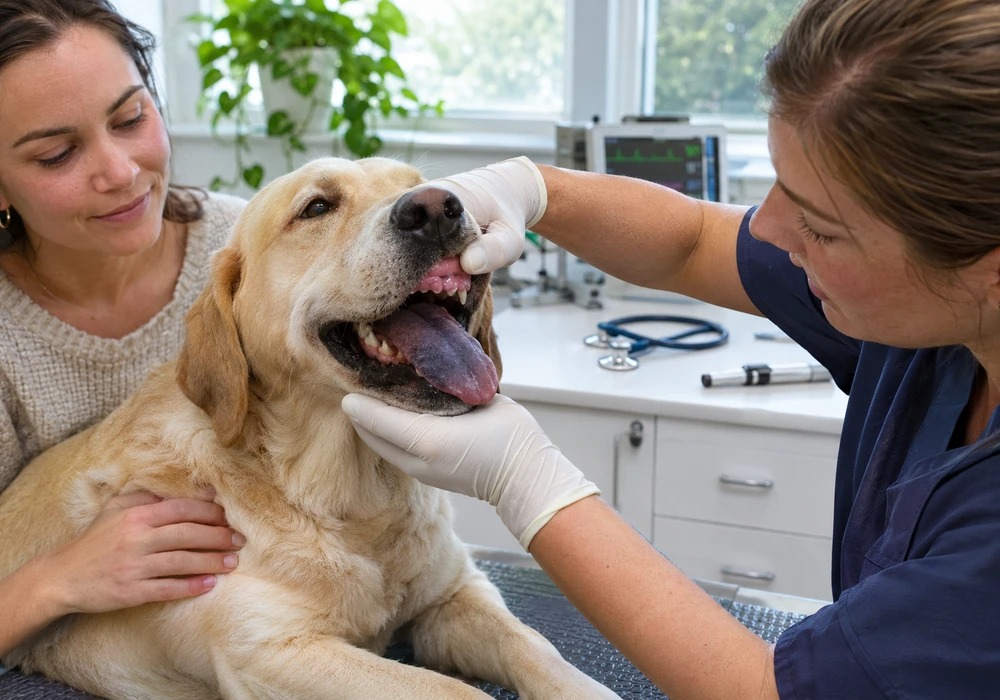
Testing waits when a dog cannot breathe or is in shock. The veterinary team first supplies oxygen, keeps handling to a minimum, and stabilizes the airway and circulation. Once the dog is safer, the pattern of discoloration guides the workup.
- Purple color across the tongue and gums may lead to an airway examination, oxygen assessment, chest imaging, blood pressure measurement, ECG, ultrasound, or blood tests.
- After a possible toxin exposure, the team may inspect the blood itself and use blood gas or co-oximetry testing. Liver values and red blood cells may also need checking.
- A swollen tongue often requires a careful oral examination under sedation to look for thread, bands, burns, embedded material, or dead tissue.
- A raised or changing spot may need cytology or biopsy. If cancer is suspected, the veterinarian may also sample nearby lymph nodes and image the chest.
Do not let one reassuring pulse oximeter number overrule what you can see. Motion, weak circulation, dark pigment, poor probe placement, and abnormal hemoglobin can distort the reading. A visibly purple tongue still needs veterinary assessment.
Frequently Asked Questions
Is a purple tongue always an emergency?
No. Lifelong, flat, stable pigment can be normal, especially in Chow Chows and Shar-Peis. A new generalized purple color, a swollen purple tongue, or any change accompanied by breathing difficulty, weakness, or collapse is an emergency.
Why is my dog’s tongue purple after running?
Exercise should not make a normally pink tongue become dusky purple. Stop activity, move to a cool quiet area, and seek emergency care if the color does not return immediately or if your dog is breathing hard, weak, overheated, or unable to recover normally.
Can cold weather make a dog’s tongue look purple?
Severe hypothermia and poor peripheral circulation can produce dusky mucous membranes, but this is not a harmless color effect. Shivering that stops, weakness, confusion, cold limbs, slow breathing, or collapse require emergency veterinary care.
Can food stain a dog’s tongue purple?
Yes. Berries, icing, colored treats, ink, and dyes may stain the top surface. The dog should otherwise be normal, the gums and underside of the tongue should remain pink, and some pigment may transfer gently to damp gauze. If you are uncertain or any symptom is present, contact a veterinarian.
What if only one part of the tongue is purple?
A flat spot that has always been present may be pigment. A new localized area can reflect bruising, impaired blood flow, a trapped object, burn, ulcer, vascular lesion, or oral mass. Swelling, pain, bleeding, drooling, or rapid change increases urgency.
Should I check my dog’s capillary refill time?
Capillary refill can provide context in a calm dog, but pigment, lighting, temperature, technique, and poor circulation can make it unreliable. Do not press repeatedly on the gums or delay transport when the tongue is newly purple or your dog has emergency signs.
The Bottom Line
The timeline makes the first distinction. A flat patch that has looked the same for years is likely pigment. A color change that appears suddenly across a normally pink tongue is another matter.
If a normally pink tongue turns purple, go to an emergency clinic. Do the same for rapid swelling or any change accompanied by difficult breathing, weakness, or collapse. A new raised, painful, bleeding, or growing spot is less likely to be a breathing crisis, but it still needs a prompt examination.
Veterinary references
- VCA Animal Hospitals: Cyanosis in Dogs
- Merck Veterinary Manual: Toxicoses From Human Analgesics in Animals
- American Kennel Club: Why Do Some Dogs Have Blue Tongues?
- VCA Animal Hospitals: Oral Tumors in Dogs
This guide can help you judge urgency, but a veterinarian must examine the dog to find the cause.
Related Articles
Great Dane Heart Rate: Normal Range and Warning Signs
Great Dane cardiac health Great Dane Heart Rate: Normal Range and Warning Signs Put your fingers on a sleeping Great Dane's pulse and it may feel surprisingly slow. That can
Why Is My Old Dog Suddenly Not Eating
Senior dog appetite guide Why Is My Old Dog Suddenly Not Eating? A skipped meal is not always a crisis. Still, when an older dog suddenly walks away from food,

Why Does My Dog Cough at Night?
Nighttime cough guide Why Does My Dog Cough at Night? A dog may cough at night because the bedroom air is irritating an already sensitive throat. Repeated episodes can also