
A sudden cough can make even a calm owner stop and listen. One minute your dog seems fine. The next, they are stretching their neck, standing stiffly, honking, hacking, or making a gagging sound that seems to come from the throat. Sometimes it is dry and sharp. Sometimes it sounds wet, rattly, or mixed with retching.
If you are staring at your dog and asking why is my dog coughing and gagging, you are not overreacting. The same outward sound can come from something mild, such as throat irritation, or from something that needs help quickly, such as choking, pneumonia, heart-related coughing, bloat with dry heaving, or a severe airway problem.
You will check what the cough sounds like, when it happens, whether your dog can breathe comfortably, what the gums look like, and which signs mean it is time to contact a veterinarian. It is not a diagnosis, and it is not a reason to delay care if your dog looks unwell.
“If your dog is struggling to breathe, has pale or blue gums, keeps retching without bringing anything up, or seems weak, do not wait at home. Call a veterinarian or emergency clinic.”
Coughing vs Gagging vs Vomiting vs Reverse Sneezing
When trying to understand what your dog’s coughing or gagging sounds mean, begin by distinguishing coughing, gagging, vomiting, and reverse sneezing. Owners often use these terms interchangeably, but each action starts differently and may point to a different part of the respiratory or digestive system.
- Coughing: This is a forceful push of air from the airway. It may sound dry, honking, hacking, wet, or rattly. Repeated coughing can be linked with throat irritation, kennel cough, tracheal sensitivity, pneumonia, heart disease, or fluid in the lungs.
- Gagging: This is more of a throat reaction. Your dog may retch, swallow hard, lick their lips, or look as if they are trying to bring something up. Repeated gagging with nothing coming up can be more concerning, especially if your dog seems distressed.
- Vomiting: Vomiting usually involves repeated abdominal contractions before food, liquid, or bile comes up. Unlike coughing, the movement tends to involve the stomach and abdomen rather than beginning with a forceful burst of air from the chest.
- Reverse sneezing: During a reverse-sneezing episode, a dog rapidly pulls air inward through the nose, often while standing still with the neck extended. It may sound like snorting, choking, or gasping and usually stops within a short time. Record a video for your veterinarian if episodes are frequent, prolonged, or accompanied by breathing difficulty.
A small airway problem can sound dramatic because irritated or narrowed airways are harder to move air through. You do not need to calculate anything at home. Watch the pattern instead: the sound, the trigger, gum color, breathing effort, and whether your dog can settle.
If your dog moves from a mild cough to hard breathing, panic, weakness, or pale or blue gums, treat that as a major change. That is no longer a wait-and-see situation.
What owners should check first at home
To work through why is my dog coughing and gagging without guessing, start with these checks. Handle your dog gently and keep the room calm, because stress can make coughing and breathing effort worse.
If you are not sure what normal breathing, gum color, appetite, and energy should look like, compare your dog with a baseline first. Our Signs of a Healthy Dog guide can help.
Dog cough and gagging urgency checker
Select what you are seeing. This tool does not diagnose the cause. It looks at cough sound, timing, gum color, breathing rate, and red flags.
Suggested urgency level
Select symptoms to begin
Please select symptoms to evaluate your dog's risk level.
Higher scores mean your dog is less suitable for home monitoring. If breathing looks hard, gums look pale or blue, gagging is repeated, or your dog cannot settle, call a vet early.
Common reasons dogs cough and gag
After the first checks, compare the pattern with these common causes. This is not a diagnosis, but it can help you decide whether the situation can wait or needs a vet today.
1. Kennel cough or another contagious respiratory infection
Kennel cough and other contagious respiratory infections can spread rapidly in boarding facilities, shelters, daycare centers, and dog parks. Recent contact with other dogs is therefore an important detail to share with your veterinarian.
The Profile: An abrupt onset of a harsh, dry, hacking cough that sounds like a goose honk, often ending with a gag that produces a small puddle of white foam. The dog otherwise remains active, bright, and hungry.
The Merck Veterinary Manual notes that kennel cough commonly causes a distinctive “goose honk” cough that may be followed by retching or gagging.
2. Collapsing trachea or tracheal irritation
Collapsing trachea is one possible cause of a recurring dry or honking cough, especially in small and toy breeds such as Yorkshire Terriers, Pomeranians, and Chihuahuas. It occurs when the cartilage supporting the windpipe weakens, but veterinary evaluation is needed to distinguish it from other respiratory or cardiac conditions.
The Profile: The cough is dry, chronic, triggered by excitement, heat, or leash pressure, and often results in gagging as the collapsing tissue irritates the throat.
3. Heart-related coughing
Heart disease can sometimes be associated with coughing, faster breathing at rest, reduced stamina, or difficulty settling, particularly in older dogs. However, coughing is more commonly associated with primary respiratory disease than with cardiogenic pulmonary edema, so a cough alone cannot confirm a heart problem.
The Profile: Pay attention to a rising sleeping respiratory rate, increased breathing effort, restlessness, weakness, or reduced exercise tolerance. These changes should be evaluated by a veterinarian. To learn more about related warning signs, read our guide to the signs your dog may have congestive heart disease.
4. Something stuck in the mouth, throat, or airway
A physical emergency where an object is physically caught in the pharynx, larynx, or esophagus.
The Profile: Sudden, frantic onset during or after a walk or chew session. The dog will gag continuously, salivate excessively, paw at their face, and show signs of respiratory panic.
5. Bloat or repeated dry heaving
A life-threatening medical emergency where the stomach fills with gas and twists on its axis, trapping air and cutting off blood flow back to the heart.
The Profile: The dog will attempt to vomit but produce nothing or only small amounts of white foam (unproductive retching/dry heaving). This is accompanied by a rapidly swelling, rigid abdomen, restlessness, and signs of severe pain.
Cornell University College of Veterinary Medicine lists non-productive retching, a bloated or painful abdomen, excessive drooling, restlessness, weakness, and collapse among the warning signs of GDV, which requires immediate veterinary treatment.
6. Environmental irritants
Smoke, dust, strong fragrances, household sprays, and other airborne irritants can temporarily inflame a dog’s throat or airways.
The Profile: The coughing begins after exposure to a particular environment and may improve after the dog moves into clean air. Persistent coughing, breathing difficulty, or symptoms that return without an obvious trigger should be evaluated by a veterinarian.
7. Laryngeal paralysis
Laryngeal paralysis affects the voice box and is seen most often in older, large-breed dogs, particularly Labrador Retrievers. It can interfere with airflow and increase the risk of inhaling food or water into the lungs.
The Profile: Noisy or raspy breathing, a change in the dog’s bark, coughing or gagging after eating or drinking, heat intolerance, and reduced stamina. Difficulty breathing, blue gums, or collapse requires emergency care.
8. Heartworm disease
Heartworm disease can affect the blood vessels in the lungs and may cause respiratory signs as the infection progresses. Dogs in mosquito-prone areas or those without consistent heartworm prevention may have a higher risk.
The Profile: A mild but persistent cough, reduced exercise tolerance, fatigue after activity, decreased appetite, or weight loss. Heartworm disease cannot be diagnosed from coughing alone and requires veterinary testing.
Coughing and gagging urgency matrix
Use this quick matrix as a summary after you have checked your dog. When breathing, gum color, repeated retching, or weakness look abnormal, choose caution.
| OBSERVED SYMPTOM CLUSTER | URGENCY LEVEL | POTENTIAL UNDERLYING CAUSE | IMMEDIATE ACTION REQUIRED |
|---|---|---|---|
| Occasional dry cough, dog is bright, active, eating normally, and settles at night | Low Risk | Mild environmental allergy, dust irritation, or early kennel cough. | Isolate from other dogs. Use a harness instead of a collar. Monitor closely for 48 hours. |
| Harsh, frequent honking cough, ending with a white foam gag; active but slightly tired | Moderate Risk | Infectious respiratory disease (Kennel Cough) or mild tracheal irritation. | Schedule a standard veterinary exam within 12–24 hours. Keep isolated. |
| Wet, bubbling cough, worse at night; dog is restless, reluctant to lie down, panting | High Priority | Pulmonary edema secondary to congestive heart failure, or deep pneumonia. | URGENT. Schedule a priority veterinary exam within 12 hours. High risk of respiratory failure. |
| Frantic gagging, pawing at mouth, white/blue gums, or unproductive dry heaving with a bloated belly | Critical Emergency | Foreign body airway obstruction or Gastric Dilatation-Volvulus (Bloat). | ER NOW. Transport immediately to the nearest veterinary emergency hospital. Do not delay. |

Why a narrowed airway can sound so dramatic
When the airway is irritated or narrowed, even a small change can make breathing feel harder. That is one reason some dogs cough after excitement, heat, drinking, or leash pressure.
What to do next
Match your next step to your dog’s comfort level. Home monitoring is only reasonable when your dog is bright, breathing normally, and the cough is mild or improving.
✅ When Home Observation is Safe
Brief home observation may be reasonable when the cough is mild, the dog remains bright and alert, and breathing appears comfortable. These measures do not treat the underlying cause, and a persistent, recurring, or worsening cough should be discussed with a veterinarian.
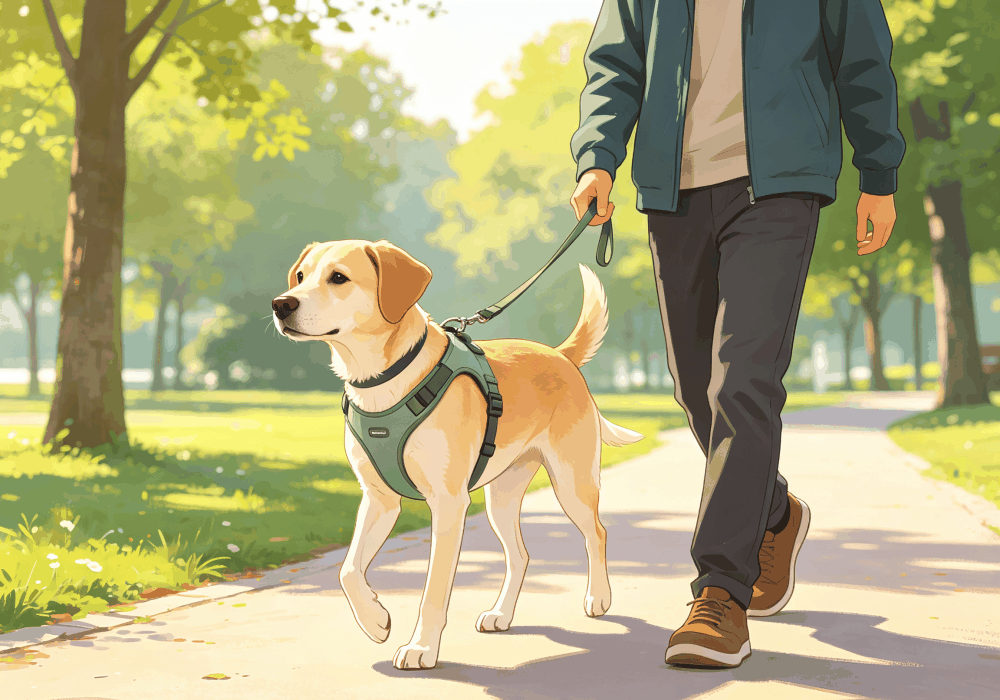
- Switch to a Harness: A well-fitted harness can reduce pressure on the neck and may help prevent coughing triggered by collar pressure, particularly in dogs with sensitive or narrowed airways.
- Keep the Air Comfortable: Avoid smoke, aerosols, strong fragrances, and excessive heat around your dog. If the indoor air is very dry, ask your veterinarian whether a clean cool-mist humidifier may be appropriate. Do not add essential oils or medications to the humidifier.
- Limit Excitement: Keep your home environment quiet and calm. Excitement or stress can trigger coughing fits, especially in dogs with sensitive or narrowed airways.
❌ Red flags: call a vet now
If your dog shows any of these signs, do not try to manage it at home. Waiting can make the situation harder to treat.
- Difficulty Breathing: Breathing with an open mouth, flaring their nostrils, or using their abdominal muscles to forcibly pump air in and out.
- Change in Gum Color: Gums that look pale, grey, white, or blue-tinged.
- Unproductive Retching: Continuous gagging and dry heaving without producing any vomit (classic sign of Bloat).
- Fluid, Foam, or Blood: Seek prompt veterinary care if your dog coughs up fluid, pink or blood-tinged foam, or visible blood. These signs can occur with several serious respiratory or cardiovascular problems and cannot be diagnosed by appearance alone.
Frequently Asked Questions
What to remember
Understanding your dog’s coughing and gagging is less about naming the exact cause at home and more about recognizing important changes. Check the sound, timing, gum color, breathing rate, energy level, and whether your dog can rest comfortably.
If the cough is mild and your dog seems normal, careful observation may be enough for a short period. If the cough is wet, frequent, worsening, linked with weakness, or paired with abnormal gums or hard breathing, call your vet. Your best job is not to guess perfectly. It is to act early when the pattern stops looking safe.
Related Articles
What Are Common Dog Behavior Changes with Age
Canine behavior and healthy aging Common Dog Behavior Changes with Age: What Is Normal and What Is Not? Dogs change throughout life, but age alone does not explain every new

Why Does My Dog Follow Me Everywhere?
DOG BEHAVIOR GUIDEIf you keep wondering, "Why does my dog follow me everywhere?", the answer is often quite ordinary: you are the safest and most rewarding part of your dog's
Hormonal Behavior in Dogs: Causes, Signs, and What to Do
Canine behavior and health guide Hormonal Behavior in Dogs: Causes, Signs, and What to Do Hormones can influence marking, roaming, mounting, nesting, appetite, sleep, and emotional responses. They are only