
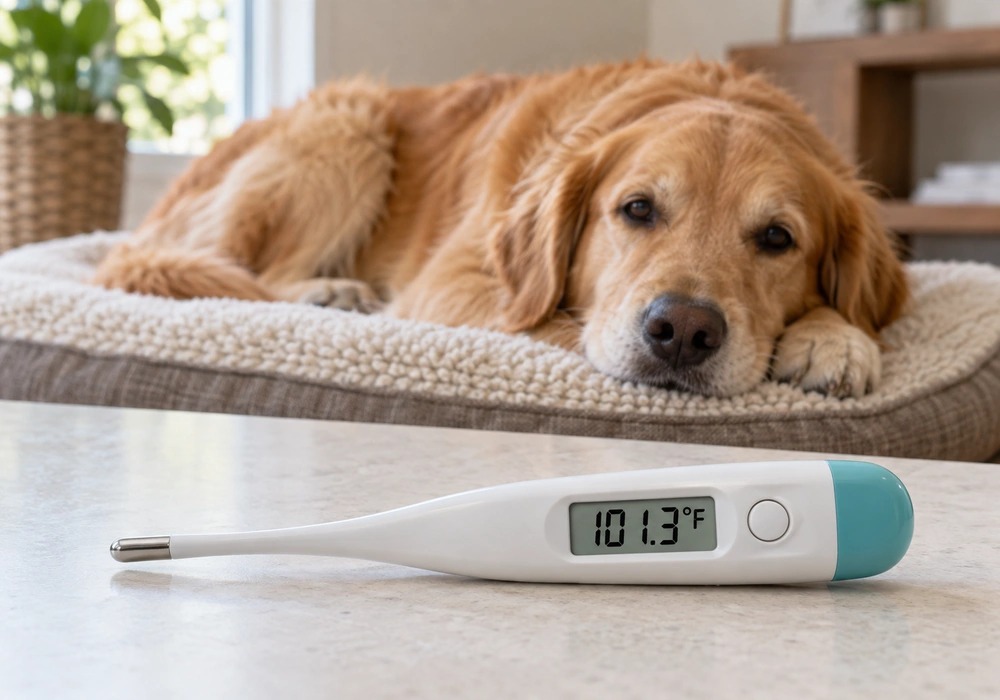
A normal rectal temperature for most healthy adult dogs is 99.5°F to 102.5°F (37.5°C to 39.2°C). A number just outside that range is not automatically an emergency. A dog that has just played, fought the thermometer, or sat in a warm car may read higher than the same dog resting at home. Use this dog temperature chart as a starting point, then check breathing, gum color, energy, coordination, and overall comfort.
If your dog is collapsing, struggling to breathe, having a seizure, unable to stand, or showing pale, blue-gray, or brick-red gums, seek emergency veterinary care regardless of the thermometer reading.
Quick Dog Temperature Chart
Treat the ranges below as triage guides rather than hard diagnostic lines. Veterinary references differ slightly, and some healthy dogs naturally sit near one end of the usual range.
| Rectal temperature | General interpretation | What to do |
|---|---|---|
| Below 95°F (35°C) | Severe hypothermia | Emergency veterinary care. Keep the dog dry, handle gently, and begin safe trunk warming during transport. |
| 95-98.9°F (35-37.2°C) | Abnormally low for most adult dogs | Wrap in warm, dry blankets and contact a veterinarian promptly. Illness, shock, cold exposure, or recent anesthesia may be involved. |
| 99-99.4°F (37.2-37.4°C) | Borderline low | Recheck technique and assess the dog. This can be meaningful in a weak, elderly, very small, or unwell dog. |
| 99.5-102.5°F (37.5-39.2°C) | Common normal adult range | Record the reading and compare it with your dog’s usual baseline and behavior. |
| 102.6-103.5°F (39.3-39.7°C) | Mild elevation | Let an otherwise stable dog rest in a cool, quiet room for 10-15 minutes, then recheck. Call your veterinarian if the elevation persists or symptoms are present. |
| 103.6-104°F (39.8-40°C) | Clearly elevated | Contact your veterinarian. Fever, pain, inflammation, stress, exercise, and overheating are possible causes. |
| Above 104°F (40°C) | Potentially dangerous high temperature | Veterinary assessment is needed, especially if the reading remains high after rest or the dog seems unwell. |
| 105°F (40.6°C) or higher | Severe hyperthermia or high fever | Treat as an emergency. If heatstroke is suspected, begin appropriate cooling while traveling to an emergency clinic. |
| 106°F (41.1°C) or higher | Critical, life-threatening temperature | Immediate emergency treatment is required. Organ and clotting damage can develop rapidly. |
The circumstances change the meaning of the number. A temperature of 103.2°F after vigorous play in warm weather is not the same as 103.2°F in a resting dog that refuses food and shivers. A reading of 99°F also means more in a lethargic senior dog with weak pulses than in an alert dog whose normal baseline runs low.
What Is a Normal Temperature for Dogs?
The Merck Veterinary Manual lists the normal rectal temperature range for dogs as 99.5°F to 102.5°F (37.5°C to 39.2°C). That range is a useful starting point, but it does not mean every healthy dog must remain at exactly 101°F.
Body temperature changes throughout the day and can rise with movement, excitement, stress, warm surroundings, and restraint. The most useful comparison is your dog’s current temperature versus their calm, healthy baseline measured with the same method.
To establish a baseline, take readings on separate days when your dog is healthy, relaxed, indoors, and has not recently exercised. Record the time and method. Stop if monitoring becomes frightening or painful.
Do puppies have a different normal temperature?
Newborn puppies need their own reference range. They cannot regulate body temperature as well as adult dogs, so lower readings are expected during the first few weeks. Their temperature rises as that ability develops.
Because chilled newborn puppies can deteriorate quickly, do not apply an adult chart without considering age. A breeder or foster caregiver should follow a veterinarian’s neonatal warming and feeding plan rather than trying to correct a low reading rapidly. Older puppies approaching weaning generally move toward the adult range.
What about senior dogs?
Healthy senior dogs are still expected to remain near the standard adult range, although some rest near its lower end. A low reading in an older dog deserves attention because seniors may have less muscle mass, reduced metabolic reserve, chronic disease, or a poorer response to cold exposure. Weakness, confusion, pale gums, slow breathing, or poor coordination alongside a low temperature warrants prompt veterinary advice.
Fever and Hyperthermia Are Not the Same Thing
People often use "fever" for any elevated temperature, but veterinarians distinguish fever from hyperthermia because the underlying processes and immediate response can differ.
Fever
With fever, inflammation changes the body’s internal temperature set point. The dog may shiver, seek warmth, curl up, or feel cold while the temperature is climbing. Infection is one possible cause, but immune-mediated disease, inflammation, some cancers, and medication reactions can also produce fever.
A thermometer cannot reveal the cause. A persistent fever needs veterinary assessment rather than home treatment with human medicines. Ibuprofen, naproxen, acetaminophen, and aspirin can be dangerous for dogs unless a veterinarian has specifically prescribed an appropriate product and dose.
Non-pyrogenic hyperthermia
Hyperthermia occurs when the body gains or produces heat faster than it can release it, while the internal set point remains normal. Hot cars, humid weather, strenuous exercise, seizures, and impaired panting can all cause hyperthermia.
Dogs depend heavily on panting for cooling. Short-nosed dogs, dogs with airway disease, overweight dogs, very young or old dogs, and dogs exercising in heat can lose the ability to cool themselves surprisingly quickly. Hyperthermia with heavy panting, thick saliva, weakness, vomiting, disorientation, abnormal gum color, or collapse should be treated as possible heatstroke.
For a fuller symptom checklist, see the guide to dog heat stroke warning signs.
How to Take a Dog’s Temperature Safely
A temperature chart is useful only when the measurement is reasonably accurate. Rectal temperature remains the standard method for estimating core temperature in dogs at home and in veterinary practice.
You will need:
- A digital thermometer reserved for your dog
- Water-soluble lubricant or petroleum jelly
- Tissues or disposable wipes
- A second person, if your dog is comfortable being gently held
- High-value treats for calm cooperation
Step-by-step rectal temperature method
- Choose a calm location. Unless this is an emergency, wait until your dog has rested after exercise, travel, barking, or excitement.
- Turn on the thermometer and coat the tip with lubricant before positioning your dog.
- Have the dog lie on their side if possible. VCA notes that a standing dog may sit down on the thermometer. A helper can support the shoulders and body without forceful restraint.
- Lift the tail gently and insert the metal sensor tip into the rectum. A larger dog may require slightly more depth, but never force the probe.
- Angle the tip toward the rectal wall. If it rests in a mass of stool, the result may be falsely low.
- Keep hold of the thermometer until it beeps.
- Remove it and record the temperature, time, recent activity, symptoms, and measurement method.
- Clean it according to the manufacturer’s instructions and store it away from household thermometers.
Stop if your dog clenches, cries, snaps, struggles hard, has rectal pain, or has had recent rectal or pelvic surgery. Do not risk injury to your dog or yourself. A veterinary professional can obtain the measurement safely.
Are Ear, Armpit, and Infrared Thermometers Accurate?
Alternative thermometers may be more comfortable, but their readings are not interchangeable with rectal measurements.
Ear thermometers
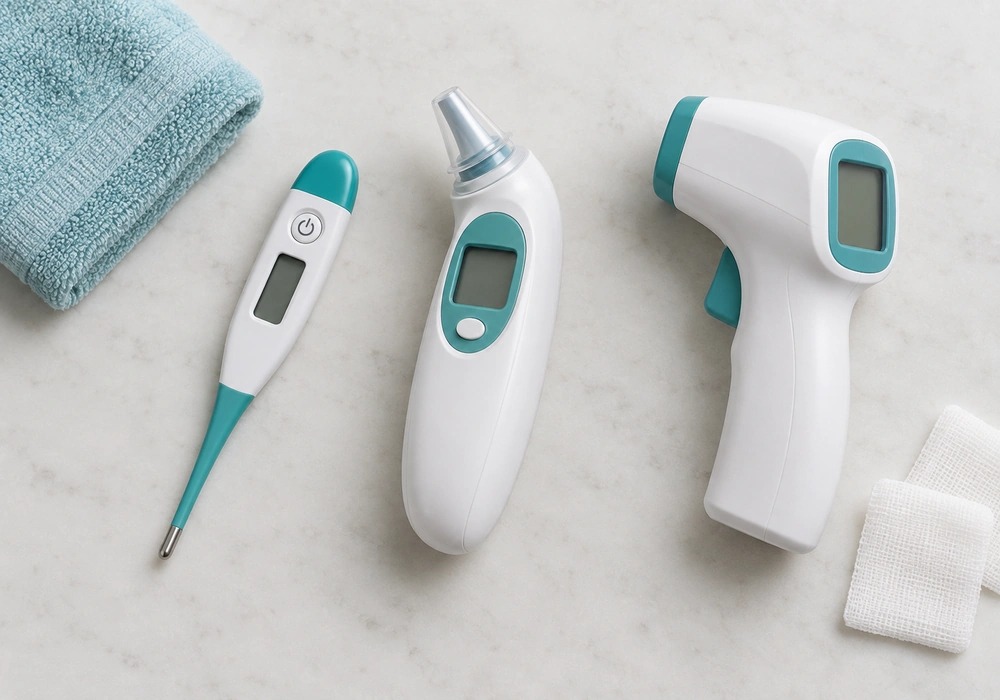
A veterinary ear thermometer can be useful when correctly positioned toward the eardrum. Accuracy varies because canine ear canals differ in shape and may contain hair, wax, debris, or inflammation. An ear infection can make insertion painful and distort the reading. If you use an ear device, establish a normal range with that specific thermometer rather than comparing every reading directly with a rectal chart.
Armpit measurements
Axillary, or armpit, readings are affected by fur, skin contact, positioning, and room temperature. They often read lower than core temperature. They may help follow a trend in a cooperative dog when no better method is possible, but they should not determine whether suspected heatstroke or hypothermia is safe to manage at home.
Forehead and non-contact infrared devices
Human forehead scanners measure surface temperature, not core temperature. Coat thickness, air temperature, blood flow, moisture, and the exact body site can change the result substantially. A normal-looking surface reading cannot rule out fever, heatstroke, shock, or hypothermia.
Why a Reading May Be Wrong
Before reacting to an unexpected number, consider how it was obtained.
Common causes of a falsely low reading include:
- The sensor was not inserted far enough
- The tip was embedded in stool instead of touching the rectal wall
- An ear thermometer was misaligned
- An armpit or surface reading was compared with a rectal reference range
- The thermometer was faulty or had a weak battery
Common causes of a temporary high reading include:
- Struggling during restraint
- A car ride or clinic visit
- Recent running, play, or barking
- A warm room or direct sunlight
- Panting caused by anxiety
If your dog is alert, breathing comfortably, and only mildly above the normal range, let them rest quietly for 10-15 minutes and repeat the measurement once. Do not delay care to obtain a second reading when serious symptoms are present.
How to Interpret Temperature With Other Vital Signs
A number becomes more meaningful when combined with simple observations.
Breathing
Count the breaths when your dog is fully relaxed or asleep. Persistent breathing difficulty, noisy airflow, open-mouth gasping, or a resting respiratory rate that is clearly abnormal for your dog increases urgency. See the guide to the normal breathing rate for dogs at rest for a step-by-step count.
Heart rate and pulse
Temperature, circulation, and heart rate influence one another. Fever, pain, dehydration, shock, and heat exposure can all change the pulse. The dog heart rate chart explains how to count a chest beat or femoral pulse and recognize concerning combinations.
Gum color and moisture
Healthy, unpigmented gums are generally pink and moist. Pale, white, blue-gray, muddy, or brick-red gums can indicate a circulation or oxygen problem, particularly when paired with abnormal temperature, weakness, or breathing difficulty. Use the dog gum color chart as an observation guide, not a diagnosis.
Hydration and behavior
Sticky gums, sunken eyes, reduced urination, weakness, or vomiting may accompany dehydration. The dog dehydration symptoms checklist can help organize observations for your veterinarian.
What to Do If Your Dog’s Temperature Is High
A high reading alone cannot tell you whether your dog has a fever or is overheating. If it stays high or your dog looks ill, call a veterinarian rather than trying to make that distinction at home.
For a mildly elevated reading in a stable dog:
- Stop exercise and move to a comfortable, well-ventilated room.
- Offer small amounts of fresh water without forcing the dog to drink.
- Allow 10-15 quiet minutes.
- Recheck once using the same method.
- Contact your veterinarian if the temperature remains above the normal range, reaches 104°F, or is accompanied by vomiting, diarrhea, pain, marked lethargy, coughing, shaking, or appetite loss.
Suspected heatstroke
Heatstroke is an emergency even if cooling begins to lower the number. Move the dog into shade or air conditioning, wet the coat with cool or lukewarm water, and create airflow with a fan during transport. Focus on getting to an emergency veterinary clinic.
Avoid ice water, ice baths, and rubbing alcohol. Extreme cold can narrow surface blood vessels and make heat transfer less effective, while alcohol can be toxic. Do not wrap the dog in wet towels for transport because a warming towel can trap heat against the body.
If you can monitor rectal temperature safely, veterinary triage references advise stopping active cooling at about 103°F (39.4°C) to reduce the risk of overshooting into hypothermia. Continue transport even if your dog appears to improve, because kidney injury, intestinal damage, abnormal clotting, and neurological complications may develop after the temperature falls.
What to Do If Your Dog’s Temperature Is Low
A low core temperature may follow cold exposure, immersion, anesthesia, shock, severe infection, blood loss, endocrine disease, low blood sugar, or advanced illness. Small, thin-coated, elderly, newborn, and underweight dogs lose heat more readily.

For a conscious dog with mild cold exposure:
- Move the dog indoors and remove wet bedding or clothing
- Dry the coat gently
- Wrap the trunk in warm, dry blankets
- Place a wrapped warm-water bottle near the chest or abdomen, never directly against skin
- Contact a veterinarian for advice and recheck temperature if it can be done safely
Do not use an unregulated electric heating pad. A weak or poorly perfused dog may not move away from a hot area and can suffer burns. Do not heat the legs aggressively or massage a severely chilled dog. Handle a profoundly hypothermic dog gently and travel to an emergency clinic.
Special Situations That Change the Meaning of the Chart
After anesthesia or sedation
Anesthetic drugs reduce heat production and interfere with temperature control. Follow the discharge instructions and call the clinic if your dog is difficult to wake, shivering continuously, breathing abnormally, or below the temperature limit your veterinarian provided.
Pregnancy and the pre-whelping temperature drop
Some pregnant dogs experience a rectal temperature drop near labor as progesterone falls. Breeders may take twice-daily measurements late in gestation to identify an individual trend, but a single low reading does not precisely predict delivery. Contact a veterinarian if the mother seems ill, has abnormal discharge, or strains without producing a puppy.
Brachycephalic dogs
Bulldogs, French Bulldogs, Pugs, and other short-nosed dogs may have less effective airflow for panting. Warmth, humidity, excitement, and exercise can therefore become dangerous before an owner expects it. Do not wait for an extreme thermometer reading when a short-nosed dog has noisy breathing, blue-gray gums, weakness, or collapse.
When to Call a Veterinarian Immediately
Seek urgent or emergency veterinary care if:
- The rectal temperature is 105°F (40.6°C) or higher
- The temperature is below 99°F (37.2°C) and the dog is weak, lethargic, confused, recently anesthetized, or exposed to cold
- The temperature remains above 104°F (40°C) after a quiet recheck
- Your dog collapses, cannot stand, has a seizure, or becomes unresponsive
- Breathing is labored, noisy, unusually slow, or open-mouthed
- Gums are blue-gray, white, very pale, muddy, or brick red
- There is bloody vomit, bloody diarrhea, unusual bruising, or pinpoint red spots
- The pulse is weak or difficult to find
- Your dog may have been trapped in a hot car or exercised heavily in heat
- A newborn puppy is cold, weak, crying continuously, or unable to nurse
When calling, report the temperature, measurement method, time, symptoms, recent activity, medications, known illnesses, and any possible heat or cold exposure. This information helps the veterinary team prepare before you arrive.
How to Keep a Useful Temperature Record
One isolated reading is less informative than a short, consistent record. Use a simple log when your veterinarian asks you to monitor at home.
| Date and time | Temperature | Method | Dog’s condition | Recent activity or medication |
|---|---|---|---|---|
| Example: 7:00 a.m. | 101.3°F | Rectal | Resting, alert, ate breakfast | No exercise; medication at 6:30 a.m. |
Measure at roughly the same times and under similar conditions. Avoid taking temperatures so often that your dog becomes stressed, since the monitoring itself can change the result. Ask your veterinarian how frequently to check and what number should trigger a call for your dog’s specific condition.
Common Mistakes When Using a Dog Temperature Chart
- Assuming every high reading means infection. Exercise, fear, pain, seizures, and environmental heat can also raise temperature.
- Judging fever by the nose or ears. A warm, dry nose cannot confirm fever, and cool ears cannot rule out illness.
- Comparing measurements from different sites as though they were equivalent. Rectal, ear, armpit, and surface temperatures can differ.
- Forcing the thermometer when the dog resists. This adds stress and risks injury.
- Giving human fever medicine. Common household drugs can poison dogs.
- Using ice for suspected heatstroke. Controlled cooling during rapid transport is safer than extreme cold.
- Dismissing symptoms because the number looks normal. Serious illness can be present before temperature changes.
- Delaying emergency care while trying to get a perfect reading. Collapse, breathing distress, abnormal gums, and seizures take priority.
Frequently Asked Questions
Is 103°F a fever in a dog?
It is mildly above the commonly cited normal rectal range, but context matters. Exercise, stress, or a warm environment can temporarily produce a reading around 103°F. Let an otherwise stable dog rest quietly for 10-15 minutes and recheck once. Call your veterinarian if the elevation persists or the dog has other symptoms.
Is 104°F dangerous for a dog?
A persistent rectal temperature of 104°F is concerning and warrants veterinary contact. It may reflect fever or overheating. If the dog is weak, vomiting, breathing hard, disoriented, or showing abnormal gum color, seek urgent care rather than waiting to recheck repeatedly.
Can I tell whether my dog has a fever by touching the nose?
No. Nose temperature and moisture change with sleep, licking, room conditions, and hydration. A warm or dry nose does not diagnose fever. Core temperature requires an appropriate thermometer.
What temperature is considered heatstroke in dogs?
Heatstroke is a clinical condition, not just one number. Temperatures around 105°F or higher with heat exposure and neurological, gastrointestinal, respiratory, or circulation abnormalities are highly concerning. A dog can still need emergency treatment at a lower reading if cooling has already started or severe symptoms are present.
Can a dog’s temperature be normal even when the dog is sick?
Yes. Normal temperature does not rule out pain, gastrointestinal disease, breathing problems, heart disease, poisoning, or early infection. Behavior, breathing, gum color, hydration, appetite, and examination findings still matter.
What to remember
A dog temperature chart helps you decide what to do next; it cannot explain why the temperature changed. For most healthy adult dogs, 99.5-102.5°F (37.5-39.2°C) is a practical normal rectal range. Recheck a mildly surprising result once your dog is calm, using the same method. Call a veterinarian if it remains abnormal. Extreme readings or serious symptoms belong in emergency care.
Know your dog’s calm baseline, measure consistently, record the circumstances, and assess the whole dog rather than chasing one number.
References
Related Articles
7 Fun Games for Dog Mental Stimulation
Mental stimulation for dogs is play and problem-solving that works the brain instead of just the legs: scent games, puzzle toys, hidden treats, new tricks. A physically tired dog can
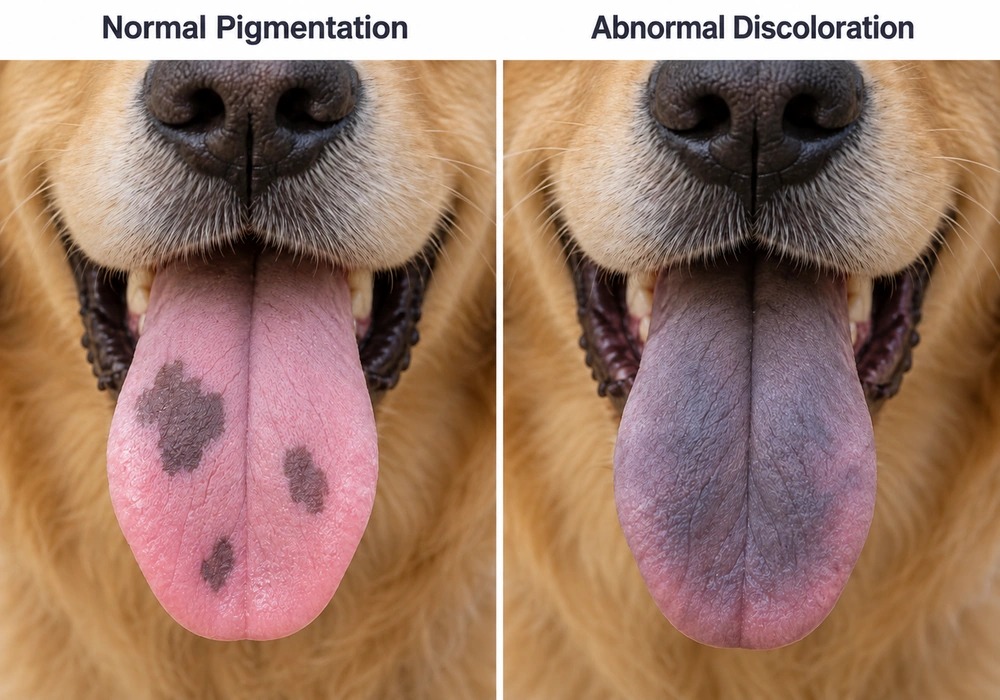
Why Is My Dog’s Tongue Grey?
Canine oral health and emergency triage Why Is My Dog's Tongue Grey? A grey tongue in dogs does not always mean the same thing. Some dogs are born with dark
How to Identify Canine Hormone Imbalance Symptoms
Canine endocrine health How to Identify Canine Hormone Imbalance Symptoms Hormones influence a dog's metabolism, appetite, thirst, skin, coat, muscles, stress response, blood sugar, and reproductive cycle. Most endocrine disorders