
Dog Gum Color Chart
Your dog’s gums can offer an early clue that something is wrong. Here is what each color means, how to check capillary refill time, and when it is safer to head straight to a veterinarian.
White: circulation warning
Blue: oxygen emergency
Yellow: bilirubin warning
A dog gum color chart is useful when you need to decide whether a change can wait or needs veterinary attention. In many healthy dogs, unpigmented gums are pink and moist, and their color returns within one to two seconds after gentle pressure. White, blue, gray, muddy brown, yellow, brick-red, or newly spotted gums tell a different story. They do not identify one specific disease, but they can be an important warning, especially when your dog is weak, breathing abnormally, bleeding, vomiting, or may have reached a toxin.
Emergency warning: Blue, gray, muddy-brown, suddenly white, or brick-red gums can signal a crisis. If your dog is also struggling to breathe, collapsing, bleeding, becoming weak, swelling around the face, overheating, or may have been poisoned, leave for an emergency clinic now. Rechecking the gums over and over only wastes time.
01Quick Dog Gum Color Chart
| Gum appearance | What it may indicate | Other signs to check | Suggested response |
| Pink and moist | Normal circulation and oxygenation for many dogs | Normal energy, breathing, appetite, and CRT of 1–2 seconds | Continue routine monitoring |
| Pale pink or white | Anemia, blood loss, shock, or poor circulation | Weakness, rapid breathing, cold limbs, weak pulse, collapse, or abdominal swelling | Urgent or emergency veterinary assessment |
| Bright red or brick red | Heatstroke, systemic inflammation, abnormal circulation, toxin exposure, or local inflammation | Heavy panting, high temperature, weakness, vomiting, altered behavior, or facial swelling | Emergency care if widespread or accompanied by illness |
| Blue, purple, or gray | Severe oxygen shortage or advanced circulatory failure | Labored breathing, neck extended, open-mouth breathing, collapse, or reduced responsiveness | Immediate emergency care |
| Yellow or mustard-colored | Increased bilirubin associated with red blood cell destruction, liver disease, or blocked bile flow | Yellow eyes, dark urine, vomiting, poor appetite, lethargy, or abdominal discomfort | Prompt veterinary examination |
| Muddy brown or chocolate | Abnormal hemoglobin that cannot carry oxygen effectively, sometimes caused by toxin exposure | Breathing difficulty, weakness, facial or paw swelling, dark urine, or medication ingestion | Immediate emergency care |
| Pinpoint red or purple spots | Bleeding under the tissue, platelet disorders, clotting problems, vascular inflammation, or toxins | Bruising, nosebleeds, blood in urine or stool, weakness, or unexplained bleeding | Urgent veterinary examination |
| Black or dark pigment | Often normal inherited pigmentation | Check whether it is flat, unchanged, and free from swelling, ulceration, or bleeding | Monitor established pigment; examine new or changing lesions |
Use the chart as a starting point: It can help with triage, but it cannot diagnose your dog. Room lighting and natural pigment can change how the gums look. So can stress, temperature, dental inflammation, and circulation.
02What Should Healthy Dog Gums Look Like?
Most healthy, unpigmented gums look light pink or salmon pink. The tissue should feel moist, not sticky, and fit snugly around the teeth. Obvious swelling, open sores, or bleeding without a clear cause is not normal.
Not every healthy mouth is pink. Some dogs are born with brown or black pigment on the gums, lips, or tongue. This is common in Chow Chows and Shar-Peis, but it also occurs in German Shepherds, Labrador Retrievers, and mixed-breed dogs.
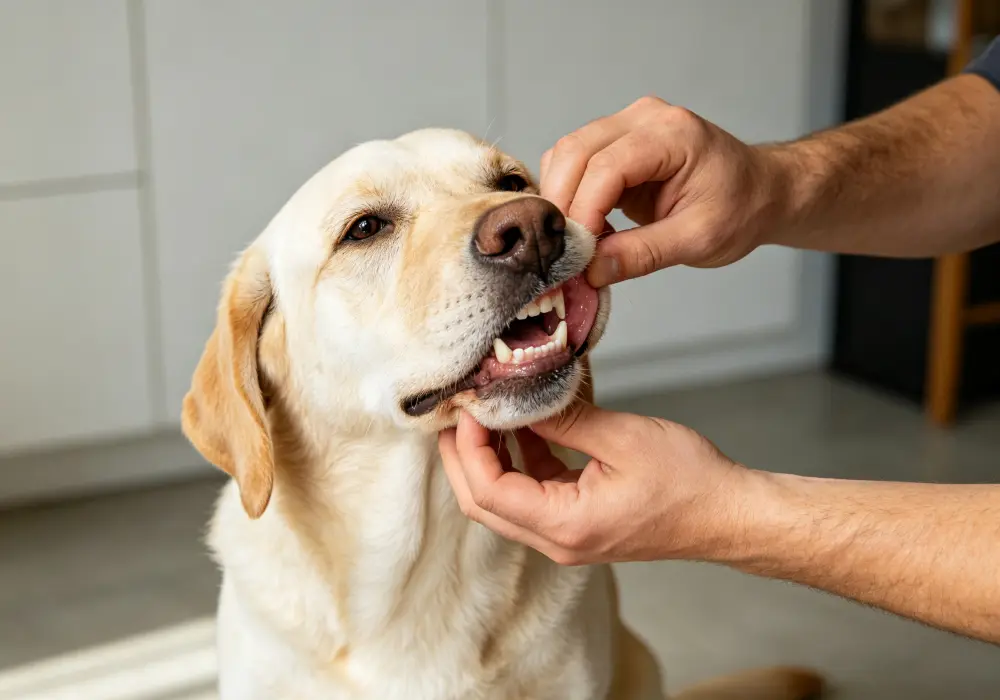
Your own dog’s normal gums are a better reference than a color shown on a screen. Pick a calm day when your dog feels well, then:
- Look at the gums in natural or neutral indoor light.
- Note which areas are pink and which are naturally pigmented.
- Check whether the surface is moist.
- Photograph the gums for future comparison if your dog tolerates this calmly.
- Ask your veterinarian to confirm what is normal at the next wellness examination.
A baseline photo is handy, but do not treat it as a perfect color sample. Phone cameras adjust brightness, white balance, and saturation automatically. Compare the photo with what you see in person, and pay attention to how your dog is acting.
For a broader wellness review, use our guide to the signs of a healthy dog.
03How to Check Your Dog’s Gums Safely
Check the mouth in a quiet, well-lit room. Wait if your dog is eating, guarding something, panting hard, or trying to move away. A painful or frightened dog may bite even if mouth checks are usually easy.
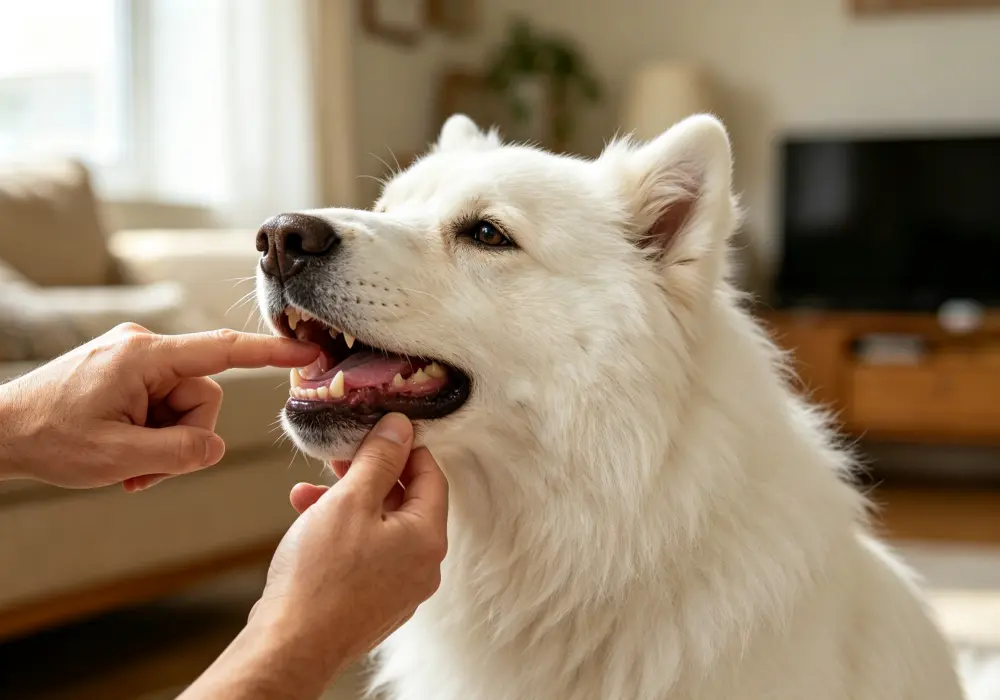
- Approach from the side instead of leaning directly over your dog.
- Gently lift the upper lip without forcing the mouth open.
- Examine a non-pigmented area above the canine teeth, if available.
- Look at the color, moisture, swelling, bleeding, and symmetry.
- Compare the appearance with your dog’s established baseline.
- Stop if your dog becomes frightened, stiff, painful, growls, or attempts to bite.
Do not press on an ulcer, fresh injury, or bleeding area. If your dog stiffens, turns away, growls, or shows pain, stop.
If you cannot check safely: Do not force the mouth open. Call a veterinary clinic and describe what you can see, how your dog is breathing and behaving, and whether medication, chemicals, heat, or trauma could be involved.
04How to Measure Capillary Refill Time
Capillary refill time, or CRT, is a quick check of blood flow near the surface of the body. It is only one piece of the examination. A veterinarian will also consider gum color, pulse strength, heart rate, temperature, breathing, and alertness.
- Find a pink, non-pigmented area of gum.
- Press gently with one finger until the tissue temporarily turns pale.
- Release the pressure.
- Count how long it takes for the pink color to return.
Generally considered a normal refill time when the dog is otherwise well.
May be associated with poor circulation or peripheral vasoconstriction.
May occur in a hyperdynamic state associated with fever, heatstroke, or some stages of shock.
Natural pigmentation or an uncooperative dog may prevent an accurate home check.
Capillary refill time at a glance
Usual range
Delayed refill
CRT is easy to misread. Cold gums, dark pigment, dim lighting, pressing too firmly, or counting inaccurately can change the result. Even a refill time that looks normal does not prove that a dog is well.
The Merck Veterinary Manual triage parameters also emphasize interpreting mucous membrane color and CRT alongside the rest of the patient.
What if your dog has black gums?
Try another area beneath the lip or around a different tooth. If every accessible area is pigmented, skip the home CRT rather than guessing. Watch breathing effort, alertness, body temperature, and any clear change from normal.
05Pale Pink or White Gums
Pale gums have less visible blood in the surface tissue than expected. A dog may have too few red blood cells, be losing blood, or be redirecting blood away from the gums during shock.
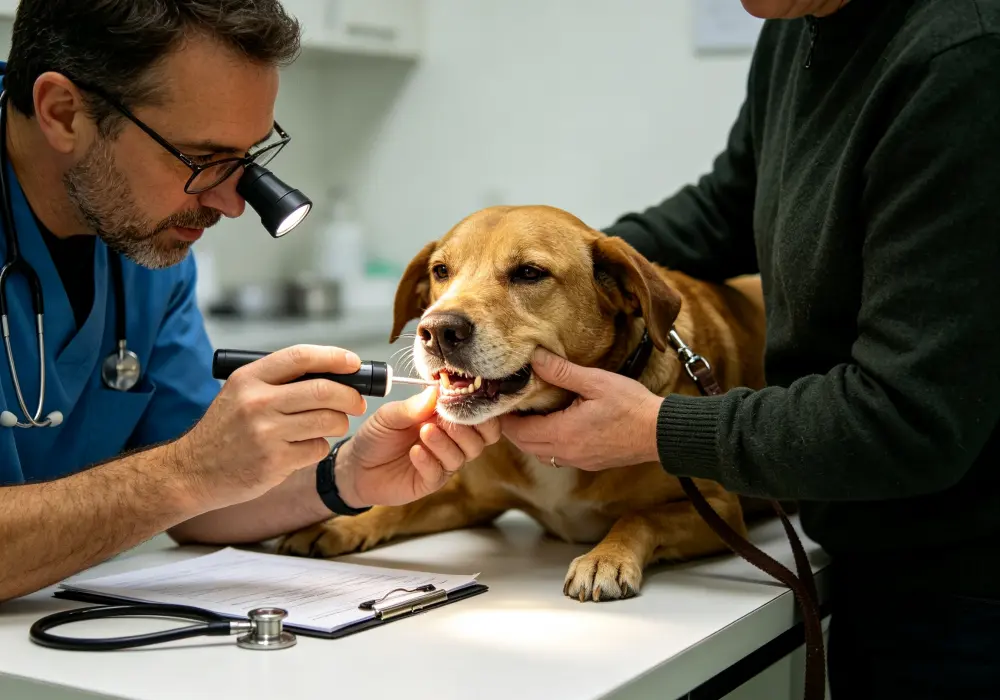
Possible causes include:
- internal or external bleeding;
- anemia;
- immune-mediated destruction of red blood cells;
- severe parasite burdens;
- chronic kidney disease;
- trauma;
- toxin exposure;
- circulatory shock; or
- some cancers that can rupture and bleed internally.
Suddenly white gums are especially worrying when the dog is weak, breathing fast, cold at the paws, reluctant to move, or has a swollen abdomen. A fast, faint pulse or collapse makes the situation even more urgent.
Do not wait for visible bleeding. Significant blood loss can occur inside the chest, abdomen, digestive tract, or another body cavity.
The Merck Veterinary Manual associates pale or white mucous membranes with anemia or shock and includes pale gums among the possible signs of circulatory failure in its pet emergency guide.
06Bright Red or Brick-Red Gums
Red gums can mean two very different things. Redness around one tooth often points to a mouth problem. When most of the gums turn bright or brick red and the dog looks ill, the cause may affect the whole body.
Redness along the gumline
Red, swollen tissue around one or more teeth often fits gingivitis, periodontal disease, or a local injury better than a circulation emergency.
Other signs may include:
- bad breath;
- visible plaque or tartar;
- reluctance to chew;
- dropping food;
- pawing at the mouth;
- bleeding during chewing; or
- loose or damaged teeth.
Dental disease can extend below the gumline and may not be fully visible during a home examination. Our dog teeth care guide explains why a professional oral assessment may still be needed when the visible teeth look relatively clean.
Cornell University’s periodontal disease overview notes that significant disease may exist below the gumline.
Widespread bright or brick-red gums
A widespread red or brick-red appearance is more concerning, especially when paired with:
- heavy or distressed panting;
- recent heat exposure;
- weakness or disorientation;
- vomiting or diarrhea;
- collapse;
- very rapid CRT;
- abnormally high body temperature; or
- possible smoke or toxin exposure.
Heatstroke and severe inflammation can drive more blood toward the surface and make the gums intensely red. That appearance may not last. As circulation begins to fail, both gum color and CRT can change again.
If heat exposure is possible, move your dog into a cooler environment and contact an emergency clinic immediately. Follow veterinary instructions while traveling. Avoid delaying transportation while trying to normalize the gum color at home.
See our dog heat stroke warning signs for additional emergency guidance.
07Blue, Purple, or Gray Gums
Blue, purple, slate-gray, or dusky gums suggest that too little oxygen is reaching the tissues. Veterinarians call this cyanosis. At home, the important point is simpler: it is an emergency.
Possible causes include:
- upper-airway obstruction;
- severe pneumonia;
- fluid in or around the lungs;
- heart failure;
- respiratory collapse;
- severe hypothermia;
- blood clots affecting circulation; or
- advanced shock.
Do not judge breathing by the number alone. A dog in distress may breathe with the mouth open while resting, stretch the head and neck forward, hold the elbows away from the chest, or pull hard with the abdomen. Noisy breathing, weakness, and collapse add to the concern.
Blue or gray gums are an emergency. Transport your dog to an emergency veterinary facility immediately. Keep handling and stress to a minimum, and do not place anything inside the mouth unless instructed by a veterinary professional.
Merck’s guidance on small-animal emergency triage explains that gray, dark-pink, or blue mucous membranes may accompany a substantial loss of pulmonary function.
08Yellow or Mustard-Colored Gums
Yellow gums usually mean bilirubin has accumulated in the tissues. Bilirubin is produced as red blood cells are broken down, and the discoloration is called jaundice or icterus.
Veterinarians usually trace jaundice to one of three places in the process:
- Pre-hepatic: Red blood cells are being destroyed faster than the liver can process their breakdown products.
- Hepatic: Liver cells cannot adequately process or remove bilirubin.
- Post-hepatic: Bile cannot flow normally because of an obstruction involving the gallbladder, pancreas, or bile ducts.
Potential underlying conditions include immune-mediated hemolytic anemia, infections, toxin exposure, severe liver inflammation, gallbladder disease, pancreatitis, and biliary obstruction.
Look at the whites of the eyes, the inner ear flap, and any unpigmented skin. They may also look yellow. Dark urine, loss of appetite, vomiting, abdominal pain, fever, or unusual tiredness gives the veterinarian more context, but the color alone is enough to arrange a prompt examination.
Yellow gums require prompt veterinary investigation. Gum color cannot determine whether the problem comes from red blood cell destruction, liver dysfunction, or blocked bile flow.
09Muddy Brown or Chocolate-Colored Gums
A new muddy or chocolate-brown color is not the same as the flat, dark pigment a dog has always had. It can occur with methemoglobinemia, in which hemoglobin has been altered and no longer carries oxygen normally.
Toxin exposure is an important possibility. Acetaminophen, also called paracetamol, can cause serious poisoning in dogs. Other oxidizing substances may produce similar changes.
Possible accompanying signs include:
- breathing difficulty;
- rapid heart rate;
- weakness;
- facial or paw swelling;
- vomiting;
- dark urine;
- collapse; or
- suspected access to human medication.
This is an emergency. Do not give additional medication, induce vomiting, or attempt an antidote unless a veterinarian or animal poison-control professional specifically instructs you to do so. Bring the package or a photograph of the suspected product to the clinic.
10Red or Purple Spots on the Gums
Tiny flat red or purple dots are called petechiae. Larger bruise-like patches are ecchymoses. Unlike normal pigment, these marks come from bleeding beneath the tissue.
Possible causes include:
- very low platelet numbers;
- impaired platelet function;
- immune-mediated disease;
- certain tick-borne or infectious diseases;
- blood-clotting disorders;
- anticoagulant rodenticide exposure;
- severe systemic inflammation; or
- vascular injury.
Check elsewhere for unexplained bruising or bleeding. Look for nosebleeds, blood in urine, dark or bloody stool, prolonged bleeding from a minor injury, weakness, or collapse.
A scrape from chewing a hard object may leave one obvious sore area. Pinpoint marks scattered across the gums are different, but the distinction is not always clear at home. Call your veterinarian when spots appear without an obvious injury.
11Black Gums and Natural Pigmentation
Black or brown gums are often normal. Long-standing pigment is usually:
- flat;
- unchanged over time;
- similar to pigmentation elsewhere in the mouth;
- free from ulceration;
- not swollen; and
- not painful or bleeding.
Normal pigment needs no treatment. It simply makes a baseline photo and familiarity with the mouth more useful.
Arrange a veterinary oral examination if a dark area is new, growing rapidly, raised, irregular, asymmetrical, ulcerated, bleeding, producing an odor, or associated with difficulty eating.
Not every suspicious dark lesion is cancer, and not every oral tumor is darkly pigmented. Visual inspection cannot identify the type of a mass. A veterinarian may recommend sampling or biopsy when a lesion is concerning.
12Gum Moisture Matters Too
Color is only half of a useful gum check. Healthy oral tissue is usually moist and slick. Tacky or dry gums can occur with dehydration, but panting, anxiety, medication, reduced saliva, and a dry environment can produce a similar feel.
Possible accompanying dehydration signs include:
- reduced energy;
- poor appetite;
- vomiting or diarrhea;
- reduced urination;
- sunken-looking eyes;
- thick saliva; or
- inability to keep water down.
Gum moisture and the familiar skin-tent test are both rough checks. They are particularly easy to misread in puppies, older dogs, very thin or overweight dogs, and breeds with loose skin.
Use our dog dehydration symptoms checklist to record several observations instead of relying on one test.
13Why Gum Color Cannot Diagnose a Disease
A gum check can tell you that something may be wrong. It usually cannot tell you what the underlying disease is.
Several illnesses can produce the same color. Pale gums occur with anemia, blood loss, shock, and sometimes blood-vessel constriction from pain or cold. Redness may stay around a diseased tooth or spread across the mouth during heatstroke and circulatory changes. Yellow tells the veterinarian that bilirubin is present, but not whether the trouble began with red blood cells, the liver, or bile drainage.
Veterinarians may combine the oral examination with:
- heart and lung auscultation;
- pulse quality;
- blood pressure;
- body temperature;
- oxygen measurement;
- a complete blood count;
- blood smear examination;
- platelet count;
- serum chemistry;
- bilirubin testing;
- coagulation tests;
- urinalysis;
- radiographs; or
- ultrasound.
Merck’s overview of common veterinary laboratory tests explains that gum appearance and CRT provide useful clues, but laboratory and physical examination findings are needed to investigate anemia, jaundice, shock, and related conditions.
14When Is a Gum-Color Change an Emergency?
Go immediately
Blue, gray, muddy-brown, suddenly white, or brick-red gums accompanied by breathing difficulty, collapse, bleeding, heat exposure, or suspected poisoning.
Contact a vet promptly
Yellow gums, unexplained spots, persistent generalized redness, new pallor, changing dark lesions, or tacky gums with vomiting and poor intake.
Monitor the baseline
Established pigmentation and consistently pink, moist gums in a dog that is eating, drinking, breathing, moving, and behaving normally.
When you call, say what color you see and when it changed. Mention breathing effort, alertness, bleeding, vomiting, recent heat, medication or chemical exposure, and the CRT if you could measure it safely. A photo can help the clinic understand what you saw, but do not stop to take one during an obvious emergency.
15How to Create a Useful Baseline Record
- Take one photograph in neutral daylight.
- Record the normal color and pigmentation pattern.
- Note the usual gum moisture and CRT.
- Repeat the check occasionally when your dog is relaxed and healthy.
- Save the numbers for your regular veterinarian and nearest emergency clinic.
- Keep a current list of medications and health conditions.
- Record any history of anemia, heart disease, lung disease, liver problems, clotting disorders, or toxin exposure.
It also helps to know your dog’s normal resting breathing rate. A change in gum color means more when it appears alongside labored breathing, an abnormal rate, weakness, or poor circulation.
16Frequently Asked Questions
17The Bottom Line
A dog gum color chart works best as an early warning, not a home diagnostic test. For many dogs, pink, moist gums and a refill time of about one to two seconds are reassuring. What matters most is whether the color has changed from your dog’s usual appearance and whether other symptoms appeared with it.
Do not wait on a sudden abnormal color when your dog is struggling to breathe, collapsing, bleeding, or becoming hard to wake. Check once if it is safe, tell the clinic what you saw, and get veterinary help. The gum check has done its job once it alerts you that something may be wrong.
Related Articles
7 Fun Games for Dog Mental Stimulation
Mental stimulation for dogs is play and problem-solving that works the brain instead of just the legs: scent games, puzzle toys, hidden treats, new tricks. A physically tired dog can
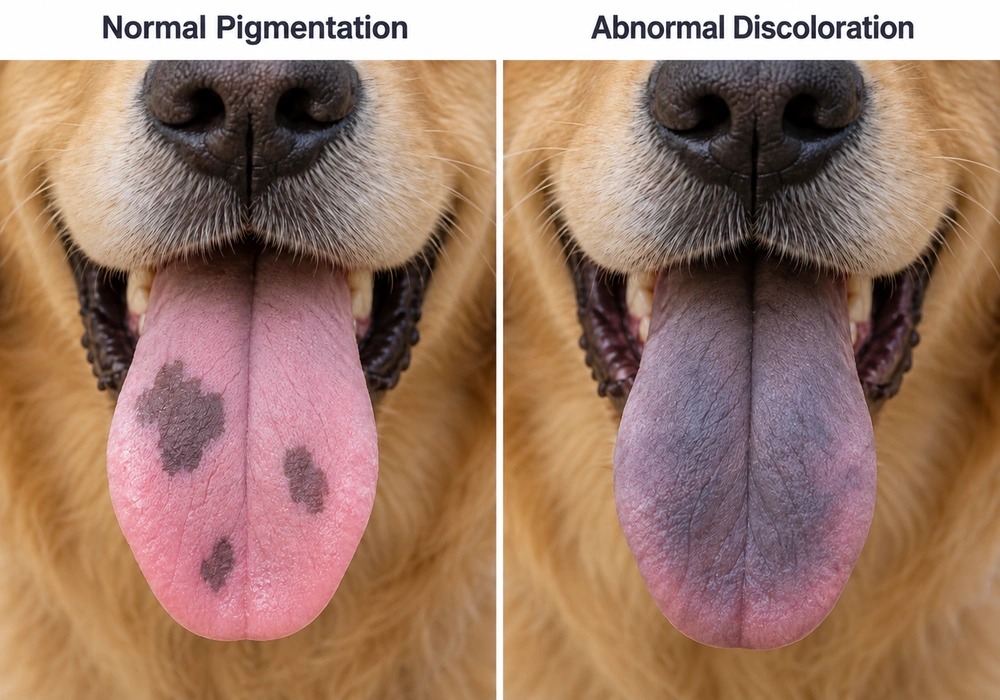
Why Is My Dog’s Tongue Grey?
Canine oral health and emergency triage Why Is My Dog's Tongue Grey? A grey tongue in dogs does not always mean the same thing. Some dogs are born with dark
How to Identify Canine Hormone Imbalance Symptoms
Canine endocrine health How to Identify Canine Hormone Imbalance Symptoms Hormones influence a dog's metabolism, appetite, thirst, skin, coat, muscles, stress response, blood sugar, and reproductive cycle. Most endocrine disorders