
Why Does My Dog Cough at Night?
A dog may cough at night because the bedroom air is irritating an already sensitive throat. Repeated episodes can also point to tracheal collapse, bronchitis, reflux, infection, or heart and lung disease. The hour on the clock does not tell you which one it is.

Is It Actually a Cough?
Several noises get described as coughing. A true cough usually starts with a forceful breath out and sometimes ends in a gag. Retching brings visible abdominal contractions and may produce food or fluid. During a reverse sneeze, the dog takes a rapid series of noisy breaths in, often while stretching the neck forward. Snoring and throat clearing add to the confusion.
If gagging is the most obvious part of the episode, compare the pattern with our guide to dog coughing and gagging.
Why Can a Dog’s Cough Seem Worse at Night?
Lying down changes the conditions in the chest and throat. Mucus can settle in the lower airways. A weak or narrowed airway may behave differently when the neck bends. After a late meal, stomach contents can travel back toward the throat. Dry air from heating or air conditioning adds another possible irritant.
There is also a simpler explanation for the timing: the house is quiet. A cough that disappears into daytime noise is hard to miss beside the bed. “Only at night” is still worth writing down, but it is a clue rather than a diagnosis.
Common Causes of Dog Coughing at Night
Dry air, smoke, dust, or fragrance
Smoke, aerosol sprays, incense, diffusers, dusty bedding, and very dry indoor air can set off a dry cough. If the cough eases in another room, the environment may be involved. An underlying airway problem can still be present.
Tracheal collapse
A harsh “goose-honk” cough is common in affected toy and small dogs. Excitement, pressure from a collar, heat, drinking, and certain sleeping positions may trigger an episode.
Chronic bronchitis
Inflamed bronchi cause a cough that lingers and may sound dry or productive. During sleep, mucus settles. The dog may launch into a coughing spell after rolling over or getting up.
Respiratory infection
Think back to recent boarding, daycare, grooming, shelter visits, or time around a coughing dog. Nasal discharge, fever, poor appetite, or a dog who is plainly not feeling well makes a prompt examination more pressing.
Reflux or microaspiration
Coughing shortly after lying down may accompany lip licking, repeated swallowing, burping, regurgitation, or retching. Dogs with swallowing problems, megaesophagus, or laryngeal disease have greater aspiration risk.
Heart disease or pulmonary edema
Fluid in the lungs can cause coughing, faster breathing, restlessness, and trouble settling. A heart murmur does not prove that the cough comes from the heart. Older dogs often have an airway problem and heart disease at the same time.
Laryngeal paralysis or brachycephalic obstruction
Older large-breed dogs with laryngeal paralysis may have a changed bark, noisy breathing, heat intolerance, and coughing while eating or drinking. Flat-faced dogs may snore, gag, or struggle more when relaxed.
Parasites, fungal disease, or a foreign body
Heartworm risk depends on where the dog lives or travels and whether prevention is current. Fungal disease and inhaled material are less common. They move higher on the list when there is relevant travel, fever, weight loss, or a very sudden start.
| Pattern you notice | What it may suggest | Useful next step |
|---|---|---|
| Dry, honking cough in a small dog | Tracheal collapse or airway irritation | Use a harness, record an episode, and arrange an examination |
| Cough after lying down or after a late meal | Reflux, regurgitation, aspiration risk, or airway secretions | Record meal timing and any lip licking, swallowing, or regurgitation |
| Wet cough with fever or low energy | Infection, pneumonia, or fluid in the lungs | Seek prompt veterinary assessment |
| Cough with fast sleeping breaths or restlessness | Possible heart or lung disease | Count sleeping breaths and contact your veterinarian |
| Sudden coughing after chewing grass, sticks, or toys | Throat irritation or inhaled foreign material | Urgent examination if coughing persists or breathing changes |
When Is Nighttime Coughing an Emergency?
Do not wait for morning if coughing is accompanied by signs that your dog is not moving enough oxygen or is working hard to breathe.
- Open-mouth breathing while resting
- Blue, gray, or very pale gums or tongue
- Collapse, fainting, profound weakness, or poor responsiveness
- An extended neck, elbows held away from the chest, or obvious abdominal effort
- Pink froth, blood, or repeated coughing that prevents normal breathing
- A rapidly worsening breathing rate together with distress
If color is difficult to judge, see the examples in our dog gum color guide and gray tongue guide, but do not delay an emergency visit to compare photographs.
What to Observe Before the Appointment
You do not need to diagnose the cough at home. A plain record of what happened is more useful and can help the veterinarian choose the first tests.
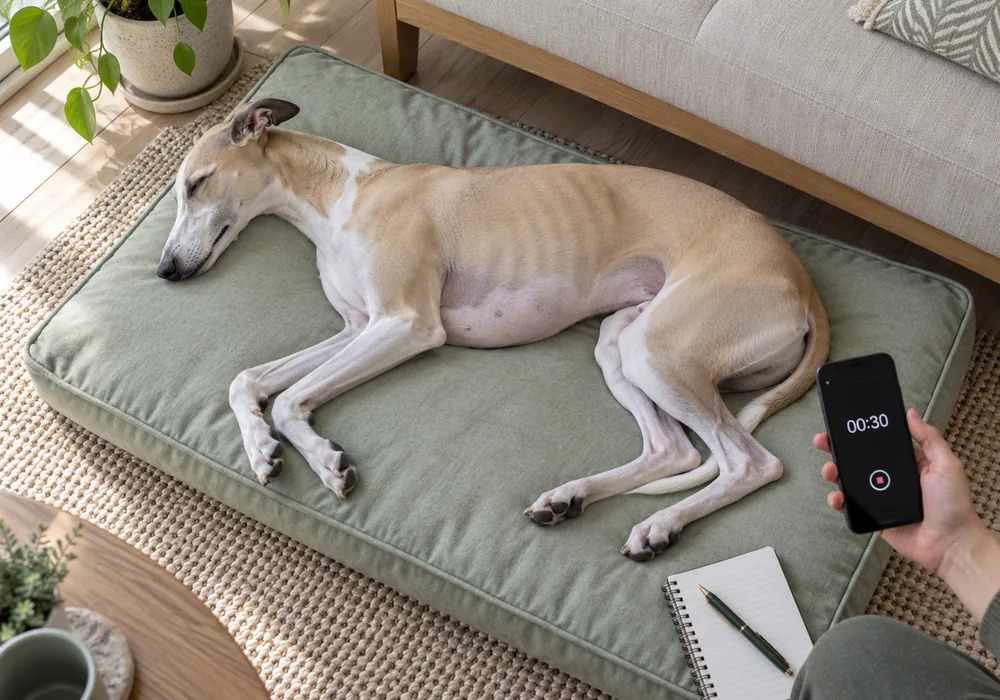
For a detailed counting method, use our guides to normal breathing rate at rest and fast breathing during sleep.
How a Veterinarian Investigates a Nighttime Cough
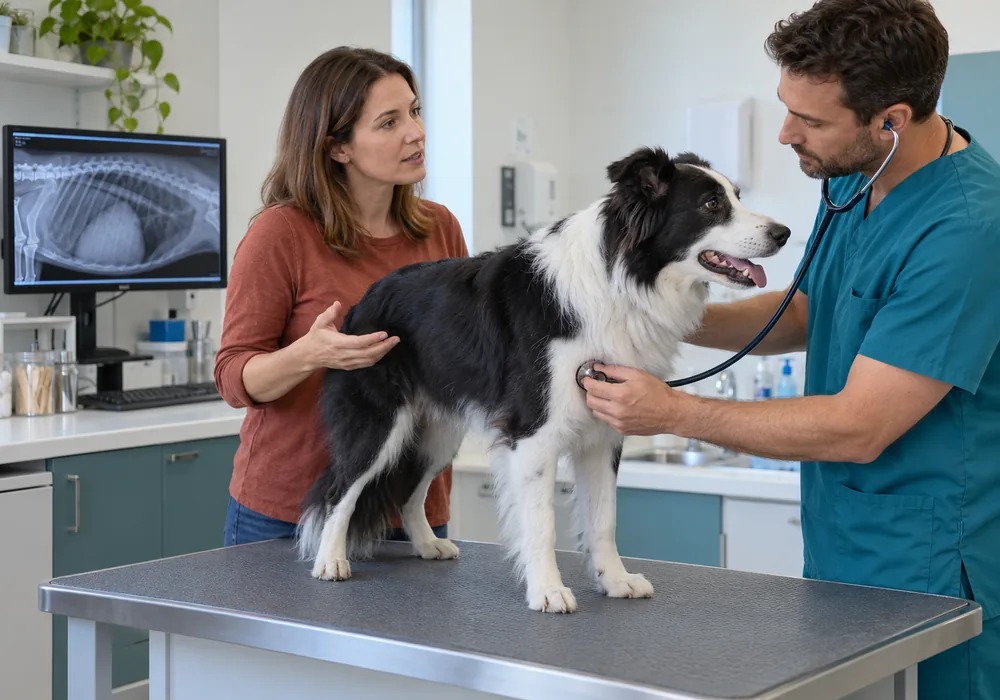
The examination begins with the pattern you observed, medication and travel history, temperature, gum color, breathing effort, heart and lung sounds, and the dog’s airway anatomy. The next step depends on what that first assessment suggests.
- Chest X-rays to assess lungs, airways, and heart silhouette
- Heart testing such as an ECG, echocardiogram, or selected biomarkers
- Fluoroscopy when dynamic tracheal or bronchial collapse is suspected
- Bloodwork, urinalysis, or infectious-disease testing
- Airway sampling or bronchoscopy in selected chronic cases
- Swallowing or gastrointestinal evaluation when reflux or aspiration is suspected
A heart murmur and a cough can occur together without congestive heart failure. The reverse trap is assuming that a dog who looks comfortable between spells cannot be ill. The examination and test results, rather than the sound alone, decide what should be treated.
Frequently Asked Questions
Why does my dog cough as soon as they lie down?
Position can change the shape of a weak airway. Lying flat also allows mucus to settle and makes it easier for reflux to reach the throat. In some dogs, breathing trouble caused by fluid in the lungs becomes clearer at rest. The timing helps, but it does not identify the cause on its own.
Can dry air make a dog cough at night?
Yes. Heated or air-conditioned rooms can dry and irritate an already sensitive airway. Remove smoke and fragrance sources, wash dusty bedding, and keep a humidifier clean if you use one. Recurrent coughing still warrants an examination.
Does a nighttime cough mean my dog has heart failure?
No. Heart-related fluid in the lungs is one possibility, particularly when coughing occurs with fast or labored breathing, poor exercise tolerance, or restlessness. Tracheal collapse, bronchitis, infection, and reflux can produce similar complaints. A murmur alone cannot identify the cause.
Can I give my dog honey or human cough medicine?
Do not use human cough or cold products without veterinary direction. Some contain ingredients that are toxic to dogs, and suppressing a productive cough can be harmful. Honey is not a substitute for diagnosis and may be inappropriate for some dogs.
When should I book a regular veterinary appointment?
Arrange an appointment when the cough recurs over more than a night, interrupts sleep, is becoming more frequent, or appears with reduced appetite, nasal discharge, weight change, exercise intolerance, or a changed bark. Use emergency care for breathing distress, abnormal gum color, collapse, blood, or pink froth.
Related Articles
Great Dane Heart Rate: Normal Range and Warning Signs
Great Dane cardiac health Great Dane Heart Rate: Normal Range and Warning Signs Put your fingers on a sleeping Great Dane's pulse and it may feel surprisingly slow. That can
Why Is My Old Dog Suddenly Not Eating
Senior dog appetite guide Why Is My Old Dog Suddenly Not Eating? A skipped meal is not always a crisis. Still, when an older dog suddenly walks away from food,
Why Does My Dog Cough at Night?
Nighttime cough guide Why Does My Dog Cough at Night? A dog may cough at night because the bedroom air is irritating an already sensitive throat. Repeated episodes can also