
What Is a Normal Chihuahua Heart Rate?
A Chihuahua’s heartbeat can feel surprisingly fast beneath your fingers. That does not automatically mean something is wrong. Age, activity, anxiety, pain, and even the place where you take the reading can change the result. The number is most useful when your dog is calm and you record what you see at the same time.
This guide is for home observation, not self-diagnosis. A pulse reading cannot identify a heart murmur, valve disease, anemia, pain, fever, dehydration, or an abnormal electrical rhythm.
Normal Chihuahua Heart Rate by Situation
No single number is normal in every situation. Some veterinary references give one range for all dogs; others separate dogs by size. The Merck Veterinary Manual lists 70 to 120 bpm for dogs overall and notes that smaller dogs tend to be faster. The UC Davis veterinary emergency reference gives 100 to 160 bpm for small dogs and 120 to 160 bpm for puppies.
For everyday home monitoring, use the following table as context rather than a pass-or-fail test.
| Situation | Practical reference | How to interpret it |
|---|---|---|
| Calm adult, awake | Often about 100-140 bpm; some small-dog charts extend to 160 bpm | Repeat the reading after several quiet minutes and compare it with your dog’s normal baseline. |
| Puppy | Often about 120-160 bpm | Age and excitement have a strong effect. See the dedicated puppy heart rate guide for age-specific context. |
| Sleeping deeply | May be lower than the awake rate | A smooth, comfortable sleeper with pink gums may have a slower pulse. Establish an individual baseline instead of relying on one universal sleep cutoff. |
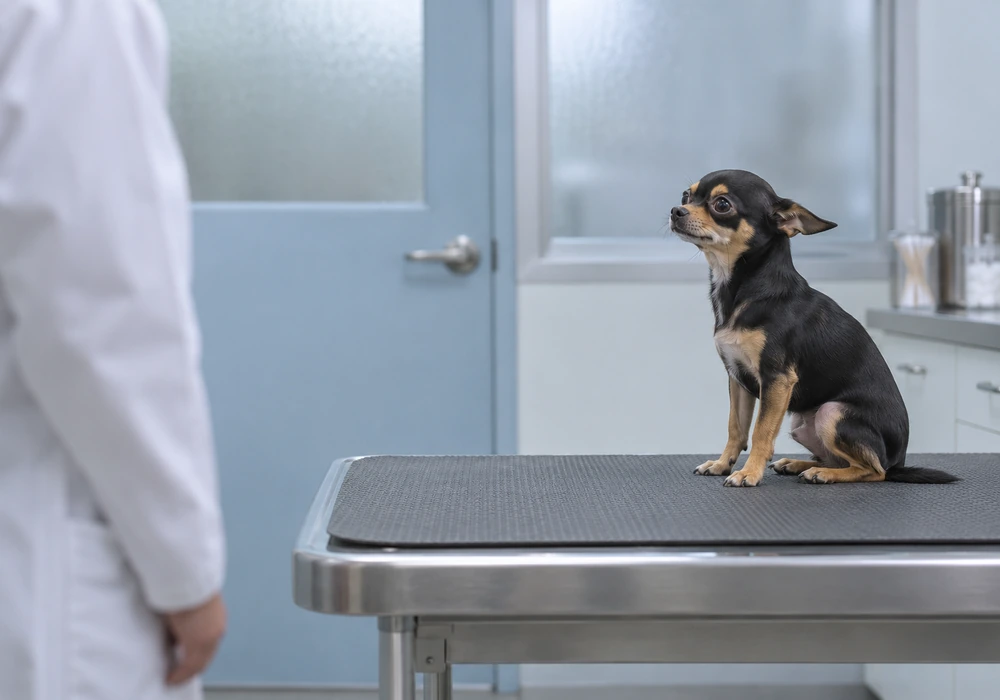
| Nervous or at the clinic | May temporarily reach the upper end of the range or above it | Trembling, panting, handling, and unfamiliar surroundings can raise the rate. A calm home recheck gives useful context. |
| Immediately after activity | Temporarily elevated | The rate should trend downward as your dog recovers. A persistently rapid rate at complete rest deserves veterinary advice. |
Use the number as a trend, not a verdict
Movement, panting, fear, and simple counting mistakes can distort one reading. Take a few calm measurements on different days. That record is more useful than a number gathered while your dog is squirming in your lap. For comparison with other breeds and body sizes, see the site’s dog heart rate chart.
How to Check a Chihuahua’s Heart Rate at Home
Choose a time when your Chihuahua is lying quietly. Avoid measuring just after exercise, a large meal, a barking spell, or an excited greeting. If your dog is panting or pulling away, stop and try later.
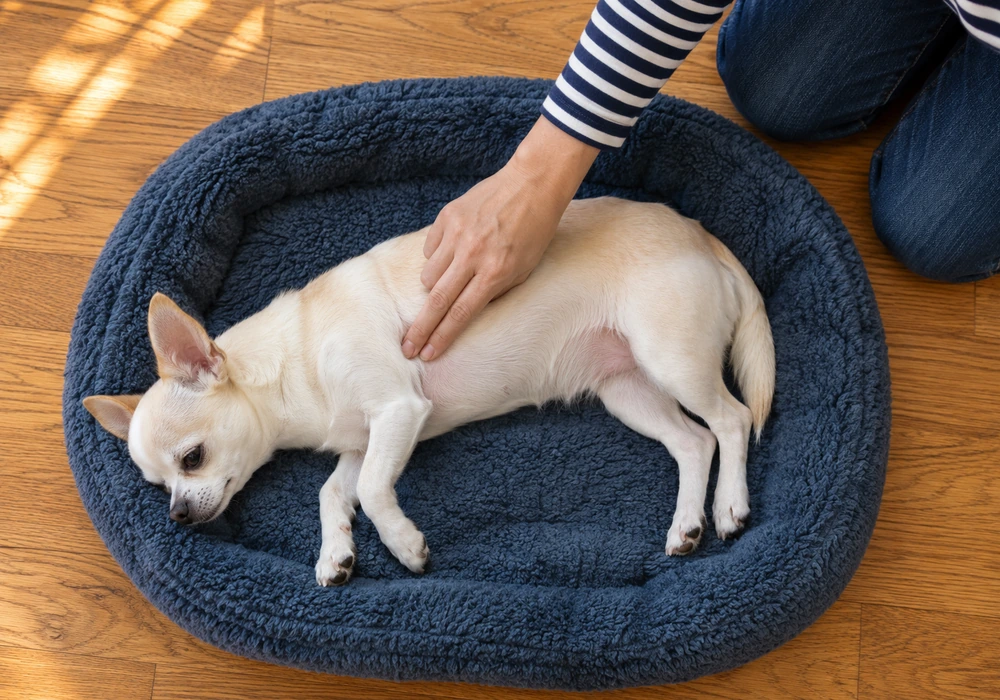
Let your dog settle
Sit nearby for five to ten quiet minutes. Record whether your dog is awake, drowsy, or asleep because the state changes how the number should be interpreted.
Find the heartbeat or femoral pulse
Place your palm on the left side of the chest just behind the elbow, or gently place two fingers high on the inside of a rear thigh where the femoral artery passes. Do not use your thumb because its own pulse can confuse the count.
Count long enough to notice the rhythm
If the beat feels steady, count for 15 seconds and multiply by four. If it feels uneven, very fast, very slow, or difficult to follow, count for a full 60 seconds. Dogs can have a normal breathing-related rhythm change, so a longer count reduces error.
Repeat and write down the context
Wait a minute and count again. Write down the time and what your dog was doing. Add anything unusual, such as a weak pulse, coughing, pale gums, or a recent medication dose. If the breathing or chest movement looks odd, a short video may help your veterinarian.
Stop if checking causes distress
Do not hold down a frightened Chihuahua, press hard into the groin, or keep counting while the dog struggles to breathe. If collapse, blue or very pale gums, severe weakness, or labored breathing is present, skip repeated measurements and seek emergency veterinary care.
Why a Chihuahua’s Heart Rate Changes So Easily
The white-coat effect
The car ride, unfamiliar smells, handling, and anticipation can all raise the rate. A clinic reading may be much higher than a quiet home reading, and that difference alone does not prove heart disease.
Movement and excitement
Play, barking, an excited greeting, and shivering can raise the rate. Wait for your dog to settle. How quickly the heartbeat returns toward its usual level often tells you more than the highest number.
Pain, heat, and illness
Fever, pain, dehydration, anemia, low blood sugar, breathing disorders, and some medications can also change heart rate. An unexpected result needs to be considered alongside the rest of the dog’s condition.
A prospective study that monitored dogs at home found that resting heart rate varied with body size and age. Repeated home readings can therefore help you learn what is usual for your Chihuahua. A wearable or phone app still cannot replace a veterinary examination or ECG. The methods and results are available in the AI-COLLAR study.
Heart Rate and Heart Rhythm Are Not the Same
Heart rate is the number of beats per minute. Heart rhythm describes the pattern and timing of those beats. A Chihuahua can have a rate inside a reference range but still have an abnormal rhythm, or a rapid but regular rhythm caused by excitement.
If the rhythm feels uneven, count for a full minute and make a note of what you felt. Do not try to identify the rhythm at home. After examining your dog, a veterinarian may suggest an ECG or bloodwork. Some dogs also need chest X-rays, an echocardiogram, or a Holter monitor.
Heart Monitoring in a Senior Chihuahua
Myxomatous mitral valve disease becomes more common as small dogs age. The ACVIM consensus guidelines recommend regular veterinary auscultation for small dogs at increased risk. Counting the pulse cannot confirm a murmur. A dog may also have heart disease before the owner notices obvious symptoms.
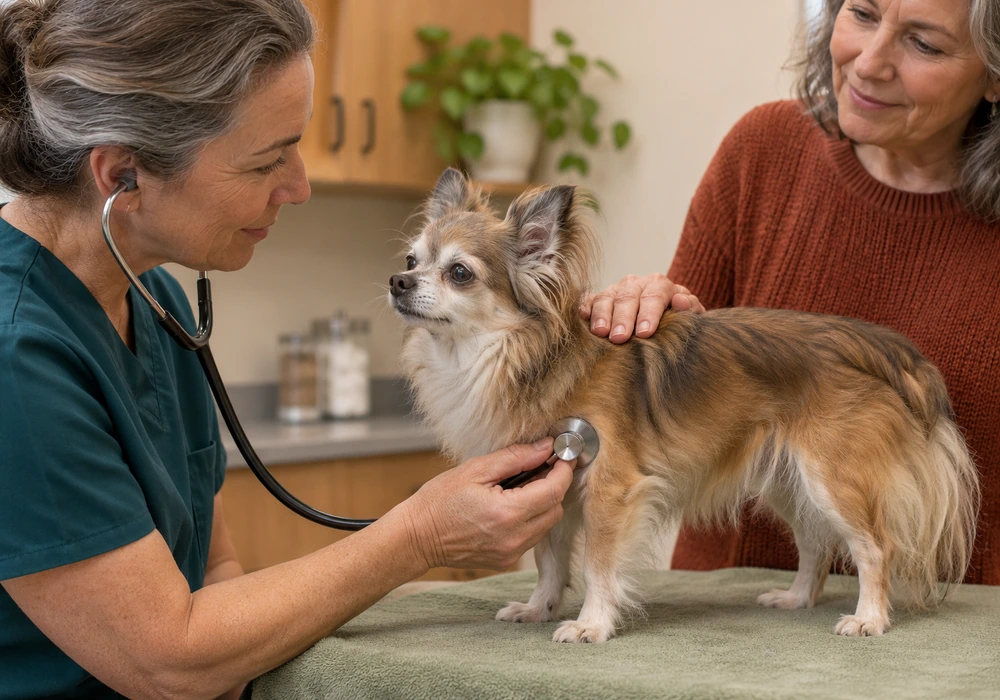
Track the baseline
Measure the heart rate under similar calm conditions once or twice a week if your veterinarian recommends it. Look for a sustained change from your dog’s usual pattern rather than chasing a perfect number.
Count breathing too
For dogs with known heart disease, sleeping respiratory rate can be especially helpful. Healthy and subclinical-heart-disease studies generally found average sleeping rates below 25 to 30 breaths per minute.
Share the full record
Bring the dates and readings, along with notes about coughing, fainting, appetite, and medication times. A clear record helps the veterinarian decide what to investigate.
Learn how to count breaths in the site’s guide to a normal breathing rate for dogs at rest. For broader age-related care, use the Senior Chihuahua Care Guide.
When Is a Chihuahua Heart Rate Concerning?
Contact your veterinarian if calm readings repeatedly fall outside your Chihuahua’s usual range and do not settle with rest. The number is only one part of the decision. Breathing trouble, a weak or irregular pulse, abnormal gum color, and changes in behavior can make the situation more urgent.
- A new resting rate that repeatedly remains much faster or slower than usual
- An irregular rhythm or pulse that is difficult to count
- Reduced stamina, reluctance to walk, or unusual tiredness
- New nighttime coughing or a rising sleeping respiratory rate
- Appetite loss, weight loss, or abdominal swelling
- Collapse, fainting, inability to stand, or severe weakness
- Open-mouth breathing, obvious breathing effort, or inability to settle
- Blue, grey, white, or markedly pale gums
- A very rapid or very slow pulse accompanied by poor responsiveness
- Sudden distress with cold limbs or a weak, difficult-to-find pulse
Use the dog gum color chart only as a visual aid; abnormal color plus breathing difficulty or collapse is an emergency. If coughing is the main concern, compare the pattern with dog coughing at night. Coughing can come from airway disease as well as heart disease, so it should not be diagnosed from the sound alone.
A Simple Chihuahua Heart Rate Log
Use the same quiet location and counting interval each time. Always note what your dog was doing. Otherwise, a log full of numbers can be difficult to interpret.
| Date and time | State | Heart rate | Rhythm and pulse | Sleeping breaths | Symptoms or notes |
|---|---|---|---|---|---|
| Example: Monday, 9 pm | Awake, lying quietly | 116 bpm | Regular; pulse strong | Not measured | No cough; normal appetite and walk |
| Your reading | |||||
| Your reading |
Frequently Asked Questions
Is 120 bpm normal for a Chihuahua?
It can be normal for a calm, awake Chihuahua because it sits within commonly used small-dog reference ranges. Interpret it alongside the dog’s state, rhythm, breathing, gum color, and usual baseline.
Why is my Chihuahua’s heart beating fast while resting?
A recent burst of activity or fear is a common reason. Heat, pain, fever, dehydration, anemia, low blood sugar, breathing disorders, medication effects, and heart disease are other possibilities. Let your dog settle and count again. Call a veterinarian if the increase persists, especially if your dog is weak, coughing, breathing with effort, or has abnormal gum color.
Can a sleeping Chihuahua have a heart rate below 100 bpm?
Yes. Sleep and strong parasympathetic tone can lower the rate, and home-monitoring research shows that resting values vary. A comfortable dog with a steady pulse may have a sleeping rate below an awake small-dog reference range. A persistently slow rate while awake, an irregular rhythm, weakness, or fainting needs veterinary assessment.
Can I use a smartwatch or phone app to measure my Chihuahua’s pulse?
A device may help identify a trend, but movement, fur, skin contact, and the dog’s small size can cause errors. Confirm unusual readings manually and with your veterinarian. A consumer device cannot diagnose a murmur or arrhythmia.
How often should I check my Chihuahua’s heart rate?
A healthy dog usually does not need constant monitoring. Take several calm baseline readings so you know what is typical, then follow your veterinarian’s schedule if your Chihuahua is older, has a murmur, takes cardiac medication, or has concerning symptoms.
The Bottom Line
For many calm adult Chihuahuas, 100 to 140 bpm is a useful working range. Some veterinary charts extend the small-dog range to 160 bpm. Sleep may pull the number down; fear at the clinic may push it up.
Learn your dog’s usual rate under calm conditions and pay attention to changes. Call your veterinarian about a persistent shift, an irregular rhythm, a rising sleeping respiratory rate, coughing, or reduced stamina. Collapse, breathing distress, and blue, grey, white, or very pale gums are emergencies, whatever the timer says.
Veterinary References
- Merck Veterinary Manual: Normal Physiological Values for Dogs
- UC Davis California Veterinary Emergency Team: Normal Vital Signs
- AI-COLLAR Study: Resting Heart and Respiratory Rates in Dogs at Home
- ACVIM Consensus Guidelines for Canine Myxomatous Mitral Valve Disease
- Sleeping Respiratory Rates in Apparently Healthy Adult Dogs
Related Articles
Puppy Won’t Settle at Night? A First-Week Bedtime Guide
Your first week together If your puppy won't settle at night, set up a safe place to sleep near you and take them for one last potty break before bed.

How Long Do Chihuahuas Live? Chihuahua Lifespan and Life Stages
Evidence-based Chihuahua longevity guide How Long Do Chihuahuas Live? Chihuahua Lifespan and Life Stages A Chihuahua may share your home well into its teens, but one number cannot predict an
What Is a Normal Chihuahua Heart Rate?
Chihuahua heart health What Is a Normal Chihuahua Heart Rate? A Chihuahua's heartbeat can feel surprisingly fast beneath your fingers. That does not automatically mean something is wrong. Age, activity,