
You already know smoking is dangerous for humans. But what about the dog sleeping at your feet while you smoke on the couch, or riding happily in the car with the window cracked just enough to let the smoke drift past their nose? The uncomfortable truth is this: secondhand smoke effects on dogs are just as harmful as they are to people—and in some ways, they’re even worse.
Dogs breathe at a faster baseline rate than humans, possess highly sensitive nasal and pulmonary structures, and constantly ingest toxic particulates when grooming residue off their coats. They cannot open a door, step outside, or ask you to put out a cigarette. They rely entirely on their handlers to identify and eliminate chemical threats lingering silently in their own domestic environments.
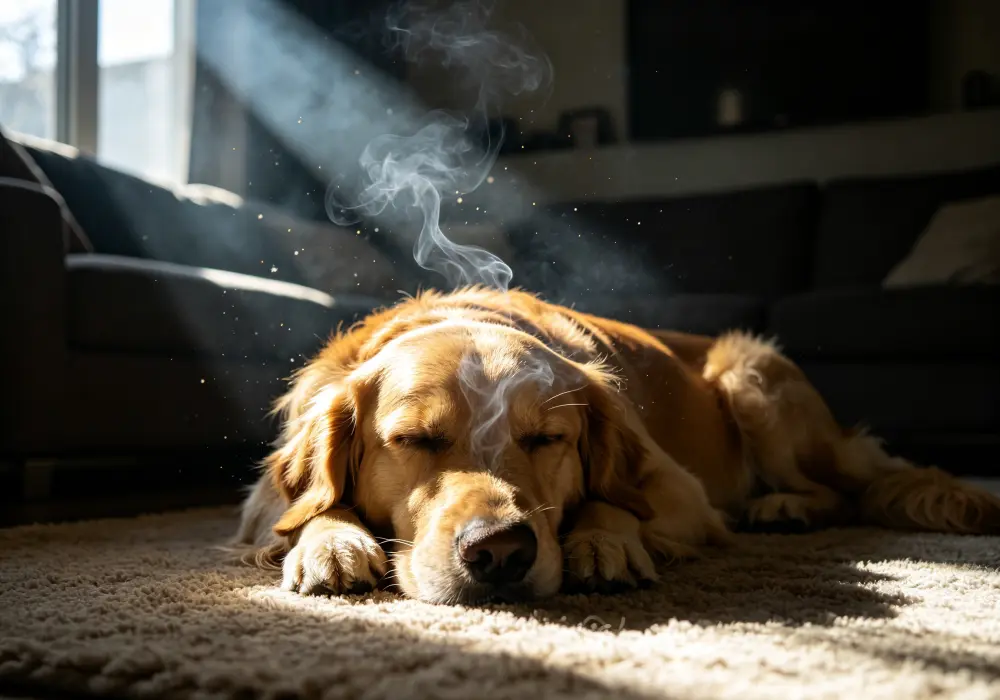
What Is Secondhand Smoke And Why Is It Dangerous For Dogs?
To accurately map the clinical secondhand smoke effects on dogs, we must first define what environmental tobacco smoke (ETS) actually is. It is the combination of mainstream smoke exhaled by a user and side-stream smoke emitted directly from the burning tip of a cigarette, pipe, or cigar. This complex chemical aerosol contains over 7,000 distinct compounds, hundreds of which are biologically toxic, and at least 70 known carcinogens capable of initiating cellular mutations.
In multi-pet households, these aerosolized toxins do not simply drift out of open windows. They interact with canine physiology through three highly destructive pathways:
- Accelerated Inhalation Volume: Due to a higher relative metabolic demand, dogs take more breaths per minute than humans. This means they process a significantly larger volume of ambient, toxin-heavy air relative to their physical body weight.
- Proximity to Ground-Level Accumulation: Heavy-metal particulates, nicotine deposits, and chemical tar fractions from smoke are physically heavier than air. They settle directly onto carpets, upholstery, and low traffic areas—precisely where dogs sleep, play, and explore.
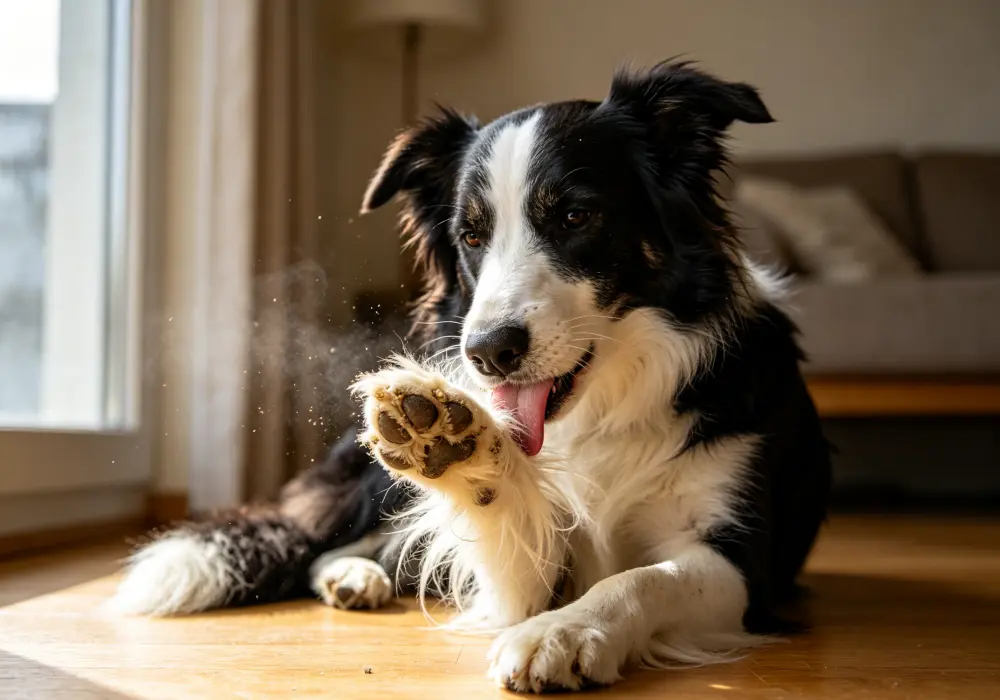
- Compounded Oral Ingestion: Unlike humans, dogs use self-grooming as a primary hygienic routine. When toxic dust settles on their fur, they lick their coats and paws, directly transferring carcinogens to their oral tissues and digestive tracts. This toxic grooming loop is a frequent trigger for obsessive paw-chewing, which is often misdiagnosed as standard dog behavior problems.
“A dog’s primary sensory window to the world is olfactory. When we saturate their environment with thirdhand tobacco residue, we aren’t just irritating their lungs; we are actively degrading their primary cognitive processing mechanism.”
Three Pathological Ways Secondhand Smoke Effects On Dogs Manifest
1. Chronic Respiratory Damage and Lung Cancer
When examining how secondhand smoke effects on dogs damage their cardiovascular and pulmonary systems, pathologists focus on the progressive, chronic inflammation of the airway mucosa. Over time, this leads to structural airway remodeling, chronic bronchitis, asthma-like bronchospasms, and a dramatic decrease in local ciliary clearance.
Epidemiological research published in the American Journal of Epidemiology indicates that dogs living in smoking households suffer a 60% increase in the risk of developing lung cancer compared to dogs in smoke-free environments. This pulmonary strain is particularly hazardous for dogs already dealing with underlying cardiorespiratory diseases, such as congestive heart disease in dogs, where compromised lungs cannot afford any loss of oxygenation efficiency.
2. Nasal and Sinus Tumors (Cranial Morphology Risk)
This is where canine skull anatomy dictates their oncological destiny. Long-nosed (dolichocephalic) breeds possess incredibly complex, maze-like nasal turbinates designed to filter out airborne particulate matter. While this long nasal passage acts as a barrier that partially protects their lungs from carcinogens, it concentrates those trapped toxins directly within the nasal tissue. Consequently, long-nosed dogs living with smokers are more than twice as likely to develop malignant nasal and sinus tumors (an approximate +250% increase in relative risk) compared to those living in clean-air homes.
3. Thirdhand Smoke: The Sticky, Invisible Threat
Even if you restrict your smoking to a separate room, thirdhand smoke—the sticky nicotine and chemical residue that binds to carpets, dog beds, and household fabrics—remains active for months. It undergoes chemical changes over time, reacting with ambient air compounds to form even more potent, cancer-causing tobacco-specific nitrosamines (TSNAs). Dogs absorb these directly through their paw pads and skin, making thirdhand smoke a major threat to overall systemic health. To monitor if your pet is showing systemic health drops from exposure, run through our comprehensive guide on the Signs of a Healthy Dog checklist.
Canine Snout Risk Profiler
Select your dog's anatomical breed profile to analyze filtration efficiency and specific secondhand smoke effects on dogs instantly.
Short-Nosed (Brachycephalic) Profile
Breeds like Pugs, French Bulldogs, Boxers, and Shih Tzus possess highly compressed upper airways and flattened cranial structures.
CLINICAL PATHOPHYSIOLOGY
Due to severely shortened nasal turbinates, these dogs lack the anatomical surface area required to trap airborne carcinogens. Toxic particles bypass natural mucosal filtration and travel directly into the lower respiratory tract, leading to a $60\%$ higher incidence of severe pulmonary cell mutation.
PRIMARY DIAGNOSTIC THREAT
Chronic bronchitis, severe asthma-like airway inflammation, and accelerated lung cancer development due to direct alveolar particulate loading.
Long-Nosed (Dolichocephalic) Profile
Breeds like Collies, Greyhounds, German Shepherds, and Dachshunds possess elongated snouts and extensive nasal cavities.
CLINICAL PATHOPHYSIOLOGY
Their large nasal surface area acts as a highly efficient physical filter, successfully trapping inhaled smoke particles before they reach the lungs. However, this causes carcinogens to accumulate densely within the nasal passages, resulting in an alarming $+250\%$ increase in sinonasal tumor risk.
PRIMARY DIAGNOSTIC THREAT
Chronic sinonasal tumors, persistent unilateral nasal discharge, severe nosebleeds, and localized facial tissue inflammation.
Small-Bodied (Toy & Miniature) Profile
Breeds like Chihuahuas, Yorkies, Maltese, and Pomeranians face unique risks driven by baseline surface-area-to-mass ratios.
CLINICAL PATHOPHYSIOLOGY
Small dogs have a significantly higher metabolic and respiratory rate per pound of body weight compared to larger breeds. Because smoke particles and thirdhand nicotine residues naturally sink to carpets and floors, these low-profile dogs constantly inhale concentrated toxic zones and ingest settled carcinogens during daily self-grooming.
PRIMARY DIAGNOSTIC THREAT
Accelerated system toxicity, chronic respiratory distress, secondary skin dermatitis from coat residue, and heightened lymphoma risks.
Anatomy-Based Risk Factors
Understanding how your dog’s physical build dictates the severity of secondhand smoke effects on dogs is critical to establishing a targeted prevention strategy:
| ANATOMICAL RISK FACTOR | PATHOPHYSIOLOGY OF EXPOSURE | REPRESENTATIVE BREEDS |
|---|---|---|
| Short-nosed (Brachycephalic) | Minimal nasal passage filtration allows larger, heavy tar particles to pass directly into the lung tissue, significantly increasing the risk of pulmonary tumors. | Pugs, French Bulldogs, Boston Terriers, Boxers, Shih Tzus |
| Long-nosed (Dolichocephalic) | Extensive nasal turbinates trap inhaled particles, preventing lung penetration but exposing the nasal passages to concentrated carcinogen buildup. | Collies, Greyhounds, German Shepherds, Dachshunds |
| Small Body Stature | A much faster resting respiratory rate leads to a higher relative dosage of environmental toxins per pound of body weight. | Chihuahuas, Yorkshire Terriers, Maltese, Pomeranians |
| Pre-existing Respiratory Strain | Inhaled smoke rapidly worsens chronic tissue inflammation, triggering tracheal collapse or severe asthmatic flare-ups. | Any dog diagnosed with chronic allergies, bronchitis, or heart murmurs. |
Visualizing the Risk: Comparative Cancer Rates
Veterinary epidemiological studies trace a direct, clear connection between environmental tobacco smoke exposure and elevated cancer rates in dogs. The chart below illustrates these relative epidemiological secondhand smoke effects on dogs compared to clean-air baselines:
Symptoms Of Smoke-Related Illness In Dogs
Because these progressive secondhand smoke effects on dogs often develop silently without immediate outward indicators, handlers must stay highly alert for these clinical signs:
| SYMPTOM CATEGORY | SPECIFIC PHYSICAL OBSERVATIONS | URGENT ACTION CHECKPOINT |
|---|---|---|
| Pulmonary & Airway | Persistent dry hacking cough, wheezing during rest, gagging after excitement, and progressive exercise intolerance. | Schedule digital chest X-rays immediately to rule out pulmonary edema or neoplastic masses. |
| Nasal & Oral | Unilateral (one-sided) nasal discharge, frequent chronic sneezing, spontaneous nosebleeds (epistaxis), and visible facial asymmetry. | Requires sedated rhinoscopy or CT scan of the skull to evaluate the nasal passages. |
| Dermatological | Dull, brittle coat texture, persistent skin rashes, and compulsive licking or chewing of paws to clear sticky, chemical residues. | Wipe down their fur with damp cloths after contact; evaluate for allergen-driven dermatitis. |
How You Can Protect Your Dog
While transitioning to a clean-air home is the ultimate defense against the harmful secondhand smoke effects on dogs, implementing meticulous harm-reduction protocols can act as a temporary buffer to protect your pet:
Protecting Their Sanctuary
Ultimately, managing secondhand smoke effects on dogs is not about shame, judgment, or finger-pointing. It is about understanding the hard biological vulnerability of the animal sleeping at your feet and making the conscious choice to act as their physical shield.
By staying alert for early cardiorespiratory symptoms, ensuring a clean indoor air environment, and reducing toxic residues on furniture and coats, you protect their natural health and preserve their vital senses. Every step you take toward a cleaner, smoke-free home is a direct investment in your dog’s longevity, comfort, and peace of mind.
Related Articles
What Are Common Dog Behavior Changes with Age
Canine behavior and healthy aging Common Dog Behavior Changes with Age: What Is Normal and What Is Not? Dogs change throughout life, but age alone does not explain every new

Why Does My Dog Follow Me Everywhere?
DOG BEHAVIOR GUIDEIf you keep wondering, "Why does my dog follow me everywhere?", the answer is often quite ordinary: you are the safest and most rewarding part of your dog's
Hormonal Behavior in Dogs: Causes, Signs, and What to Do
Canine behavior and health guide Hormonal Behavior in Dogs: Causes, Signs, and What to Do Hormones can influence marking, roaming, mounting, nesting, appetite, sleep, and emotional responses. They are only