
Quick answer
If your dog has broken a nail, keep them still and apply firm pressure with clean gauze. Many owners searching for “dog broken nail what to do” need to know two things first: whether the bleeding will stop and whether the nail is still attached. Use styptic powder if bleeding continues, but do not pull a dangling piece of nail. Prevent licking with an E-collar. Call your veterinarian if the quick is exposed, the fragment is unstable, your dog is very painful, or bleeding will not stop. A nail torn from its base, a deformed toe, or heavy bleeding needs urgent veterinary care.
A broken dog nail can look dramatic. Even a small tear may leave bright-red drops across the floor, and a dog who was playing normally a minute ago may suddenly refuse to put the paw down. That reaction makes sense: the hard outer nail protects the quick, living tissue supplied with nerves and blood vessels. Once the quick is cut, pinched, or exposed, the injury can be surprisingly painful.
Many broken nails heal well once the bleeding is controlled, the loose nail is treated, and the paw stays clean. The difficult part is knowing which cases are minor and which need professional treatment. This guide helps you make that decision without asking you to diagnose the injury at home.
Important: If blood is spurting, rapidly pooling, or soaking through material despite steady pressure, leave for an emergency veterinary clinic while continuing pressure. Pale gums, weakness, collapse, or breathing trouble are also emergencies.
First, decide how urgent the broken nail is
You do not need to identify every layer of the nail. Look at what your dog is doing and what you can see without twisting the toe or forcing the paw into position. If your dog growls, snaps, pants heavily, or struggles, stop. Pain can change behavior, and a veterinary team can examine the paw with safer restraint and pain relief.
On a phone, swipe sideways to view the full table.
| What you notice | Likely next step | Why it matters |
| Tiny chip at the tip; no blood, loose piece, tenderness, or limp | Monitor and arrange routine trimming if the edge catches | The damage may be limited to nonliving keratin |
| Bleeding stops with pressure, but the quick is visible or the dog remains sore | Call your veterinarian for prompt advice or an appointment | Living tissue is exposed and may need cleaning, pain relief, and protection |
| Crack runs toward the base, or nail is dangling, twisted, or repeatedly catching | Same-day veterinary care | Movement can pinch or tear the quick further |
| Nail torn from its base, deep wound, severe contamination, toe swelling/deformity, or no weight bearing | Urgent veterinary assessment | The nail bed, toe, or underlying bone may be involved |
| Several nails splitting or falling off, recurrent injuries, or a lesion that will not heal | Schedule a veterinary workup | This pattern may not be a simple accident |
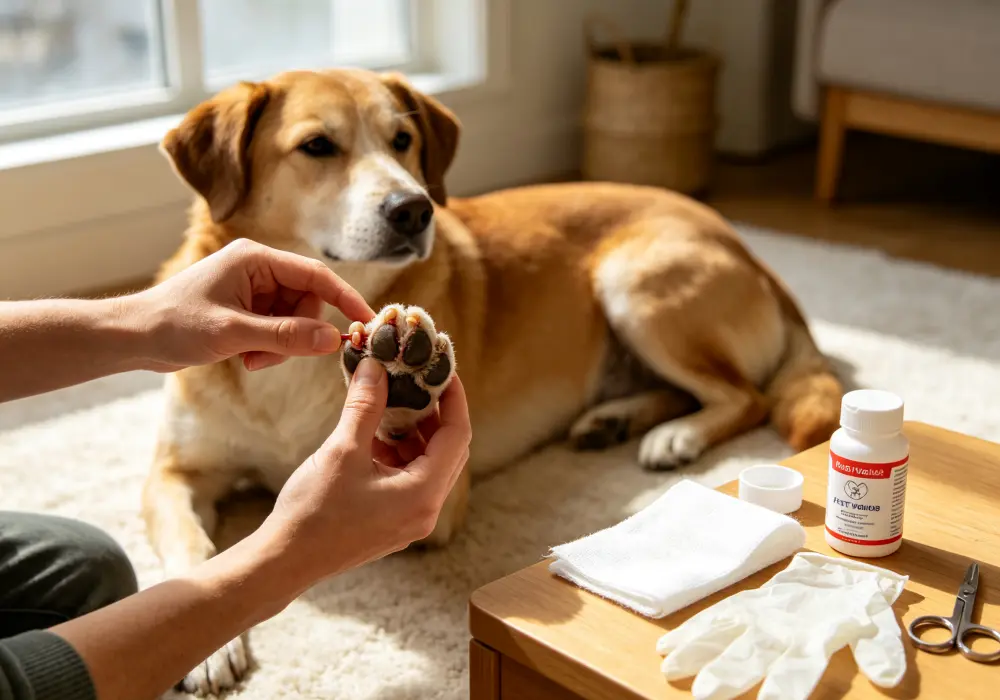
Dog broken nail: what to do step by step
1. Slow everything down
Move your dog away from stairs, slippery floors, dirt, and excited pets. A leash helps limit pacing. Ask another adult to calmly steady the dog if that can be done without a struggle. Do not put your face near the paw. If your dog has a known history of accepting a basket muzzle and is breathing normally, it may add safety; an improvised or tight muzzle can create new risks and should not delay urgent care.
2. Apply uninterrupted direct pressure
Place clean gauze, a folded clean cloth, or a towel over the bleeding nail and press steadily. Hold it in place for several minutes. The common mistake is lifting the pad every few seconds to see whether bleeding has stopped; that can pull away the early clot and restart the flow. If blood comes through, add material on top rather than peeling off the first layer.
If steady pressure is not enough, apply pet styptic powder to the bleeding tip according to the product label, then resume pressure. The Merck Veterinary Manual lists styptic powder, cornstarch, or flour as options to encourage clotting. Cornstarch or plain flour is best treated as a temporary fallback, not a substitute for assessment of a deep tear. Avoid pushing a styptic pencil into raw tissue, and do not use a tourniquet around the paw for an ordinary nail injury.
3. Inspect without pulling
Once bleeding is controlled, look from above and from the side. Is the damage only at the tip? Is a strip of nail still attached? Does the crack travel toward the skin? Is the toe itself straight? Do not test a fragment by bending or rotating it. A hanging piece can act like a lever and pinch the quick every time it moves.
Some first-aid instructions note that a tiny, freely attached sliver may be easy to trim. In practice, it is easy to underestimate how firmly the fragment is connected. If you see pink or red tissue, if the dog resists, or if the crack reaches beyond the very tip, leave removal to a veterinarian. Pulling a torn nail can extend the injury and cause another round of pain and bleeding.
4. Rinse visible dirt gently
If the paw picked up soil or debris, gently rinse it with sterile saline or clean lukewarm water. Pat around the area rather than scrubbing the quick. Do not pour hydrogen peroxide, rubbing alcohol, tea tree oil, or concentrated disinfectant onto the nail bed. These products can irritate tissue, delay healing, or be harmful if licked. VCA’s wound-care guidance recommends saline or water and cautions against harsh cleaners unless a veterinarian directs their use.
5. Prevent licking and protect the paw for transport
An E-collar is more reliable than repeated verbal correction. Licking keeps tissue wet, disturbs clots, and introduces bacteria. If your dog was repeatedly licking the same paw before the nail broke, look beyond the injury itself; this guide to common reasons dogs lick their paws explains when irritation, pain, allergies, or another problem may be involved. For a trip to the clinic, a nonstick sterile pad held in place with a loose layer of gauze can shield the nail. A home wrap is not meant to compress the paw or remain on indefinitely.
If you have not been shown how to bandage a paw, it is safer to keep a clean pad gently in place during transport than to build a tight multilayer wrap. Toes that become swollen, cold, unusually warm, pale, blue, or red may signal circulation or bandage trouble. A wet, slipped, smelly, or chewed bandage also needs prompt attention. Never leave plastic over a paw indoors; it traps moisture. A plastic cover may be used briefly outdoors to keep a veterinarian-applied bandage dry, then removed immediately on returning inside.
Why a small nail tear can hurt so much
The visible shell is made of hard keratin, but it grows around the quick. The quick contains nerves and blood vessels and lies close to the last bone of the toe. Cutting only dead nail is painless; exposing or crushing the quick is not. This anatomy explains the combination of sudden yelping, limping, licking, and brisk bleeding.
The nail’s growth tissue, often called the matrix, sits closer to the base. A shallow tip injury may grow out normally. A tear that reaches the matrix can take months to replace and may produce a nail that is ridged, curved, split, or permanently altered. Dewclaws deserve special attention because they sit higher on the leg and do not wear against the ground, making an overgrown dewclaw easier to snag on blankets, brush, or wire.
A useful distinction
Cracked shell: damage may stay in hard keratin. Exposed quick: living tissue is visible or bleeding. Partial avulsion: part of the nail is torn but remains attached. Complete avulsion: most or all of the hard shell has been pulled away. The closer the injury is to the base, the more likely professional pain control and treatment will be needed.
What not to do
- Do not pull a dangling nail. It may still be attached to sensitive tissue.
- Do not keep checking a forming clot. Maintain steady pressure before looking.
- Do not scrub or use harsh cleaners. Saline or clean water is gentler for initial rinsing.
- Do not wrap tightly. Self-adherent wrap can tighten more than expected and compromise circulation.
- Do not let the dog run to “see if it is better.” Activity can restart bleeding or catch an unstable fragment.
- Do not give human painkillers. Ibuprofen, naproxen, aspirin, and acetaminophen can cause serious harm or interact with other medication.
The FDA advises owners to stop and call a veterinarian before giving any pain reliever, including medicine left over from another dog. Prescription veterinary NSAIDs are chosen according to the individual dog’s health, hydration, other drugs, and risk factors. A correct drug given to the wrong patient can still be dangerous.
When your dog needs a veterinarian
Call for veterinary guidance whenever the quick is exposed, the nail is unstable, or pain changes your dog’s gait. A clinic may advise a prompt regular appointment or emergency care depending on the bleeding, depth, contamination, and toe position. Seek urgent care when:
- firm pressure and styptic powder do not control the bleeding;
- blood is spurting, rapidly pooling, or soaking through layers;
- the nail is torn at or under the skin line;
- the toe looks crooked, markedly swollen, crushed, or deeply cut;
- your dog cannot bear weight, cries repeatedly, or cannot settle;
- the injury contains gravel, mud, glass, or another embedded object;
- your dog is weak, has pale gums, collapses, or seems ill beyond the paw injury.
Also arrange an examination if redness, warmth, swelling, discharge, odor, increasing tenderness, or renewed lameness develops after the first day. These changes can indicate irritation, a retained fragment, or infection. A dog who keeps licking despite a cone may be telling you the paw is painful, itchy, or poorly protected. Whatever the cause, a newly injured nail should be checked first.
What the veterinarian may do
The appointment usually begins with a paw and gait examination. The veterinarian checks where the crack ends, whether the toe is stable, and whether dirt or a foreign object is trapped beneath the nail. If handling is too painful or unsafe, local anesthetic, sedation, or both may be used. This lets the veterinarian remove the fragment with less pain and movement and reduces the chance of further injury.
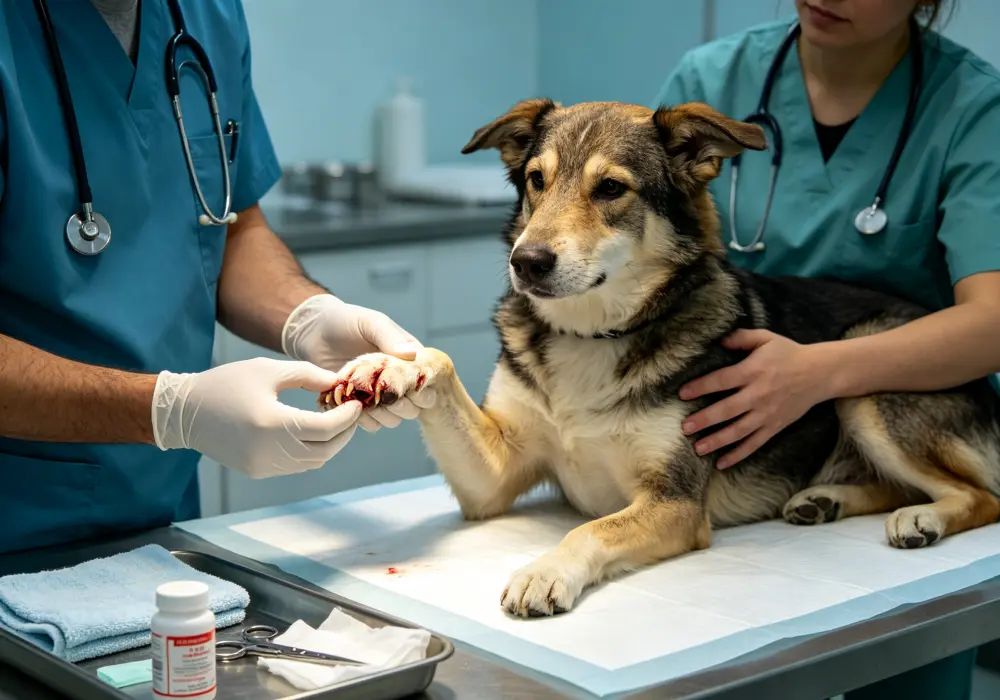
An unstable portion of horn may be trimmed back to a stable edge. The area can then be cleaned and covered with a nonstick dressing when appropriate. Your veterinarian may prescribe dog-specific pain relief. Antibiotics are not automatically needed for every broken nail; the decision depends on the depth of injury, contamination, infection signs, immune status, and possible involvement of deeper tissue. Imaging may be recommended if the toe is swollen, deformed, chronically draining, or not healing as expected.
One broken nail after a clear snag is usually traumatic. Several abnormal nails on different paws are a different pattern. Repeated splitting, shedding, or deformed regrowth may prompt testing for immune-mediated nail disease, infection, systemic illness, or nutritional imbalance. A chronic, swollen, nonhealing lesion involving one toe also deserves investigation rather than another round of home trimming.
Recovery: what to check each day
Follow the clinic’s instructions over any general timeline. Injury depth makes a large difference: a clipped quick can settle quickly, while a nail torn near the base may remain sensitive and take months to replace. During early recovery, use leash-only bathroom breaks, prevent digging and rough play, and keep the paw clean and dry. Do not resume normal walks simply because visible bleeding has stopped.
On a phone, swipe sideways to view the full table.
| Daily check | Reassuring direction | Call the clinic if… |
| Comfort and gait | Less guarding and gradually easier weight bearing | Pain, limping, panting, or restlessness worsens |
| Nail bed | Clean surface with no new bleeding | Bleeding restarts, or redness, swelling, discharge, or odor appears |
| Bandage, if prescribed | Dry, clean, secure, and not slipping | It is wet, dirty, tight, loose, chewed, bloody, or smelly |
| Exposed toes around a bandage | Normal size, warmth, and color | Toes swell, spread apart, feel cold/hot, or change color |
| Licking and chewing | E-collar prevents access and dog rests comfortably | Fixation on the paw increases or the dog damages the covering |
When can walks resume? Recovery time depends on how deeply the nail tore. Ask the treating veterinarian what milestones matter for your dog. Generally, progress from short controlled leash trips only after the nail is dry, pain is clearly improving, and weight bearing is comfortable. Return to longer walks gradually. Delay running, agility, digging, swimming, and rough ground until the nail bed is protected and your veterinarian is satisfied with healing.
Keep a simple recovery record
A daily phone photo taken in similar light can help you notice whether redness and swelling are truly improving. Add a short note about weight bearing, licking, appetite, medication, and any discharge. This is more useful to a veterinarian than trying to remember several days of small changes at once. Photograph the paw only when your dog is relaxed; do not remove a prescribed bandage or manipulate the nail for the picture.
Call the clinic before the scheduled recheck if the trend reverses. A dog who was walking more comfortably but begins limping again may have caught the nail, irritated the dressing, or developed another problem. Likewise, pain that seems out of proportion to the visible nail injury can come from the toe or paw itself and deserves reassessment. If you are unsure whether a behavior reflects discomfort, note when it happens and share a short video with the veterinary team.
Build a paw first-aid kit before you need it
Useful supplies include clean gauze squares, a roll of gauze, nonstick sterile pads, pet styptic powder, saline wound wash, disposable gloves, a correctly sized E-collar, and your regular and emergency clinic numbers. Store the kit where everyone in the household can find it, and check expiry dates periodically. Use these supplies to control bleeding and protect the paw while you contact a veterinarian. A deep avulsion still needs veterinary care.
How to reduce the chance of another torn nail
Long nails create more leverage and are more likely to catch. Check all nails, including dewclaws, every couple of weeks and trim according to the individual dog’s growth rate. If nails click loudly on hard flooring or change the way the toes sit, ask a groomer or veterinary professional to show you a safe schedule. Dogs with very long quicks often benefit from small, frequent trims rather than one aggressive cut. For a broader routine, see these practical dog grooming tips for pet owners.
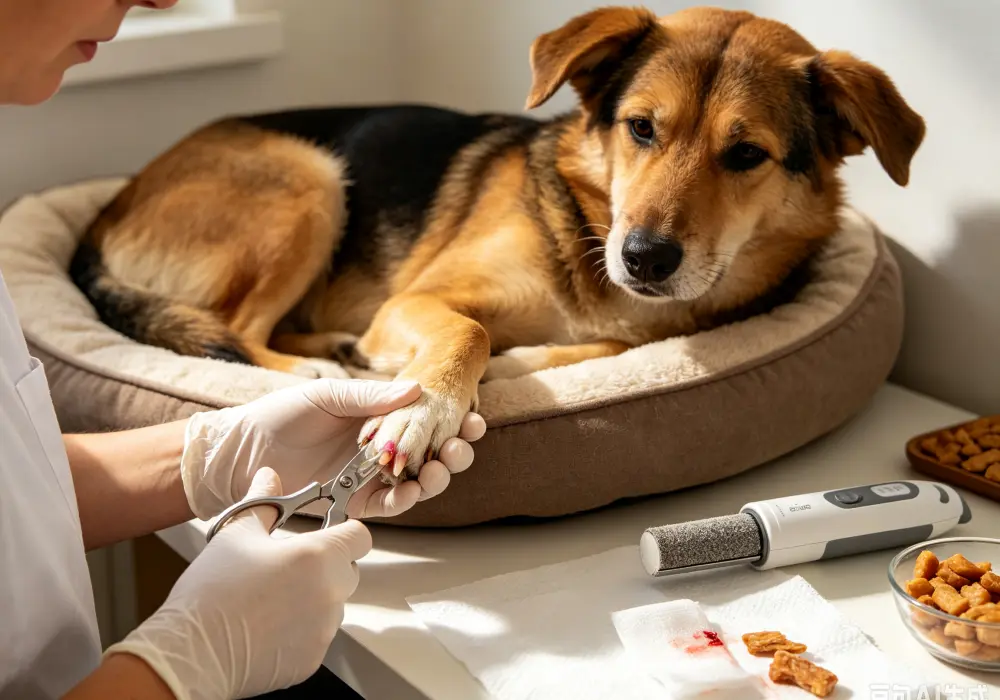
On pale nails, the pink quick may be visible through the shell. Stop comfortably in front of it. Dark nails require smaller increments and careful inspection of the cut surface. A grinder can reduce splitting for some dogs, but heat and noise can be stressful, so use brief touches and reward-based acclimation. If paw handling triggers fear or defensive behavior, do not force the session. Pain and anxiety can overlap; this article on dog anxiety versus pain can help you notice the difference before the next trim.
Inspect outdoor areas for broken wire, sharp edging, and gaps where a claw may catch. Keep bedding and rugs in good repair. After hikes, look between the toes and check each nail for small cracks. Repeated breakage despite reasonable nail length is a reason for a veterinary exam, not a reason to trim even shorter.
Frequently asked questions
Can a dog’s broken nail heal on its own?
A very small chip in dead keratin may simply grow out. Once the quick is exposed, the nail is unstable, or the dog is painful, “wait and see” can leave living tissue unprotected. Call your veterinarian for advice. The nail bed may heal before the hard shell fully regrows, and deep matrix damage can change the new nail’s shape.
How long should I hold pressure on a bleeding nail?
Use firm, continuous pressure for several minutes before checking. If bleeding persists, apply styptic powder as labeled and continue pressure. VCA advises veterinary attention when bleeding does not stop after an initial period of pressure and clotting aid. Heavy, fast, or persistent bleeding is an urgent-care problem rather than a reason to keep repeating home treatment.
Can I use cornstarch on a broken dog nail?
Plain cornstarch can help clotting when styptic powder is unavailable. Pack it against the tip and maintain pressure. It will not remove a loose fragment, clean a contaminated wound, treat pain, or rule out a deeper tear. Seek veterinary care when bleeding continues or the quick is exposed.
Should I cut off the hanging nail?
Not if it is painful, firmly attached, bleeding, or connected near the base. A veterinarian can remove unstable horn with appropriate restraint and pain control. Pulling or twisting it at home can enlarge the wound. During transport, prevent licking and protect the fragment from catching.
Does every exposed quick need antibiotics?
No universal rule fits every injury. Antibiotics may be appropriate for deep contamination, established infection, certain medical risks, or deeper tissue involvement, but they are not automatically required for every clipped quick. Your veterinarian should make that decision after considering the wound and the dog.
Why does my dog keep breaking nails?
Overgrowth, snagging, hard turns, brittle nails, and untrimmed dewclaws are common explanations. Breakage affecting multiple nails, recurrent shedding, abnormal regrowth, or chronic toe swelling can indicate a broader nail disorder or another disease. Photograph the changes and arrange a veterinary examination.
Sources used for this guide
The bottom line
When you need a clear answer to dog broken nail what to do, remember the order: keep handling safe, apply uninterrupted pressure, use styptic powder if needed, do not pull attached nail, prevent licking, and choose veterinary care based on bleeding, pain, depth, and toe stability. A tiny painless chip may be monitored; an exposed quick, dangling fragment, deep avulsion, deformed toe, or uncontrolled bleeding deserves professional help.
Medical disclaimer: This article provides general educational information and does not diagnose or treat an individual dog. Contact your veterinarian or an emergency veterinary hospital for advice tailored to your dog’s injury, health history, and medications.
Related Articles
7 Fun Games for Dog Mental Stimulation
Mental stimulation for dogs is play and problem-solving that works the brain instead of just the legs: scent games, puzzle toys, hidden treats, new tricks. A physically tired dog can
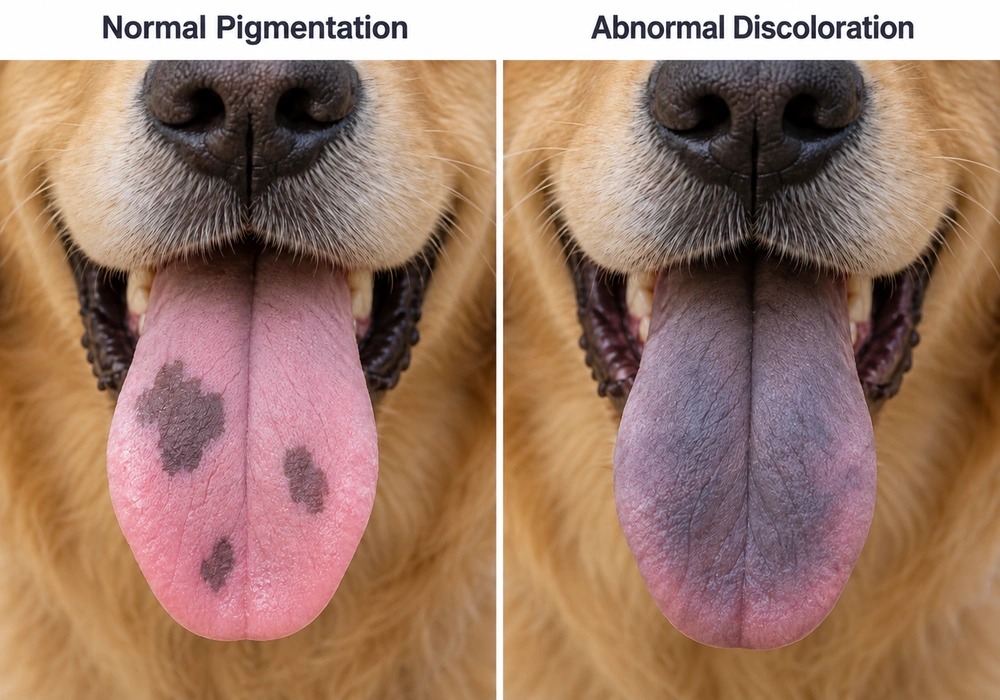
Why Is My Dog’s Tongue Grey?
Canine oral health and emergency triage Why Is My Dog's Tongue Grey? A grey tongue in dogs does not always mean the same thing. Some dogs are born with dark
How to Identify Canine Hormone Imbalance Symptoms
Canine endocrine health How to Identify Canine Hormone Imbalance Symptoms Hormones influence a dog's metabolism, appetite, thirst, skin, coat, muscles, stress response, blood sugar, and reproductive cycle. Most endocrine disorders