
Seeing your dog breathing fast while sleeping can be unsettling, especially when the room is cool and your dog has not been exercising. Sometimes the explanation is simple: your dog is dreaming. In other cases, a high sleeping respiratory rate can be an early sign of pain, fever, heart trouble, or a breathing problem.

Quick answer
A sleeping respiratory rate below 30 breaths per minute is generally reassuring for many adult dogs. A rate that repeatedly stays above 30 deserves a call to your veterinarian, particularly if it is higher than your dog’s usual rate. Labored breathing, blue or pale gums, collapse, or an inability to settle requires urgent veterinary care regardless of the number.
The number alone does not tell the whole story. How your dog is breathing, whether the rate comes down after a dream, and whether other symptoms are present matter just as much.
Before you count
Wait until your dog is fully asleep and no longer panting. Do not count immediately after exercise, play, excitement, or time spent in a warm room. Those situations can temporarily raise the breathing rate without indicating disease.
When should you worry about fast breathing during sleep?
Start by watching your dog for a full minute. A brief burst of rapid, shallow breaths accompanied by paw movement or facial twitching often happens during a dream. The rate should slow when the dream ends or when the dog wakes.
Breathing that remains fast throughout quiet sleep is more concerning. Pay attention to the chest and abdomen. A relaxed dog should breathe without obvious effort. The belly should not be pumping hard, and the nostrils should not flare with every breath.
| What you notice | What it may mean | What to do |
| Fast breathing with twitching, soft noises, or moving paws | REM sleep or dreaming | Wait and count again after the movement stops |
| Rate repeatedly above 30 while deeply asleep | Possible pain, fever, heart disease, or respiratory illness | Record the rate and contact your veterinarian |
| Abdominal effort, open-mouth breathing, or inability to lie down | Breathing distress | Seek urgent veterinary care |
| Blue, gray, or very pale gums; weakness or collapse | Possible oxygen or circulation emergency | Go to an emergency clinic immediately |
What is a normal sleeping respiratory rate for a dog?
Veterinary guidance often uses 15 to 30 breaths per minute as a practical resting range. Healthy dogs may fall below that range during deep sleep. In one study involving 114 healthy dogs, the average sleeping respiratory rate within each dog was about 13 breaths per minute, and none of the dogs had an average above 23.
That does not mean an occasional reading above 30 automatically signals disease. Even healthy dogs can have a short period of faster breathing, particularly while dreaming. The pattern is more useful than a single measurement.
A separate study of 51 dogs with medically controlled congestive heart failure found a median sleeping respiratory rate of 20 breaths per minute, with most readings below 30. This is why veterinarians often ask owners of heart patients to keep a daily breathing log. A steady rise from the dog’s normal baseline may appear before more obvious symptoms.
For a closer look at resting ranges, see our guide to the normal breathing rate for dogs at rest.
A baseline is more useful than a universal cutoff
If your dog normally sleeps at 14 breaths per minute and begins recording 26 every night, that change may matter even though the rate is still below 30. Write down several calm sleeping measurements so you know what is normal for your dog.
How to count your dog’s sleeping breaths
You do not need special equipment. A timer and a clear view of your dog’s chest are enough.
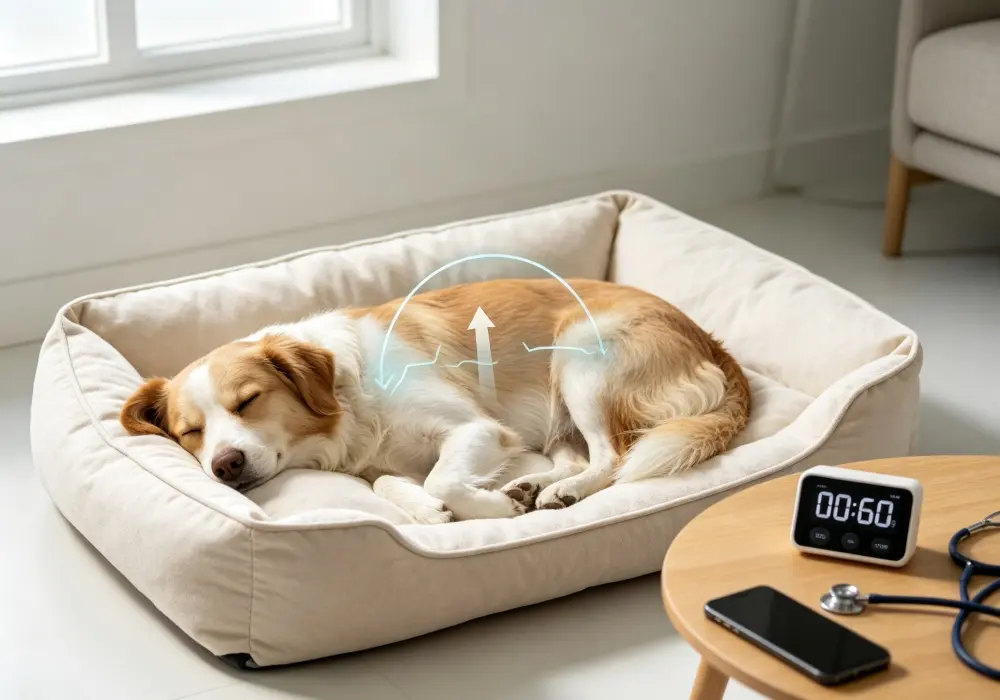
1. Wait for real sleep
Your dog should be lying quietly and unaware of what is happening around them. Do not measure while your dog is panting.
2. Watch the chest or abdomen
One complete rise and fall counts as one breath. Small movements can be easier to see from the side.
3. Count for 30 or 60 seconds
Count for a full minute when possible. If you count for 30 seconds, multiply the result by two.
4. Repeat the measurement
Take two or three readings on different nights. Record the rate, time, room temperature, and any symptoms you noticed.
If the chest movement is difficult to count, record a one-minute video. The video can help you count later and gives your veterinarian a chance to see the breathing pattern.
Dreaming or breathing trouble?
Dogs enter rapid eye movement, or REM, sleep just as people do. During this stage, the eyes may move beneath the eyelids, the paws may twitch, and the breathing can become irregular. You might also hear a quiet whine or muffled bark.
Dream-related breathing usually comes in short bursts. It settles when the twitching stops, and the dog looks comfortable between episodes.
True breathing trouble looks different. The dog may stretch the neck forward, hold the elbows away from the body, use the abdominal muscles with every breath, or repeatedly change position because lying down feels uncomfortable. Those signs matter even if you have not finished counting.
Do not wake a distressed dog just to recount
If your dog is struggling to breathe, has discolored gums, or cannot stand normally, leave for the nearest emergency clinic. Counting another minute should not delay care.
Nine reasons a dog may breathe fast while sleeping
1. REM sleep
Dreaming is one of the most common harmless explanations. The breathing may be quick, uneven, and paired with paw or facial movements. It should return to a calm rhythm after the dream passes.
2. Recent exercise or a warm room
A dog that has just finished playing may continue breathing quickly after falling asleep. Warm bedding, direct sunlight, or poor air circulation can have the same effect. Move your dog to a comfortable room and recheck after they have cooled down.
Heavy panting, drooling, weakness, vomiting, or confusion after heat exposure may indicate heatstroke. Read our guide to dog heatstroke warning signs and seek veterinary help promptly.
3. Stress or pain
Pain can raise a dog’s respiratory rate even when the lungs are healthy. Arthritis, an abdominal problem, an injury, or discomfort after surgery may be responsible. A painful dog may also tremble, avoid being touched, sleep in an unusual position, or struggle to get comfortable.
4. Fever or infection
Fever increases the body’s demand for oxygen and can lead to faster breathing. Loss of appetite, tiredness, coughing, nasal discharge, vomiting, or diarrhea may accompany an infection. A warm or dry nose cannot confirm a fever; a thermometer is needed for an accurate temperature.
5. Heart disease or congestive heart failure
When the heart cannot move blood effectively, fluid may collect in or around the lungs. A rising sleeping respiratory rate can be an early warning sign, sometimes appearing before a dog develops an obvious cough.
Watch for reduced stamina, coughing at night, fainting, a swollen abdomen, or reluctance to lie flat. Dogs already diagnosed with heart disease should follow the monitoring plan provided by their veterinarian.
Medication note: Do not increase a diuretic or change heart medication based only on a home breathing count. Call the prescribing veterinarian first unless you have already been given a written adjustment plan.
6. Lung or airway disease
Pneumonia, bronchitis, fluid around the lungs, airway obstruction, and other respiratory disorders can cause rapid breathing. Coughing, gagging, noisy breathing, discharge from the nose, or exercise intolerance provides an additional clue.
If coughing is part of the problem, our article on why dogs cough and gag explains several common causes.
7. Brachycephalic obstructive airway syndrome
Flat-faced dogs such as Bulldogs, Pugs, and French Bulldogs have narrow upper airways. Snoring may be common in these breeds, but struggling for air is not normal. Worsening noise, interrupted sleep, gagging, overheating, or blue gums needs veterinary attention.
8. Anemia
Anemia reduces the blood’s ability to carry oxygen. The body may compensate by breathing faster. Pale gums, weakness, a rapid heartbeat, poor appetite, or dark stool can occur. Blood loss, immune disease, parasites, and chronic illness are among the possible causes.
9. Hormonal or metabolic illness
Conditions such as Cushing’s disease, diabetic ketoacidosis, and severe kidney problems can affect breathing. These dogs usually have other changes too, including increased thirst, frequent urination, weight loss, weakness, vomiting, or changes in appetite.
Breathing effort matters more than posture alone
Some sleeping positions make chest movement easier to see. A dog lying on its side may appear to breathe more dramatically than a dog curled into a ball. Position by itself is not a reliable test.
What matters is whether your dog can rest comfortably. A dog that keeps sitting up, stretches the neck forward, refuses to lie on one side, or stands with the elbows turned outward may be trying to make breathing easier. Treat that behavior as a warning sign.
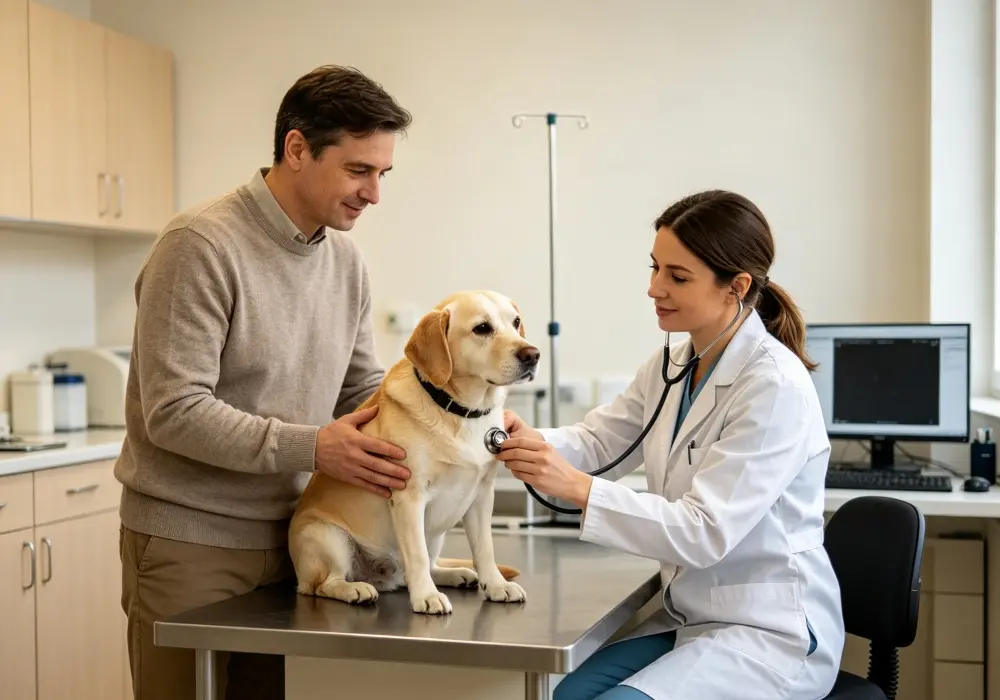
When fast breathing is an emergency
Go to an emergency veterinary clinic if your dog has any of the following:
- Blue, gray, purple, or very pale gums or tongue
- Open-mouth breathing while resting
- Strong abdominal movement with each breath
- Collapse, confusion, severe weakness, or poor responsiveness
- An inability to lie down or remain settled
- Foam, fluid, or blood coming from the mouth or nose
- Rapid breathing after overheating, trauma, choking, or possible poisoning
Call the clinic on the way if someone else can do so safely. Keep the car cool and limit handling. Do not force food, water, or medication into a dog that is having trouble breathing.
What to do tonight
| Step | What to record |
| Let your dog settle | Wait until panting and dream movements have stopped |
| Count for one minute | Write down the complete sleeping respiratory rate |
| Check breathing effort | Note belly movement, nostril flaring, noise, and sleeping posture |
| Look at the gums | Healthy gums are usually pink, allowing for normal pigmentation |
| Take a short video | Include the chest, abdomen, face, and breathing sounds |
| Repeat later | Compare another calm sleeping measurement with the first |
If your dog looks comfortable and the rate returns to their usual range, continue monitoring. Contact your veterinarian if the rate repeatedly stays above 30, keeps rising over several measurements, or comes with coughing, tiredness, appetite changes, or reduced exercise tolerance.
Frequently asked questions
Is 40 breaths per minute normal for a sleeping dog?
A brief rate of 40 may occur during a dream, but 40 breaths per minute throughout quiet sleep is higher than expected. Count again when your dog is deeply asleep. If the rate remains high, contact your veterinarian. Seek urgent care if the breathing looks labored.
Do puppies breathe faster while sleeping?
Puppies can have variable breathing during REM sleep and may dream frequently. Still, persistent rapid breathing or visible effort should not be dismissed because the dog is young. Puppies can become ill quickly, so call a veterinarian if you are unsure.
Can anxiety make a dog breathe fast in its sleep?
Stress can keep the heart and breathing rates elevated as a dog settles, but the rate should usually fall during deeper sleep. Ongoing fast breathing should be checked for physical causes rather than assumed to be anxiety.
Should I wake my dog if it is breathing fast?
If your dog is twitching and appears to be dreaming, wait briefly and see whether the breathing settles. You do not need to wake the dog. If the breathing looks difficult or the gums are discolored, focus on getting veterinary help.
Can heart failure cause fast breathing only at night?
Heart-related breathing changes are often easier to notice at night because the dog is quiet and sleeping. A rising sleeping respiratory rate can occur before severe distress develops. It cannot diagnose heart failure by itself, so the dog still needs a veterinary examination.
The practical takeaway
A short spell of rapid breathing during a dream is usually harmless. Breathing that remains fast during deep, quiet sleep deserves a closer look. Count for a full minute, compare the result with your dog’s normal rate, and watch the amount of effort involved. If your dog appears distressed, do not wait for the number to improve.
References
- Rishniw M, Ljungvall I, Porciello F, Häggström J, Ohad DG. Sleeping respiratory rates in apparently healthy adult dogs. PubMed.
- Ljungvall I, Rishniw M, Porciello F, Ferasin L, Ohad DG. Sleeping and resting respiratory rates in dogs with medically controlled left-sided congestive heart failure. PubMed.
- VCA Animal Hospitals. Home breathing rate evaluation. VCA Animal Hospitals.
Medical disclaimer: This article provides general educational information and is not a diagnosis or a substitute for veterinary care. Breathing difficulty can worsen quickly. Contact a veterinarian if your dog’s breathing is persistently abnormal, and seek emergency care for labored breathing, collapse, or blue, gray, or pale gums.
Related Articles
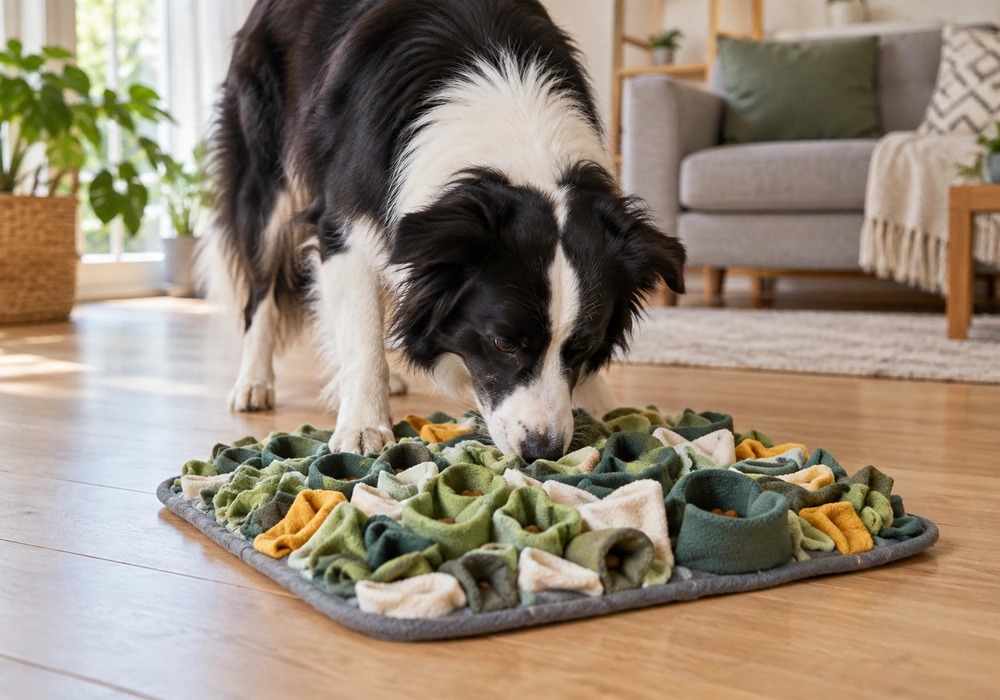
7 Fun Games for Dog Mental Stimulation
Mental stimulation for dogs is play and problem-solving that works the brain instead of just the legs: scent games, puzzle toys, hidden treats, new tricks. A physically tired dog can
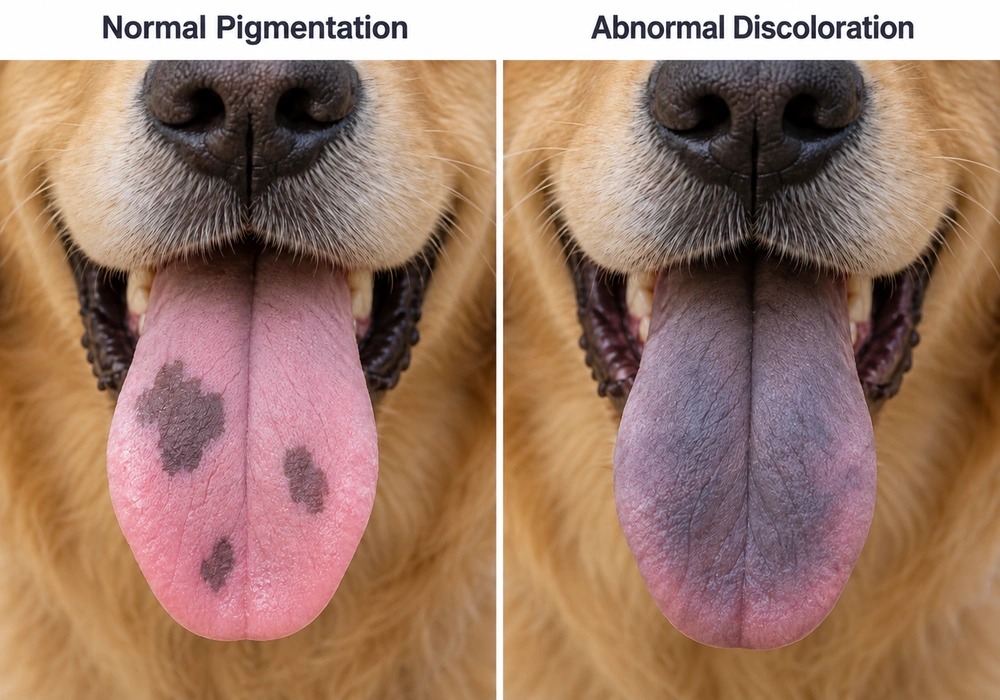
Why Is My Dog’s Tongue Grey?
Canine oral health and emergency triage Why Is My Dog's Tongue Grey? A grey tongue in dogs does not always mean the same thing. Some dogs are born with dark
How to Identify Canine Hormone Imbalance Symptoms
Canine endocrine health How to Identify Canine Hormone Imbalance Symptoms Hormones influence a dog's metabolism, appetite, thirst, skin, coat, muscles, stress response, blood sugar, and reproductive cycle. Most endocrine disorders