
When Should You Switch a Puppy to Adult Dog Food?
The right time is based less on a birthday and more on your puppy’s expected adult size, growth rate, body condition, and the nutritional adequacy of the food you plan to use.
Quick answer: Most small dogs can switch at about 8 to 12 months, medium dogs at 12 to 15 months, large dogs at 12 to 18 months, and giant breeds at roughly 18 to 24 months. Make the change gradually over 7 to 10 days. If your puppy has a medical condition, unusual growth pattern, or a history of digestive trouble, ask your veterinarian to set the timing.
Knowing when to switch puppy to adult dog food matters because puppy food is designed for growth, while adult food is designed for maintenance. Changing too soon may leave a still-growing dog with a diet that is not formulated for its developmental needs. Waiting too long can supply more calories than a mature, less active body requires.
Age charts are useful starting points, but they are not deadlines. A Chihuahua may be physically mature while a Great Dane of the same age still has many months of growth ahead. The safest decision combines breed size, growth progress, body condition, activity, health history, and the statement printed on the food label.
Why Puppy Food and Adult Dog Food Are Different
A growing puppy is building bone, muscle, organs, skin, a nervous system, and an immune system at the same time. Puppy food therefore tends to be more energy-dense and is formulated to meet nutrient profiles for growth. Adult maintenance food is intended to support a body that has largely finished growing.
Puppy food supports growth
Growth diets generally provide more calories and higher minimum levels of protein and fat. They also account for developmental needs involving essential fatty acids and carefully balanced minerals.
Adult food supports maintenance
Adult formulas are designed to maintain tissues and energy balance after rapid growth slows. Portions still matter because calorie density varies widely between products.
Protein, fat, and energy are not interchangeable
Puppies need sufficient amino acids for new tissue. They also have small stomachs relative to their energy needs, so growth diets often deliver more calories per cup than adult foods. This does not mean the richest food is automatically the best. Excess energy can accelerate weight gain, especially in large-breed puppies whose bones and joints benefit from controlled growth.
Adult food typically has lower regulatory minimums for protein and fat than growth food. A well-formulated adult diet can be excellent for a mature dog, but choosing it simply because a puppy looks nearly full-sized can be premature.
Calcium balance is especially important for large puppies
Young puppies do not regulate calcium absorption as efficiently as adult dogs. Too much calcium, too many calories, or an inappropriate calcium-to-phosphorus balance can interfere with normal skeletal development. This is particularly important for dogs expected to weigh 70 pounds or more as adults.
Do not use calcium supplements or add large amounts of calcium-rich foods to a complete large-breed puppy diet unless your veterinarian has identified a specific need. More calcium does not create stronger bones and may be harmful during growth.
For related guidance on evaluating nutrients rather than relying on package marketing, see our guide to the difference between adult and senior dog food and our explanation of DHA in dog food.
When to Switch Puppy to Adult Dog Food by Size
Expected adult weight provides a more useful starting point than current weight. If you do not know your puppy’s likely adult size, ask your veterinarian to estimate it using breed, parents, bone structure, current age, and growth records.
| Expected adult size | Typical transition window | What to confirm first |
|---|---|---|
| Toy: under 12 lb (5.5 kg) | About 8–12 months | Height growth has leveled off and body condition is stable |
| Small: 12–25 lb (5.5–11 kg) | About 10–12 months | Growth curve is flattening and adult teeth have erupted |
| Medium: 25–50 lb (11–23 kg) | About 12–15 months | Frame is nearing adult size and rapid weight gain has slowed |
| Large: 50–70 lb (23–32 kg) | About 12–18 months | Primary skeletal growth is nearly complete |
| Giant: over 70 lb (32 kg) | About 18–24 months | Veterinary guidance is advisable before ending a large-breed growth diet |

A dog does not become nutritionally adult at midnight on a particular birthday. A healthy small dog may be ready near the early end of its range, while a slowly maturing large dog may need growth nutrition closer to the later end.
Signs Your Puppy May Be Ready for Adult Food
No single home observation proves that the growth plates have closed. Still, several trends together can help you and your veterinarian decide whether the transition window has arrived.
- Height and body length have changed very little over several weeks.
- Rapid puppy weight gain has slowed into a steadier pattern.
- Your puppy has most or all permanent adult teeth.
- The dog’s body frame looks close to its expected adult size.
- Portion control is becoming harder because puppy food is calorie-dense.
- Your veterinarian is satisfied with growth, gait, and body condition.
Adult teeth are a developmental clue, not a stand-alone signal. Likewise, a puppy that appears tall may still be filling out, building muscle, and completing skeletal maturation. For a broader at-home wellness review, use our guide to the signs of a healthy puppy.
Body condition is more useful than appearance alone
A healthy, lean young dog should usually have ribs that are easy to feel under a thin layer of fat, a visible waist when viewed from above, and an abdominal tuck when viewed from the side. Thick fur can conceal weight gain, so use your hands as well as your eyes.
If the ribs are becoming difficult to feel, the waist is disappearing, or weight is rising quickly after height growth has slowed, ask whether calorie intake should be adjusted. That may mean reducing the portion, increasing appropriate activity, or beginning the switch within the normal maturity window. It does not always mean the puppy should immediately move to adult food.
Factors That Can Change the Transition Plan
Spaying or neutering
Energy needs may decrease after spaying or neutering, and appetite can sometimes increase. This creates a period when weight gain becomes easier. Surgery does not automatically mean a puppy is ready for adult maintenance food, particularly if substantial skeletal growth remains. Measure meals, limit calorie-dense extras, and reassess body condition regularly.
Activity level
A young working, sporting, or highly active dog may need more energy than a sedentary household dog of the same size. Activity affects calorie needs, but it does not erase life-stage requirements. Choose a nutritionally complete diet for the correct life stage, then adjust portions with veterinary guidance.
Medical and digestive conditions
Chronic diarrhea, food-responsive disease, pancreatitis risk, kidney or liver conditions, orthopedic disease, and poor growth can all change the appropriate diet or transition speed. A therapeutic diet prescribed for a health condition should take priority over a generic age chart. If your puppy is recovering from stomach or intestinal illness, review our guide to choosing dog food for gastroenteritis recovery with your veterinarian.
Mixed breeds and unknown adult size
Mixed-breed puppies can be difficult to classify from paws or current weight alone. Growth charts, parental size when known, breed testing, and repeated veterinary measurements provide a better estimate. When there is uncertainty, avoid rushing the transition solely because the puppy has reached one year of age.
How to Choose the Right Adult Food
Front-of-bag phrases such as “premium,” “natural,” or “wholesome” do not establish whether a diet is complete for a particular life stage. Turn the package over and find the nutritional adequacy statement.
Growth and reproduction
This statement indicates that the food is formulated for puppies and reproductive life stages. Large-breed puppy food should also carry the appropriate large-size growth qualification.
Adult maintenance
This food is intended for mature dogs. It should not replace a suitable growth diet before the puppy has reached the appropriate developmental stage.
All life stages
These diets meet growth requirements, so they may be more nutrient-dense than some mature dogs need. Portion control remains important.
Calories per cup or can
Do not assume equal-looking portions contain equal calories. Compare the calorie statement and calculate the new serving rather than transferring the old scoop size.
Choose a food from a manufacturer that can explain who formulates its diets, how nutrient content is verified, and what quality-control procedures are used. If your dog has allergies or a medical condition, ingredient selection should be based on a diagnostic plan rather than a marketing trend.
How to Switch from Puppy Food to Adult Food
Unless your veterinarian recommends a different schedule, plan on a gradual 7-to-10-day change. A slow transition gives the gastrointestinal tract and gut microbes time to adjust to changes in ingredients, fat, protein, fiber, and calorie density.
| Days | Puppy food | Adult food | What to watch |
|---|---|---|---|
| 1–3 | 75% | 25% | Appetite, vomiting, gas, and stool consistency |
| 4–6 | 50% | 50% | Whether stool remains formed and comfortable to pass |
| 7–9 | 25% | 75% | Energy, appetite, itching, and digestive tolerance |
| Day 10 onward | 0% | 100% | Longer-term weight and body condition |
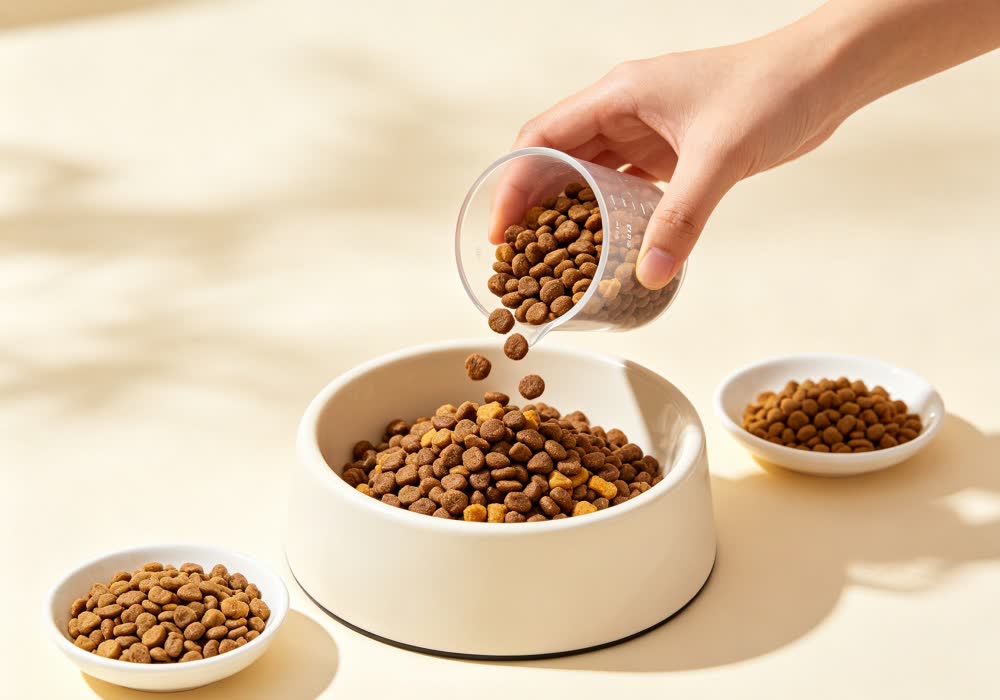
- Measure both foods. Use a gram scale or consistent measuring cup. Guessing makes it difficult to know whether diarrhea came from the new formula or simple overfeeding.
- Keep other foods steady. Avoid introducing new treats, toppers, chews, or table scraps during the transition.
- Watch every bowel movement. A mildly softer stool may settle, but repeated watery diarrhea, blood, vomiting, or marked discomfort is not something to push through.
- Slow down when needed. Sensitive dogs may require 10 to 14 days. Return to the last well-tolerated ratio and contact your veterinarian if symptoms continue.
- Recalculate the final portion. Use the adult food’s calorie content and your dog’s current body condition. Do not automatically feed the same number of cups.
Seek advice if your dog repeatedly vomits, develops persistent or bloody diarrhea, refuses food, becomes weak, shows abdominal pain, or cannot keep water down. These signs should not be dismissed as a normal food transition.
What to Monitor After the Change
The bowl may be fully switched by day 10, but evaluation continues for several weeks. Check your dog’s weight and body condition every two to four weeks at first. The correct portion is the amount that maintains a lean, stable body—not necessarily the feeding range printed on the package.
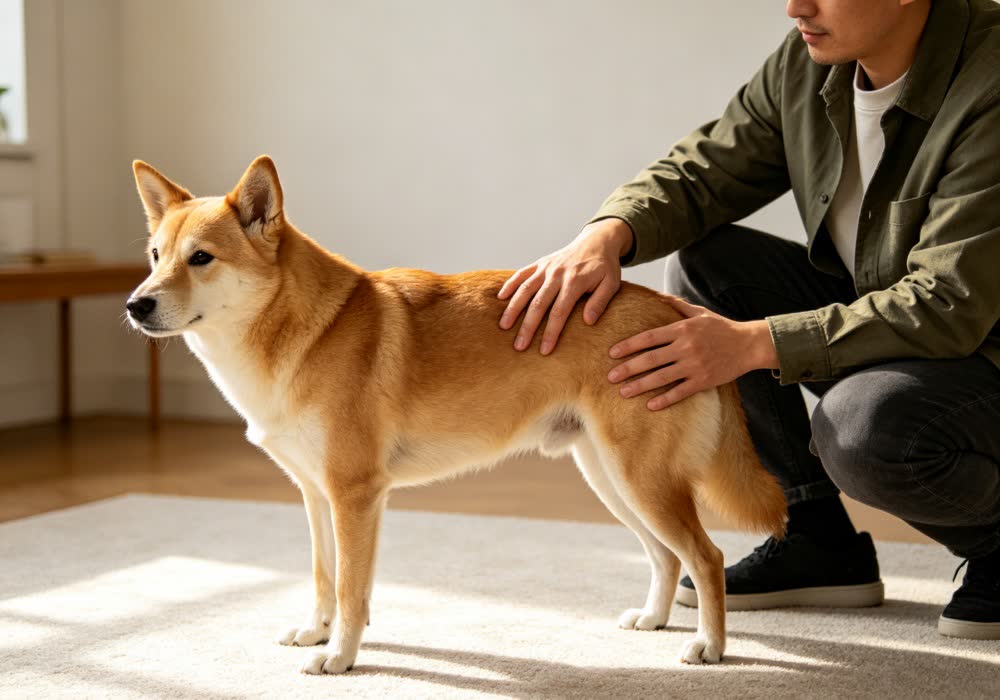
- Ribs remain easy to feel beneath a light fat covering.
- A waist is visible when the dog is viewed from above.
- Stools remain formed without ongoing mucus or blood.
- Coat and skin remain healthy without new persistent itching.
- Energy is appropriate and the dog recovers normally after exercise.
- Muscle over the spine, hips, and shoulders remains stable.
If your dog gains unwanted weight, first confirm the true calorie intake from meals, treats, chews, supplements, and food used for training. If weight falls, hunger becomes extreme, or muscle condition declines, ask your veterinarian to review the diet, portion, and possible medical causes.
Bring the food name, calorie content, daily amount, treat estimate, recent weights, and a photo of the adequacy statement. This gives your veterinarian more useful information than the product name alone.
Common Transition Mistakes
Switching only because the puppy turned one
One year is a reasonable checkpoint for many dogs, but it is too late for some toy breeds and too early for many giant breeds. Expected adult size and growth status matter more than a universal birthday rule.
Using an adult product that is not complete and balanced
Some foods, toppers, and refrigerated products are labeled for intermittent or supplemental feeding only. They should not become the entire diet unless a veterinary nutrition plan makes up the difference.
Keeping the same cup measurement
The new food may contain significantly more or fewer calories per cup. Continuing the old volume can lead to unexpected weight gain or loss.
Changing food, treats, and supplements together
When several items change at once, it becomes much harder to identify what caused vomiting, diarrhea, itching, or refusal to eat. Change one part of the diet at a time whenever possible.
Assuming loose stool is always “detox”
Persistent gastrointestinal symptoms are not evidence that the food is cleansing the body. They may reflect a transition that is too fast, overfeeding, ingredient intolerance, infection, parasites, or another medical problem.
Frequently Asked Questions
Can a puppy eat adult dog food occasionally?
A small accidental serving is unlikely to harm a healthy puppy, but adult maintenance food should not routinely replace a complete growth diet before maturity. The concern is long-term nutritional adequacy, not one stolen mouthful.
Can an adult dog eat puppy food?
Puppy food is complete for growth and is usually safe for an adult dog, but it may provide more calories than the adult needs. Regularly feeding it to a sedentary mature dog can promote weight gain unless portions are carefully controlled.
Should I switch food immediately after spaying or neutering?
Not automatically. Energy needs may fall, but a young dog may still require a growth diet. Discuss portion reduction and the appropriate transition window with your veterinarian rather than treating surgery as proof of nutritional maturity.
What if my puppy refuses the adult food?
Confirm that the dog is otherwise well, slow the transition, and avoid compensating with large amounts of treats. Sudden appetite loss, vomiting, pain, weakness, or refusal lasting more than a short period deserves veterinary advice.
How long should the transition take for a sensitive stomach?
Many dogs manage a 7-to-10-day change, while sensitive dogs may need 10 to 14 days or longer. If loose stool persists despite slowing down, contact your veterinarian rather than repeatedly testing new foods.
Is “all life stages” food the same as adult food?
No. An all-life-stages food meets nutrient requirements for growth, so it may be more nutrient-dense than a typical adult maintenance formula. It can be suitable for both stages, but mature dogs may require smaller portions to avoid excess calories.
The Bottom Line
When deciding when to switch puppy to adult dog food, start with expected adult size: roughly 8 to 12 months for toy dogs, 10 to 12 months for small dogs, 12 to 15 months for medium dogs, 12 to 18 months for large dogs, and 18 to 24 months for giant breeds. Then confirm that growth is slowing, body condition is healthy, and the new food is complete for adult maintenance.
Make the change over 7 to 10 days, measure the new portion by calories rather than habit, and monitor stool, appetite, weight, waist, ribs, energy, and muscle condition. If growth, digestion, or health is not straightforward, your veterinarian should set the schedule.
Related Articles
7 Fun Games for Dog Mental Stimulation
Mental stimulation for dogs is play and problem-solving that works the brain instead of just the legs: scent games, puzzle toys, hidden treats, new tricks. A physically tired dog can
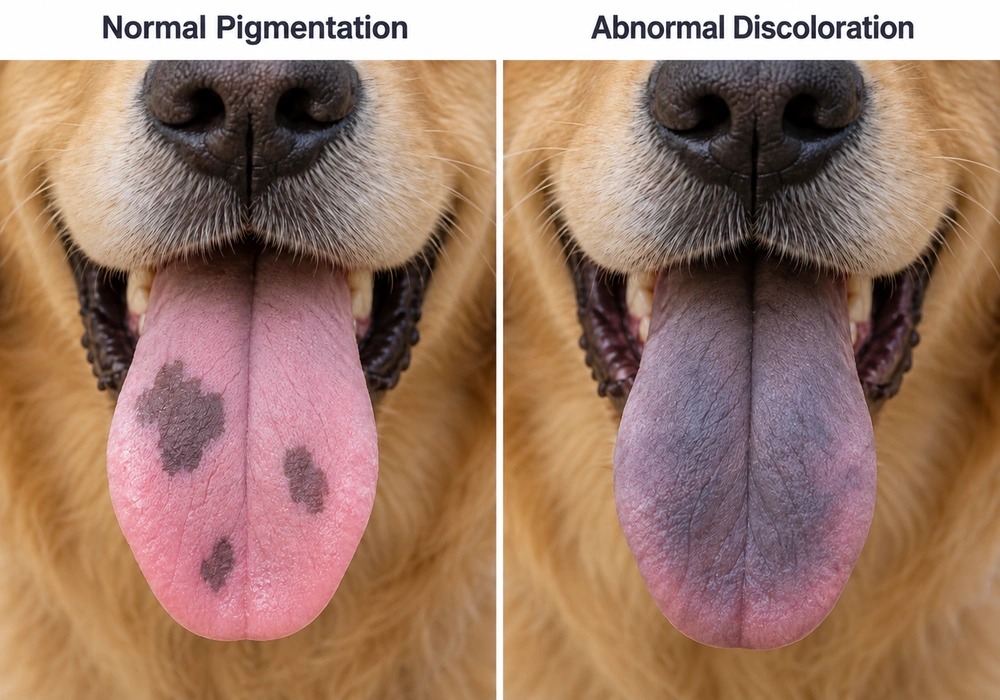
Why Is My Dog’s Tongue Grey?
Canine oral health and emergency triage Why Is My Dog's Tongue Grey? A grey tongue in dogs does not always mean the same thing. Some dogs are born with dark
How to Identify Canine Hormone Imbalance Symptoms
Canine endocrine health How to Identify Canine Hormone Imbalance Symptoms Hormones influence a dog's metabolism, appetite, thirst, skin, coat, muscles, stress response, blood sugar, and reproductive cycle. Most endocrine disorders