
Canine nutrition guide
How to Choose Dog Food for Healthy Skin and a Shiny Coat
Shopping for dog food for skin and coat health can turn into a tour of shiny bags covered with salmon, flaxseed, zinc, and biotin claims. Those ingredients may have a place, but none of them can rescue a poorly balanced formula.
Start with the basics: Is the food complete and balanced for your dog’s life stage? Does the calorie level suit your dog? Are the protein and fat sources clearly identified? If itching, sores, hair loss, or recurring ear infections are already present, book a veterinary exam. A new bag of food should not be the first and only treatment.
Quick answer
Choose a complete and balanced food for your dog’s life stage. Look for named protein sources, an identified source of linoleic acid, and fish or algal oil when EPA and DHA support is needed. Skip the do-it-yourself mineral cocktail. Extra zinc, vitamin A, vitamin D, or fish oil can cause harm.

In this guide
Check the whole formula
A salmon picture is not a nutrient analysis. Start with the adequacy statement, life stage, and calories.
Ask which fats are present
Linoleic acid supports the barrier. EPA and DHA are the omega-3 fats to ask about when inflammation matters.
Know when food is not the fix
Odor, sores, painful ears, or sudden hair loss need an examination, not another bag of food.
A practical label checklist
- A complete and balanced nutritional adequacy statement
- A formula intended for your dog’s life stage
- Named sources of animal protein and dietary fat
- Fish oil, marine oil, or algal oil when EPA and DHA support is needed
- Calories per cup, can, or kilogram
- A manufacturer willing to provide nutrient and quality-control information
Why nutrition affects a dog’s skin and coat
Skin has a practical job. Its outer layer holds water in and helps keep irritants and microbes out. Beneath it, hair follicles keep making keratin, the protein that forms each hair shaft. This work uses protein, fatty acids, vitamins, and minerals every day.
A seriously unbalanced or poorly digested diet can leave the coat dry, brittle, or slow to regrow. Flaking may follow. True deficiencies are unusual in dogs that eat a reputable complete food, but the risk rises with unbalanced homemade recipes, long periods of poor appetite, intestinal disease, and indiscriminate supplement use.
There is a catch: many skin diseases look nutritional when they are not. Fleas, mites, allergy, yeast, bacteria, hormonal disease, and repeated licking can all damage the coat. If the paws are the main problem, this guide to why dogs lick their paws can help you sort irritation from pain or habit. The pattern and timing of the signs often tell you more than the marketing on the bag.
The nutrients that matter most
Protein
Supplies amino acids for skin renewal, hair growth, strength, and normal pigment.
Linoleic acid
An essential omega-6 fat used in the outer skin barrier, where it helps limit moisture loss.
EPA and DHA
Marine omega-3 fats used in diets designed to support dogs with inflammatory skin problems.
Minerals and vitamins
Zinc, copper, vitamin E, and other micronutrients matter, but unplanned extra doses can backfire.
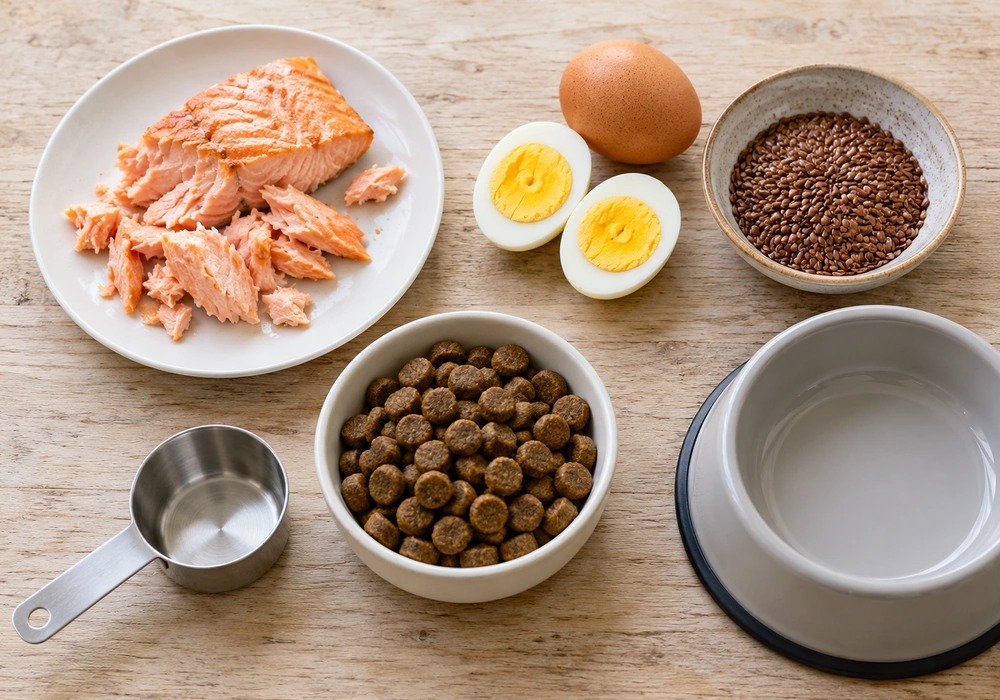
Digestible protein and essential amino acids
Hair is mostly keratin, so coat growth draws heavily on dietary protein. Methionine and cysteine help form the sulfur bonds that give hair its strength. Phenylalanine and tyrosine are involved in normal coat pigment.
The crude protein number is only a starting point. It says nothing about digestibility or whether the amino acids are well balanced. Named protein sources and a manufacturer willing to discuss the finished formula are more useful clues. Dogs with kidney, liver, or pancreatic disease may need different targets, which can rule out an otherwise respectable skin-and-coat food.
Linoleic acid and the skin barrier
Linoleic acid is an essential omega-6 fatty acid. Dogs cannot make enough of it themselves, so it must come from food. It helps form specialized lipids in the outer skin layer that reduce water loss and support barrier function.
Poultry fat, sunflower oil, and safflower oil are common sources. Omega-6 sometimes gets blamed for inflammation, but dogs need linoleic acid. The useful question is whether the entire fat profile is well formulated, not whether the food has eliminated omega-6.
EPA and DHA from marine sources
EPA and DHA are the long-chain omega-3 fats most often used for inflammatory skin problems. Fish oil and some algal oils supply them directly. Flaxseed and chia contain ALA, which dogs convert poorly to EPA and DHA. Our guide to omega-3 and omega-6 for dogs explains the difference in more detail. A vague "contains omega-3" claim is much less informative than an actual EPA and DHA value.
Ask for the amount per cup, per kilogram, or per 1,000 kilocalories. Do not calculate a dose from the large "fish oil" number on a supplement label; only part of that oil may be EPA and DHA. If the label is especially vague, see how to check DHA in dog food. The extra oil also brings calories and sometimes diarrhea. Dogs prone to pancreatitis or bleeding problems need particular care, as do dogs approaching surgery.
Zinc, copper, vitamins, and antioxidants
Zinc supports normal skin-cell turnover and wound healing. Copper contributes to pigment formation, while vitamin E helps protect fatty acids in cell membranes from oxidation. Vitamin A and several B vitamins also participate in normal skin and follicle function.
Extra is not safer. Too much zinc can disrupt the balance of other minerals, while excess preformed vitamin A or vitamin D can be toxic. Some northern breeds develop an inherited zinc-responsive skin condition despite eating balanced food. Large-breed puppies have a different risk: adding calcium or minerals to a complete growth diet can create an imbalance. Neither problem is fixed by guessing at a supplement dose.
| Nutrient | Why it matters | Useful label clues |
| Protein | Supplies amino acids for skin renewal and keratin | Named animal proteins and manufacturer nutrient data |
| Linoleic acid | Supports the skin’s moisture barrier | Poultry fat, sunflower oil, or safflower oil |
| EPA and DHA | Help regulate inflammatory signaling | Fish oil, marine oil, or algal oil with stated EPA/DHA amounts |
| Zinc and copper | Support cell turnover, healing, and pigmentation | A complete formula; do not add minerals without guidance |
| Vitamin E | Protects polyunsaturated fats from oxidation | Included antioxidant support and sensible storage instructions |
How to read a dog food label
1. Find the nutritional adequacy statement
The package should say that the food is complete and balanced for the appropriate life stage. If it says "intermittent or supplemental feeding only," it is not meant to provide the whole diet.
Choose food for the dog in front of you. A growing puppy, a healthy adult, a pregnant dog, and a senior with chronic disease do not necessarily need the same formula. A glossy coat is not a useful tradeoff if the food supplies too many calories or conflicts with a medical diet.
2. Look beyond the front-of-bag claims
Words such as "skin and coat," "premium," and "natural" do not tell you how much of a nutrient the food contains or how well a dog can use it. Turn the bag over. Check the protein and fat sources, calories, and any stated EPA and DHA amounts.
The ingredient list is arranged by weight before processing. It cannot tell you the final digestibility of the food, whether the amino acids are balanced, or how much of a nutrient the dog actually receives per calorie. Use it as one piece of evidence, not a ranking system. For a closer walk through the fine print, read our guide to dog food ingredient labels.
3. Ask the manufacturer better questions
Call or email the company if the label leaves gaps. A useful answer is specific. The company should know who formulates the food, where it is made, and how each batch is checked.
- Does a qualified veterinary nutritionist or animal nutritionist oversee formulation?
- Can the company provide EPA and DHA values rather than only total omega-3?
- What quality-control tests are performed on ingredients and finished batches?
- Can it provide a typical nutrient analysis per 1,000 kilocalories?
- Does it conduct or publish feeding and digestibility research?
4. Compare wet and dry foods fairly
The guaranteed analysis is reported as fed, so the moisture in canned food makes its protein and fat percentages look lower than those of kibble. To compare foods with very different moisture levels, use dry matter values or, preferably, compare nutrients per 1,000 kilocalories.
Dry matter formula
Dry matter percentage = as-fed nutrient percentage / (100 – moisture percentage) x 100
This calculation helps compare formats, but it still does not measure digestibility or overall food quality.
When a regular skin-and-coat food may help
A regular over-the-counter food may be enough for a healthy dog with a mildly dull coat, especially if the old diet was incomplete or poorly matched to the dog’s life stage. Do not expect a new shine in a few days. Skin must renew and new hair must grow.
Take a photograph before the switch and another every two weeks in similar light. Keep a short note of dandruff, odor, licking, stools, ear trouble, and body weight. A prettier coat is not a win if an oily supplement quietly adds unwanted pounds.

When "sensitive skin" food is not enough
Persistent itching does not prove a food allergy. Fleas, mites, environmental allergy, bacterial infection, and yeast are all common. Odor, greasy skin, pustules, crusts, painful ears, or raw paws deserve an examination. Repeated head shaking or dark discharge also fits several dog ear infection symptoms. Food may support recovery, but it will not clear an active infection on its own.
Non-itchy symmetrical hair loss, poor regrowth after clipping, weight change, lethargy, increased thirst, increased urination, or a pot-bellied appearance can point toward endocrine disease. The combination matters, as explained in our overview of canine hormone imbalance symptoms. Changing food without investigating the underlying problem may delay treatment.
Arrange veterinary care promptly if you notice
- Open sores, bleeding, pain, swelling, pus, or a strong odor
- Rapidly spreading hair loss or severe itching
- Repeated ear infections or head shaking
- Facial swelling, hives, vomiting, or breathing difficulty
- Skin changes accompanied by weight, appetite, thirst, or behavior changes
What to do if food allergy is suspected
A retail food labeled "limited ingredient" is not automatically suitable for a diagnostic food trial. Products made on shared lines may pick up traces of other proteins, enough to muddy the result in a sensitive dog.
Veterinarians diagnose a food reaction with a strict elimination trial, usually using a prescription hydrolyzed diet or a carefully selected novel protein. It commonly runs for eight to twelve weeks. One flavored chew or regular treat can set the trial back, so every edible item has to be checked.
If the skin improves, the veterinarian may recommend a controlled challenge with the previous diet to determine whether symptoms return. Blood, saliva, and hair tests marketed for food allergy should not replace a properly managed elimination and challenge trial.
How to change foods safely
Unless your veterinarian recommends an immediate change, transition gradually. A slow change helps reduce vomiting, gas, and loose stool and makes it easier to judge whether the new food agrees with your dog.
| Days | Current food | New food |
| 1–3 | 75% | 25% |
| 4–6 | 50% | 50% |
| 7–9 | 25% | 75% |
| 10 onward | 0% | 100% |
If stools become loose, remain at the current ratio for a few more days rather than moving to the next step. Dogs with a history of severe gastrointestinal disease, pancreatitis, or medically necessary prescription diets should follow an individualized plan.
Frequently asked questions
What is the best dog food for skin and coat health?
No single food wins for every dog. A healthy adult may do well on a complete maintenance food with sound protein and fat sources. A dog with food allergy, pancreatitis, or another medical condition may need a veterinary therapeutic diet with very different priorities.
Is salmon dog food always better for the coat?
No. Salmon can provide protein and marine omega-3s, but the finished food’s overall formulation matters more than the picture on the bag. Some salmon-flavored foods contain little EPA and DHA, and salmon is not automatically suitable for a dog that reacts to fish.
Should I add fish oil to my dog’s food?
Ask your veterinarian before adding it. The appropriate amount depends on the dog’s weight, current diet, health conditions, medications, and the supplement’s actual EPA and DHA content. Too much can add substantial calories, cause diarrhea, and create problems for some dogs.
How long does a food change take to improve the coat?
A mildly dull coat caused by an inadequate diet may improve over several weeks, but hair growth is gradual. Allergy investigations take longer; a diagnostic elimination trial commonly requires eight to twelve weeks of strict adherence. Lack of improvement is a reason to revisit the diagnosis, not to keep adding supplements.
Does grain-free food improve itchy skin?
Not by default. Dogs can react to dietary proteins, but grains are not the universal cause of itching. A grain-free label does not make a food hypoallergenic and does not replace a veterinary elimination trial.
Related guides on Dog Mental Health
The bottom line
A salmon picture and a handful of supplement claims are easy to print on a bag. The harder questions are more useful: Is the food complete for this dog? Are the calories sensible? Can the maker provide real nutrient data, including EPA and DHA when those fats matter?
A careful food change may be all a mildly dull coat needs. Persistent itching, hair loss, odor, sores, or repeated infections are different. Get the cause checked, then use nutrition to support the treatment.
Related Articles
7 Fun Games for Dog Mental Stimulation
Mental stimulation for dogs is play and problem-solving that works the brain instead of just the legs: scent games, puzzle toys, hidden treats, new tricks. A physically tired dog can
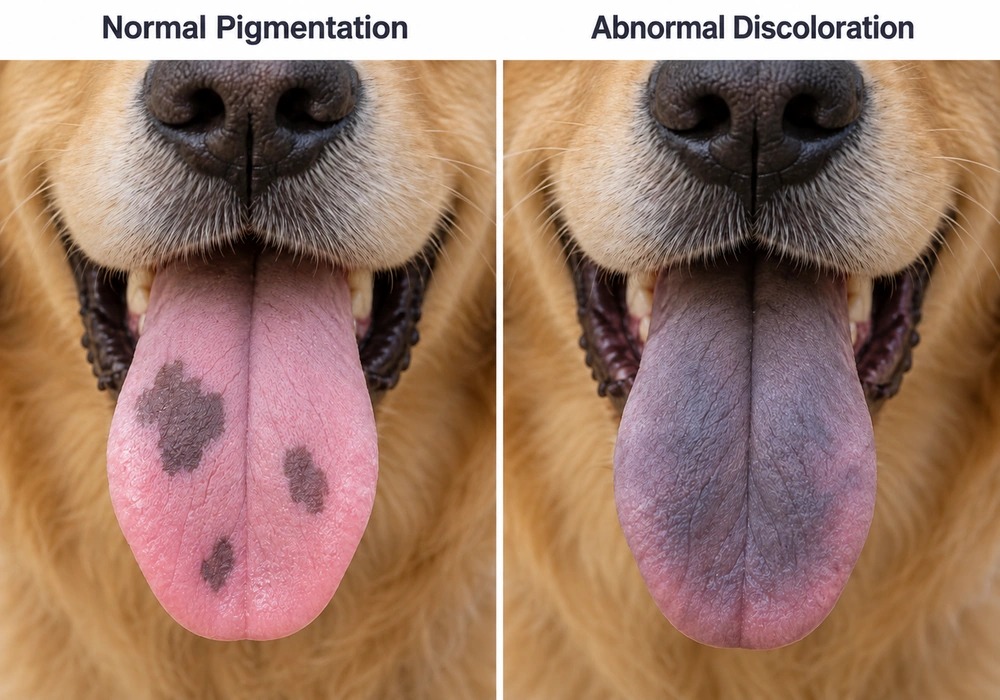
Why Is My Dog’s Tongue Grey?
Canine oral health and emergency triage Why Is My Dog's Tongue Grey? A grey tongue in dogs does not always mean the same thing. Some dogs are born with dark
How to Identify Canine Hormone Imbalance Symptoms
Canine endocrine health How to Identify Canine Hormone Imbalance Symptoms Hormones influence a dog's metabolism, appetite, thirst, skin, coat, muscles, stress response, blood sugar, and reproductive cycle. Most endocrine disorders