
🐾 Quick answer
A dog limping and licking a paw is usually in pain or trying to relieve an itch. Start with a gentle look at the nails, pads, and spaces between the toes. A thorn, damaged nail, cut, sting, skin infection, or sore joint could be responsible. Keep your dog quiet while you check. Do not dig into the skin, pull an attached nail, or give human pain medicine. Call your veterinarian if your dog cannot bear weight or the pain, swelling, or licking continues.
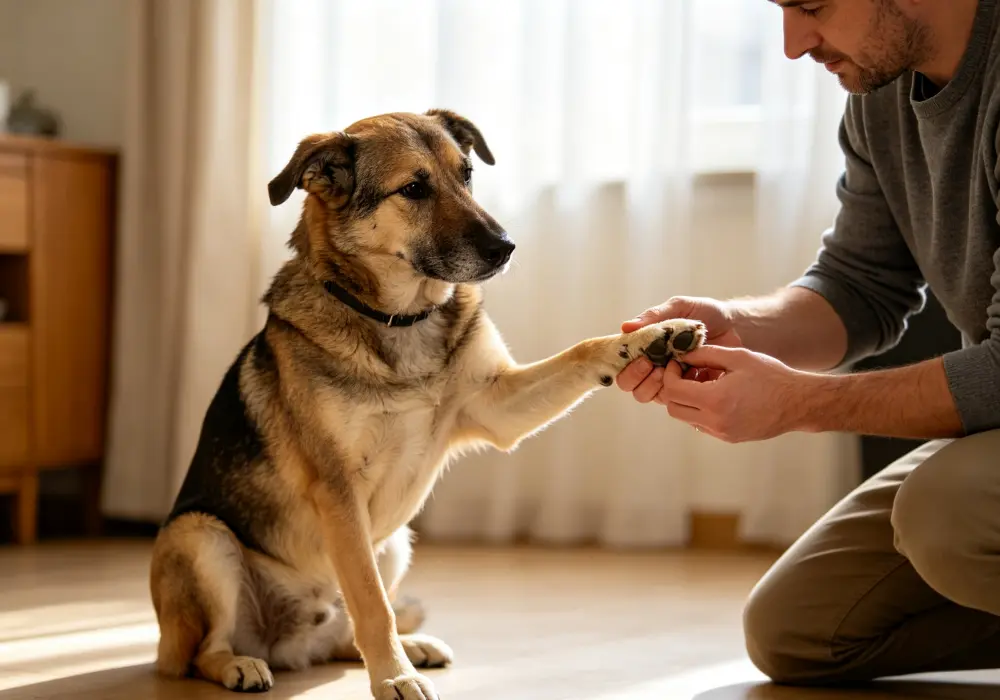
Dogs often lick the place that bothers them. If your dog is also limping, the paw is a sensible place to start, but the problem may sit higher in the leg. A sore toe, strained muscle, painful joint, or spinal condition can all change the way a dog walks.
The pattern offers useful clues. Sudden limping after a walk is different from stiffness that has been building for weeks. One sore paw also tells a different story from several red, itchy feet.
🚨 Get emergency help
Go to an emergency veterinary hospital if your dog has suffered major trauma, has an obviously deformed limb, cannot stand without help, or is bleeding heavily. Collapse, pale gums, severe weakness, and breathing difficulty are also emergency signs.
How Urgent Is the Limping?
Watch your dog stand and take a few natural steps. Do not encourage extra walking just to test the leg. Note whether the paw touches the ground, whether the limp is getting worse, and whether you can see a wound or swelling.
| What You Notice | What to Do | Why It Matters |
| Mild limp, still bearing weight, no wound or swelling, and clearly improving with rest | Restrict activity and watch closely | A minor irritation or mild strain may settle, but it should keep improving |
| Persistent licking, tenderness, swelling, discharge, or a damaged nail | Contact your veterinarian promptly | The paw may contain an injury, infection, or embedded object |
| Dog will not bear weight or the pain is severe or worsening | Arrange urgent veterinary assessment | A deeper paw, joint, bone, or soft-tissue injury may be present |
| Major trauma, obvious fracture, uncontrolled bleeding, collapse, or inability to stand | Go to an emergency hospital | These signs need immediate professional care |
The Cornell University College of Veterinary Medicine explains that limping usually reflects pain or weakness. A limp that is severe, sudden, worsening, or still present after a day or two should be assessed by a veterinarian.
7 Reasons Your Dog May Be Limping and Licking Its Paw
The following causes are common possibilities rather than a diagnosis. More than one problem can occur at the same time, especially in older dogs.
1. A foreign object, cut, or puncture
A thorn, grass awn, splinter, sharp plant fragment, or small piece of glass can lodge in a pad or between the toes. Every step presses against the tender area, so the dog may stop suddenly during a walk and begin licking one paw.
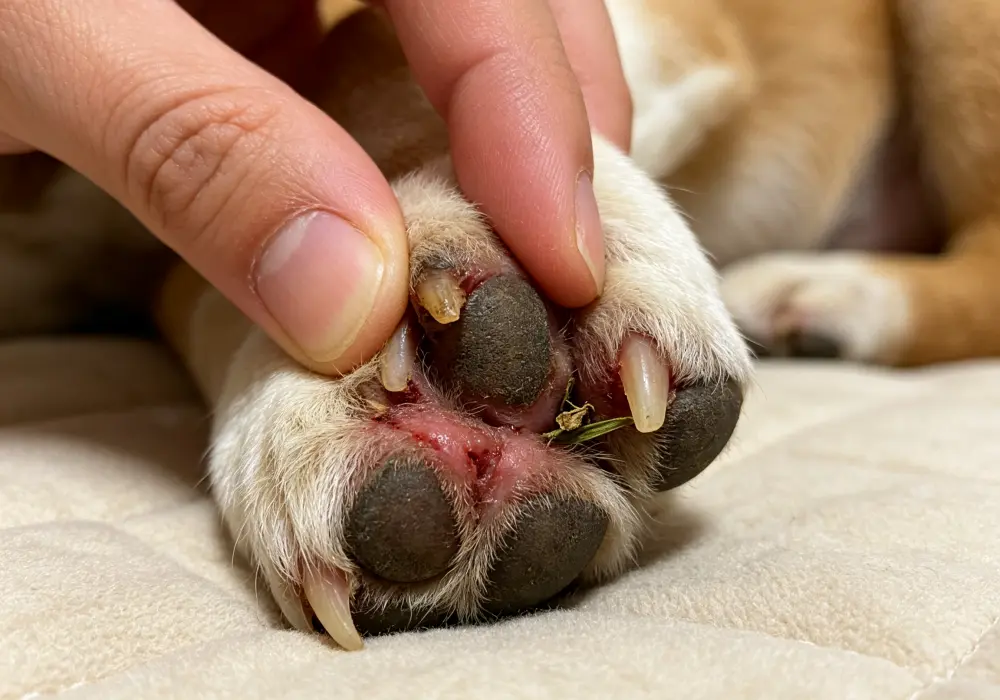
Look for a small entry point, localized swelling, bleeding, or one especially sensitive space between the toes. The object may be hidden by fur or may already have moved beneath the skin.
Loose debris caught in the coat may be easy to remove. Leave anything embedded in the skin alone. Digging with tweezers can push it farther in and introduce bacteria.
2. A broken, torn, or overgrown nail
A nail can split during play, catch on fabric, or tear close to its base. Injuries involving the quick often bleed because this part of the nail contains nerves and blood vessels.
Check every nail, including the dewclaw. You may find blood, a crack, a loose fragment, or a nail pointing at an unusual angle. Some injuries are less obvious, and the dog may simply keep licking one toe.
Do not pull a piece that remains attached. Our guide to what to do when a dog breaks a nail explains how to control bleeding and decide when veterinary treatment is needed.
3. A paw-pad injury, burn, or insect sting
Hot pavement, rough ground, ice, road salt, and irritating chemicals can damage paw pads. A bee or wasp sting may cause sudden pain and swelling.
Compare the sore paw with the opposite one. Check for redness, peeling, a raw patch, blistering, or a small puncture. If several paws became sore after the same walk, the walking surface or an environmental irritant may be involved.
Call your veterinarian about a deep cut, significant burn, or rapidly increasing swelling. Facial swelling, widespread hives, vomiting, weakness, or difficulty breathing after a possible sting requires emergency care.
4. Allergy, dermatitis, or skin infection
Allergies can make the feet itchy and inflamed. Environmental allergens, contact irritation, parasites, and some food-related reactions may all contribute. Once licking starts, the moisture and friction can damage the skin and allow bacteria or yeast to multiply.
Skin-related clues include:
- Red or moist skin between the toes
- Brown saliva stains on light-colored fur
- An unusual odor
- Hair loss around the licked area
- Recurring ear or skin trouble
- Similar irritation affecting several paws
A dog licking only one paw after a walk may have an injury rather than an allergy. Our article on why dogs lick their paws covers the differences between grooming, itching, pain, and repetitive licking.
5. Interdigital inflammation or a painful bump
A swollen bump between the toes can hurt each time the dog places weight on the paw. Owners often call these bumps “interdigital cysts,” though several conditions can produce a similar appearance.
The Merck Veterinary Manual describes interdigital furuncles as painful red or purple lesions that may rupture or drain. Foreign-body reactions, allergies, friction, and infection can contribute.
Do not squeeze or attempt to drain the bump. Ask your veterinarian to examine a lesion that hurts, keeps returning, or starts to discharge.
6. A sprain, strain, or orthopedic injury
The paw may look normal because the pain comes from another part of the leg. A slip on a smooth floor, an awkward landing, rough play, or a sudden turn can injure a muscle, tendon, ligament, or joint.
The limp may become more obvious when your dog turns, climbs stairs, or rises after resting. Some dogs also stop jumping onto furniture or hesitate before getting into a car.
Do not bend the limb repeatedly or force your dog to walk so you can test it. Keep activity controlled and arrange an examination if the limp continues or your dog struggles to bear weight.
7. Joint pain, referred pain, or persistent licking
Arthritis, ligament disease, spinal pain, and neurologic problems may change the way a dog uses a leg. These conditions are more likely when the limp develops gradually, comes and goes, or appears with stiffness after rest.
A dog may lick the lower leg even when the painful area is closer to the knee, hip, shoulder, or spine. Older dogs can also have two problems at once, such as arthritis and a separate skin irritation.
Persistent licking can eventually damage healthy skin. Anxiety or compulsive behavior is possible, but physical causes need to be considered first. Our guide to dog anxiety versus pain can help you compare the signs.
What the Pattern Can Tell You
Write down when the limp started, which paw is affected, and whether the problem changes after rest or exercise. Your veterinarian can use those details to narrow down the possibilities.
| Pattern | Possible Explanation | What to Check |
| Sudden limping after a walk | Foreign object, cut, sting, pad irritation, or damaged nail | Pads, nails, spaces between the toes, swelling, and blood |
| Several paws are itchy or red | Environmental exposure, dermatitis, allergy, or infection | Moisture, odor, redness, and recurring skin or ear trouble |
| Paw looks normal but limping continues | Muscle, joint, bone, spinal, or neurologic pain | Stiffness, swelling higher in the limb, and trouble with stairs |
| Painful bump between the toes | Interdigital inflammation, infection, or a foreign-body reaction | Discharge, bleeding, swelling, and recurrence |
How to Check the Paw Without Making Things Worse
- Move your dog to a quiet area with a nonslip floor.
- Watch a few natural steps and note which leg is affected.
- Check every nail, including the dewclaw.
- Look across each pad for a cut, blister, burn, or worn area.
- Separate the toes gently and look for plant material, swelling, moisture, or discharge.
- Compare the sore paw with the paw on the opposite side.
- Stop if your dog cries, growls, pants heavily, or pulls away.
Pain can change a dog’s behavior. Keep your face away from the sore leg and do not insist on finishing the examination if your dog becomes distressed.
If possible, record a short video of the limp without encouraging extra exercise. Dogs sometimes move differently at the clinic because they are excited or nervous, so a video from home can be useful.
What You Can Do While Waiting for Advice
Keep activity quiet until you know what is wrong. Use a leash for bathroom breaks, block access to stairs, and pause running or rough play.
An appropriately fitted recovery collar can stop your dog from repeatedly licking the paw. This protects the skin, but it does not treat the original cause. Keep the paw clean and dry, and watch for new redness, swelling, odor, or discharge.
Make a short note of recent activity. A hike, nail trim, hard play session, fall, or walk on a treated surface may help your veterinarian understand what happened.
What Not to Do
- Do not give ibuprofen, naproxen, aspirin, acetaminophen, or another human pain reliever.
- Do not use medication left over from another pet.
- Do not dig into the pad to find a hidden object.
- Do not pull or twist an attached nail fragment.
- Do not squeeze a swollen bump between the toes.
- Do not repeatedly bend the joints to test their movement.
- Do not apply a tight bandage unless a veterinary professional has shown you how.
The U.S. Food and Drug Administration advises owners to contact a veterinarian before giving a pet human pain medicine or medication prescribed for another animal.
When to Call Your Veterinarian
Arrange veterinary advice if the limp does not keep improving or if your dog repeatedly returns to the paw. Call sooner when:
- Your dog will not place the paw on the ground
- The pain is sudden, severe, or worsening
- The paw or leg is swollen
- You find a deep cut, burn, puncture, or embedded object
- A nail is loose or torn near its base
- Bleeding continues despite steady pressure
- The skin is hot, painful, wet, or producing discharge
- A bump between the toes keeps returning
- The limp disappears and then comes back
What the Veterinarian May Check
The appointment will usually begin with questions about when the limp started and what your dog was doing beforehand. The veterinarian may watch your dog walk, inspect the paw, and feel the rest of the limb for heat, swelling, tenderness, or instability.
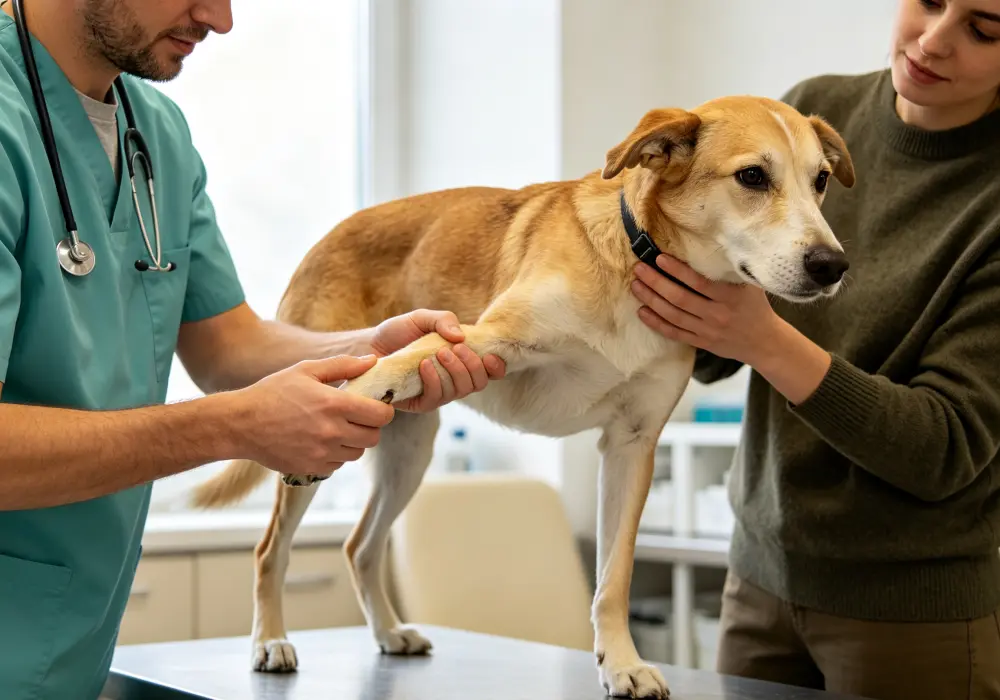
Skin samples or a bacterial culture may be useful when infection is suspected. X-rays or other imaging may be recommended if the examination points to a bone, joint, or deeper soft-tissue problem. Not every dog needs every test.
Frequently Asked Questions
Why is my dog limping but not crying?
Dogs do not always cry when they are in pain. Limping, guarding a leg, repeated licking, and reluctance to move can all indicate discomfort.
What if the paw looks normal?
The injury may be hidden beneath the fur or between the toes. Pain can also come from a muscle, joint, bone, or another part of the leg.
Can allergies make a dog limp?
Allergies can make paws inflamed and itchy. Damaged skin or a secondary infection may become painful, but sudden limping in one paw should not automatically be blamed on allergy.
Should I stop my dog from licking?
Yes. Persistent licking can damage the skin and delay healing. A recovery collar may protect the area while you arrange veterinary advice.
Can I give my dog ibuprofen?
No. Ibuprofen can seriously harm dogs. Call your veterinarian before giving any pain medicine, including medication left over from another pet.
How long can I monitor a mild limp?
A mild limp may be watched briefly if your dog still bears weight and continues to improve. Contact your veterinarian if it lasts more than a day or two, returns, or becomes more painful.
The Bottom Line
Start with a gentle look at the nails, pads, and spaces between the toes. Then let your dog’s comfort guide the next step. If the limp is severe, your dog cannot bear weight, or you find swelling, discharge, a deep wound, or an unstable nail, call your veterinarian.
Medical disclaimer: This article provides general educational information. It cannot diagnose or treat an individual dog. Contact your veterinarian or an emergency veterinary hospital for advice based on your dog’s symptoms, health history, and medications.
References
- Cornell University College of Veterinary Medicine: What to Expect When Taking Your Limping Dog to the Veterinarian
- VCA Animal Hospitals: Lameness in Dogs
- VCA Animal Hospitals: Dog Paw Injuries and How to Help
- Merck Veterinary Manual: Interdigital Furunculosis in Dogs
- U.S. Food and Drug Administration: Get the Facts About Pain Relievers for Pets
Related Articles
7 Fun Games for Dog Mental Stimulation
Mental stimulation for dogs is play and problem-solving that works the brain instead of just the legs: scent games, puzzle toys, hidden treats, new tricks. A physically tired dog can
Why Is My Dog’s Tongue Grey?
Canine oral health and emergency triage Why Is My Dog's Tongue Grey? A grey tongue in dogs does not always mean the same thing. Some dogs are born with dark
How to Identify Canine Hormone Imbalance Symptoms
Canine endocrine health How to Identify Canine Hormone Imbalance Symptoms Hormones influence a dog's metabolism, appetite, thirst, skin, coat, muscles, stress response, blood sugar, and reproductive cycle. Most endocrine disorders